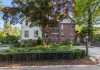
Independence Bank, a small, privately held institution in East Greenwich, has an unusual distinction: Of any bank nationwide that received funds from the U.S. Treasury’s $700 billion Troubled Assets Relief Program (TARP), Independence so far has received the smallest payout – a little more than $1 million. Robert A. Catanzaro, Independence’s president, answered five questions about TARP.
PBN: There are certainly strings attached when a bank accepts TARP money. What was the decision process you went through in deciding whether to apply?
CATANZARO: As a closely held company, we discussed it amongst our shareholders and our board of directors. Look, it is about $1 million, $1.1 million of additional Tier I capital. Just holding to safe and sound practices of having a Tier I capital ratio of 8 percent, that enables us to make another $12 million of loans and grow our balance sheet, which is good for us because we’re small.
Beyond Cash Donations: How New Forms of Giving Are Transforming Not-for-Profit Accounting
Evolving Funding Landscape for Not-for-Profits Not-for-profit organizations are being asked to do more with less,…
Learn More
PBN: Will you be asking for more?
CATANZARO: No. My understanding is you can go for a “second round” but it has to be convertible preferred [shares that are issued to the federal government in exchange for the money], meaning the government can convert it to common shares. We really don’t have an interest in that.
PBN: Have you had difficulty finding quality borrowers in the economic downturn to lend the additional money to? Also have you been under pressure from the government to do your part in thawing the credit markets by loosen your lending standards?
CATANZARO: We are lending it out. … We’re looking to grow our loans, because as a community bank, that’s how you make money – when you make good loans.
The one downside to this is I don’t want the federal government basically holding a gun to my head, saying “You have to make a loan that you wouldn’t otherwise make.” I want to make good loans, so I want to keep to our existing credit criteria. We never really got into subprime lending. We don’t want to start now. We’re making prime loans, we making mortgages and small-business loans.
We have to provide a narrative report that basically tells what we’ve lent and how it’s affected our strategic plan.
They haven’t asked to change our standards, but they have asked us to comment on what we’ve done with the TARP money.
PBN: What’s your opinion of the executive compensation restrictions that have been floated for banks that accept federal money, such as a $500,000 salary cap for top executives, or limitations on bonuses?
CATANZARO: We’re not anywhere close to [salaries of $500,000]. We’re a community bank, so that doesn’t affect us. … My personal opinion is that the government should stay out of executive compensation if the bank is not using TARP. Once you agreed to take the TARP, you should be subject to limitations. If you don’t like it, then don’t take the TARP money … I have no problem with [a cap of ] a half a million dollars. That’s pretty good money, and the banks are losing money this year, and last year. I don’t think it’s unreasonable to take the big banks that have taken a lot of taxpayer money and make them curtail their compensation until they pay it back.
PBN: Speaking of bank’s losing money, how is Independence Bank faring in this challenging environment?
CATANZARO: We’re doing OK. We had a loss in 2008, but we’re going to have a profitable first quarter in 2009. What we don’t like coming up – and a lot of banks don’t like – is this 20-basis-point special assessment [from the Federal Deposit Insurance Corporation to replenish its insurance fund] for 2009. It’s going to hit everyone. It’s not something we expected. … The issue that I have is as a community bank that didn’t contribute to the subprime meltdown, why am I asked to kick in a very onerous special assessment when I had nothing to do with the problem. And I think a lot of community bankers feel like I do.
Independence Bank is a one-branch bank in East Greenwich that recently celebrated its fifth year. For additional information, visit www.independence-bank.com.