ever has the best
programming wins.'
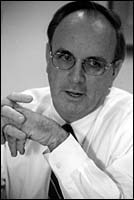
Name: Peter H. Ottmar
Position: Chairman of AAA Entertainment in Pawtucket
Rhode Island's Market Has Changed. Developers, Builders, Investors and Sellers Must Change With It.
By Emilio DiSpirito IV License Partner | Engel & Völkers Oceanside Leader | The DiSpirito…
Learn More
Background: Started radio career in 1979 as general manager of Massachusetts AM radio station WARA. He formed Ten Mile Communications and Back Bay Broadcasters, Inc., which he later merged to form AAA Entertainment
Education: Bachelor’s degree, Wake Forest University
Age: 53
Family: Married, three step-daughters
Residence: North Attleboro, Mass.
AAA Entertainment owns 19 radio stations in six markets, including Rhode Island’s Hot 106 FM, and has about 200 employees. The company received $10 million in venture capital last year, completed the sale of WICE 550 AM to Radio Disney in July, yet has maintained a consistently low profile. Looking to change that Ottmar recently signed on with Providence-based Trion Communications to help AAA with a public relations campaign.
PBN: Your family has been in radio since 1949; tell me a little bit about the earlier Ottmars and their role in radio.
OTTMAR: Their role was very minimal. My dad, Jerome Ottmar, was chairman and CEO of Amtel, which got sold out. And before that he was one of the senior guys who helped build Textron. Prior to that he worked for a company in Attleboro called Metals and Controls which was eventually bought out by Texas Instruments. Rathburn Willard was the principal owner and chairman and he had a great community orientation. He had arranged for a group of Attleboro people to buy the newspaper and eventually start a radio station, and my father was involved in that and something called the Attleboro Radio Association. They applied for a license in 1947 for WARA AM 1320. It was really a side interest for my father. He was just one of a number of equity holders, but eventually our family became the sole equity holder. Over the years he would buy people out. And I had worked in Washington D.C. in the seventies running a couple of congressional offices, and the man running WARA was leaving, and I went in as the interim general manager in 1979 or 1980, and I liked it enough that I decided to stay.
So it wasn’t really a passing of the torch from your father to you?
Not in the least. No.
You didn’t get involved in radio until your thirties, and you were down in Washington D.C. before that
After college I was in the Army for a couple years. And I worked (with two different congressmen) off and on for eight years. I did that and I came back and got involved in the family’s business, if you will, which in the early eighties was four different businesses that my brother and I were involved with.
I’m curious about the subtle nature of AAA Entertainment. Directory assistance
4-1-1 has no listing of it and the company has no Web site. Yet with 19 radio stations in six different markets you’re getting the biggest venture deals in Rhode Island.
I know we are, and that’s what matters. I guess we wouldn’t be doing this public relations push now if it wasn’t somewhat important to us. And as time goes on I imagine it will become more important, but up to now it hasn’t been as overwhelmingly important as putting together a great team of people. We’re all about people.
Our industry since the mid-nineties has gone through a rapid consolidation. And one thing about radio is that it’s always been local. And the other thing that’s interesting is that I was in the cable TV business and sold our interest in 1998. I was the last independent operator in Eastern Massachusetts (with Inland Cable) and I used to go to all these conferences for about 20 years and they would all talk about technology and other facets of the business, but it always came down to the programming. Whoever has the best programming wins and the same is true with radio. We need to have good local radio and that’s why the Internet and satellite radio won’t destroy our industry.
If our industry gets destroyed, it’s going to get destroyed because of our own stupidity, and that stupidity will revolve around not recognizing the importance of people in our industry, and secondly not recognizing the importance of good programming, which are two key ingredients to good radio. Unfortunately, too many people who are at the large companies in our industry have lost sight of that. That’s providing a huge opportunity for us, and we’re taking advantage of that opportunity.
Owning 19 stations would certainly be considered a chain. How is it possible to keep a local mentality within those 19 stations?
We hire local people in each of our markets and they’re all locally programmed. On Long Island, for instance, we own four radio stations, and we bought two of the stations a year and a half ago and the other two within the last year. The two that we bought within the last year were both fed off a satellite and they had no local element. I’m sorry to say it’s taken us a lot longer than we would have liked, but we are only now making one of those two stations a live program. Our general managers are from the market most of the time, and if they’re not from the market they get very integrated into it. They get to know all key people and advertisers, and participate in various charitable organizations, but certainly a bulk of the people at each station are local.
What is the market like in Rhode Island compared to other places? What do you do differently here than at other stations?
Providence is our home market, but we don’t have a very strong position here. We’ve been looking for ways to grow our position in Providence and there are some opportunities out there that we’ve been working on, and hopefully one of these days one of those opportunities will come to fruition because we’d like to be a more meaningful player. You have two giants here in Clear Channel and Citadel and yet our standalone station is very competitive. Hot 106 is also the only hip-hop station in the country that I know of to feature Howard Stern in the morning. Another thing that’s unique is what we’re doing now with Mohegan Sun.
What is that?
Both Foxwoods and Mohegan Sun gain a lot of their attendance from Long Island. And they have these high-speed ferries that go in between Long Island and Mohegan Sun. And they recognize the value of having a strong presence on Long Island. We own a station in New London called WKCD, which puts a pretty good signal over New London, and there are seven FM stations there, which are Class A, so it’s pretty competitive. Our station on Mantuck Point, which was WBEA, actually put a better signal over New London than WKCD, which is very unusual. We then realized we had something special there. And we found out that a lot of people who go to Mohegan Sun and Foxwoods were listening to WBEA, because they liked the format so much. And we were able to speak to both casinos about the possibility of doing some sort of casino radio. And we’re working on a deal with Mohegan Sun, who are building a brand new hotel complex, and they’re trying to significantly increase their business. So consequently they were looking for a good vehicle and this particular facility provided that opportunity. So we’ve re-formatted the station, and we’re calling it WMOS, (for Mohegan Sun) the WOLF, because their animal orientation is very important to them. It’s a unique relationship within our industry.
You’ve spoken a bit about the strength of signals. Are you nervous at all about the future of radio and radio signals being replaced by something like wireless Internet radio?
I’ve never been more confident about the future of radio. As I said before, the only things that are going to destroy radio are radio executives and programmers. As long as we continue to provide good local programming and don’t kill our listeners with too many commercials we will retain our listenership. If we go to too much national programming then we’ll lose our listeners. Everyone’s worried about satellite radio to some extent, but that fad seems to be disappearing quickly. If anything September 11th taught us that the localism of radio is important. People tune into radio during a national emergency. I’m not worried about satellite, and I’m not worried about Internet radio because you can’t use the Internet when you’re driving down the road.
The advertising market has been a little bit soft. I’m wondering if there are even enough ads to bombard people with.
A little bit soft? I’d say very soft.
Newspaper has gotten clocked, TV’s been hurt very badly, and radio, which is generally recession-resilient, up until this year hasn’t had a down year. This year is the second down year. And when I say down, I’m not talking double digits. This is just single-digits here. Traditionally the radio industry enjoys growth in the 5 to 10 percent range which most industries would absolutely love. So radio as a whole, is generally a healthy business.
What do you listen to when you’re driving around?
When I’m in Providence I sometimes listen to Hot 106, just to see how the station sounds. If I like the music on Hot 106, we’re doing something horribly wrong because Hot 106 is formatted for the 18 to 34 year-old demographic. What’s particular about our industry is we’re very demographically oriented. Quite frankly, I’m pretty busy. When I’m in a market I check how the signal sounds and make sure the station is being run professionally, but a lot of the time I’m driving around I’m thinking of my next meeting, and getting mentally prepared. I don’t have the time to relax.
(Photo by Tom Croke)