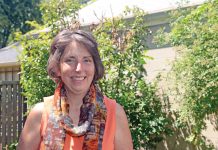
Plan International-USA is a nonprofit, child-centered, humanitarian organization with a special focus on ensuring the health, education and well-being of girls and boys in developing nations. Educated in foreign service and economics, President and CEO Tessie San Martin comes to Plan with a 25-year career that saw her involved in a variety of international development roles in the public and private sectors, as well as academia. She estimates that, since its inception in 1937, Plan International-USA has helped more than 10 million children.
San Martin recently spoke with Providence Business News about Plan USA’s mission.
PBN: What do you see as the No. 1 problem affecting children in developing nations?
SAN MARTIN: MARTIN: It depends on the country that you’re looking at. I’ve done a lot of work in Pakistan and a clear problem there is diarrhea. It is the No. 1 killer of particularly very young children under 5 years old and it comes from just bad water.
In some of these post-disaster places where we work, such as Haiti, there may be other types of diseases. Obviously, cholera is a major concern now. But more generally, the No. 1 issue affecting young children in Haiti is that there are, literally, no safe havens or safe places to be, in part because the places where they usually were, [such as] schools or even their homes and so on, have been destroyed.
Seifert Systems Invests in Energy Efficiency to Strengthen Operations
For manufacturers, energy is more than just another operating expense. It plays a critical role…
Learn More
PBN: How does Plan International-USA improve the lives of children? What exactly does it do? PBN: How does Plan USA do this? Do you send teams of people in to various countries? PBN: How do you decide whether your assistance has been successful? Do you go back and see how people are doing after a project?
PBN: How has your experience helped you at Plan USA? Have you worked with some of these countries before in different capacities? PBN: What can a local business or worker here in Rhode Island do to help Plan USA?
SAN MARTIN: MARTIN: We’ve got a number of projects in the health area, [addressing issues] such as infectious diseases, safe water, malaria.
So, for example, one very important thing you can do to immediately reduce the incidents of malaria and the number of children that actually die from that disease is to get parents to understand about the use of insecticide-treated nets. You get the parents to use the nets and that immediately reduces the number of kids getting bitten by mosquitoes and reduces the morbidity rate related to malaria.
SAN MARTIN: MARTIN: We operate in 48 countries and we implement our programs at the community level through those countries’ programs. The money that we raise here in the United States, for example, goes to support those various types of programs that I’ve described.
Our strength is we work at the community level, we’ve been working in these communities for a long time, we’re trusted and we engage [community residents] in the discussion around and the identification of their priorities and their needs, and the design and execution of programs to address those needs. We don’t come in with one solution and say, “here’s what we’re going to give you whether you need it or not.”
I can honestly say that what we’re doing is sustainable because it is owned by the community. For example, we’re building [132 primary school complexes] in Burkina Faso, West Africa, that are meant to address the special needs of girls. In this case, we’re partnered with, among other agencies, the United States Agency for International Development. This is a program to build schools and help equip schools to address the fact that girls were simply not getting an education.
We involve [community residents] in the design of those schools, and they own those schools so [they] are going to be better utilized and managed over time. We’re doing similar projects, all around the world, either in partnership with agencies like the U.S. government or with corporations.
SAN MARTIN: MARTIN: I have, and certainly that is one way it’s helped.
I’ve been involved in international development my entire professional life and even before that … when I was 15 years old in Paraguay [vaccinating children]. We work in 48 countries and there are very few of those countries where I haven’t been. That does help. I do know what the situation is on the ground. I have managed projects on the ground [in the past] that are similar to the types of projects we’re managing now at Plan, so I have a good sense of what the reality in the field is.
SAN MARTIN: MARTIN: We welcome people who want to be engaged in terms of reaching out and supporting communities around the globe. In our global environment, we’re all neighbors, right? For organizations and individuals that want to give, we’re happy to work with them. We’ve got a variety of ways where we can put those resources to use. … At the end of the day, in general, we welcome people’s engagement. We’re passionate about our mission, we want to talk to people who are interested in it even if it is not to donate. We welcome their involvement, their thoughts and their ideas. •INTERVIEW
Tessie San Martin
POSITION: President/CEO of Plan International-USA
BACKGROUND: San Martin took over Plan International-USA, based in Warwick and Washington, D.C., on Oct. 1. She previously was group vice president for international development at Abt Associates in Cambridge, Mass., a scientific research and technology firm. Before that, she worked as director for the operations group of the World Bank’s Multilateral Investment Guarantee Agency. She also has been a partner in IBM Consulting Services.
EDUCATION: Bachelor’s degree in foreign service, Georgetown University, 1980; master’s degree in public administration, the John F. Kennedy School of Government at Harvard University, 1982; doctorate in political economy, Harvard University, 1987
FIRST JOB: At 15 years old, she volunteered with Amigos de las Americas (Friends of the Americas), based in Houston, and was sent to Paraguay to vaccinate children against measles.
RESIDENCE: Rockville, Md.
AGE: 53