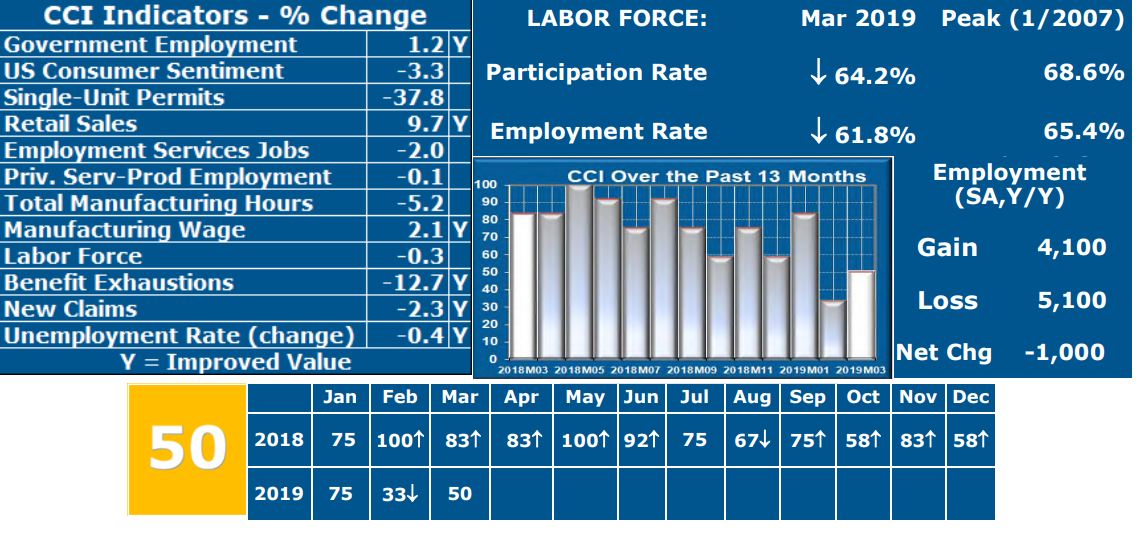
PROVIDENCE – Rhode Island’s current conditions index showed improvement in March, but still ended the first quarter with no sign of growth, University of Rhode Island economist Leonard Lardaro says.
The state reached a value of 50 in March, up from a downwardly revised value of 33 in February, Lardaro reported in the index released Monday.
Seifert Systems Invests in Energy Efficiency to Strengthen Operations
For manufacturers, energy is more than just another operating expense. It plays a critical role…
Learn More
A value of 50 is neutral, indicating neither contraction nor expansion.
The number reflects improvement in just six of the 12 local and national economic indicators used for measurement, including retail sales and the manufacturing wage.
The first quarter’s only indication of growth was in January, which reached a value of 75.
Despite its uptick since February, the state’s economic outlook is still concerning, according to Lardaro.
“I continue to remain unable to reject the possibility that Rhode Island has entered the earliest stages of a recession,” he said.
Referring to Rhode Island’s economic performance since 2015 as “spotty at best, and consistently disappointing,” Lardaro points to figures from the U.S. Bureau of Economic Analysis showing 0% growth in 2016, 0.8% in 2017 and 0.6% in 2018.
Rhode Island’s values lag well behind both New England and the rest of the nation, Lardaro said.
March was the 10th consecutive month during which the index did not reflect growth from its value the year before,and Rhode Island was recently named as the only state in the nation with no real income growth in 2018.
Below are the improved year-over-year CCI leading indicators:
- Government employment increased 1.2%
- Retail sales increased 9.7%
- Manufacturing wage increased 2.1%
- Benefit exhaustions decreased 12.7%
- New claims decreased 2.3%
- Rhode Island unemployment rate decreased 0.4%
CCI indicators that did not show improvement:
- U.S. consumer sentiment decreased 3.3%
- Single-unit permits decreased 37.8%
- Employment service jobs decreased 2%
- Private service-producing employment decreased 0.1%
- Total manufacturing hours decreased 5.2%
- The labor force decreased 0.3%
Elizabeth Graham is a PBN staff writer. She can be reached at Graham@PBN.com.