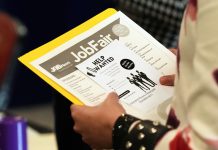
During the holiday season, an employer may feel much like Scrooge and the Grinch before their legendary epiphanies. Avoiding liability, respecting diversity and minding political correctness might seem to mandate a religiously neutral and alcohol-free celebration of the holidays. The specter of liability arising from the company holiday party makes many an employer at least a bit nervous.
From a legal perspective, however, employers have more leeway than might be commonly understood. Knowing the law and exercising some care should get most employers though to the new year without incurring new employment liabilities.
A nongovernmental employer has the legal right to celebrate a religious holiday in the workplace. A nongovernmental employer also has the legal right to display a “Christmas” tree or a menorah, to erect a crèche in the office, or to sponsor a Christmas caroling outing to a nursing home. Only governmental employers such as the state of Rhode Island and Rhode Island municipalities need fear liability for violating the Establishment Clause in the First Amendment of the United States Constitution.
The federal Equal Employment Opportunity Commission – the federal agency responsible for enforcing Title VII’s prohibition against religious discrimination – has acknowledged an employer’s entitlement to integrate “their own religious beliefs or practices into the workplace” and federal courts have agreed.
The law does, however, mandate that all employers refrain from discrimination on the basis of religion and that employers reasonably accommodate employees’ sincerely held religious beliefs, practices and observances. A “Merry Christmas” or a “Happy Hanukkah” greeting to an employee who does not celebrate such holidays is not religious harassment and the employer has no legal obligation to compel employees to abstain from such salutations.
And while the law does not mandate removing all signs of Christmas and Hanukkah from the workplace, employees who celebrate other religious holidays, or no such holidays, maintain their rights during the month of December. For example, a Muslim employee who enjoys a reasonable accommodation of breaks for prayer has the right to continue her practice during Advent and Christmas. A Hindu employee who asks to be excused from Secret Santa or Yankee Swap must be accommodated without harassment.
The issue at the company holiday party tends to be alcohol. Before taking all of the spike out of the eggnog, employers should consider a couple of points. First, the Rhode Island Workers Compensation Act specifically provides that an employer has no workers compensation liability for injuries “occasioned by or during his or her voluntary participation in employer sponsored social or nonprofessional athletic activity.” R.I. Gen. Laws §28-33-2.1. (A suit alleging that the employer’s negligence at such an event caused harm is not precluded.) Second, an employer is not liable under the “social host” theory for injuries caused by an inebriated employee to a third party. See Willis v. Omar, 954 A.2d 126 (R.I. 2008); Rhode Island Liquor Liability Act, R.I. Gen. Laws §§3-14-1 and 3-14-14.
Drunken driving is a serious problem during the holiday season. An employer need not count employees’ drinks or shut off employees who seem to be tipsy. Ultimately, each employee bears legal and moral responsibility for his or her decisions about alcohol and driving. The law does not shift that responsibility to the employer hosting the holiday party. But at the same time, a drunken driving arrest or an accident after the party can cause serious employee morale and public relations problems. Consider reminding employees during the holiday season about the dangers of drunken drivers.
Certain commonsense steps help minimize the risk.
First, invite employees to bring a guest – a spouse, partner, relative, or friend – and encourage employees to drink responsibly. Second, serve plenty of food and offer nonalcoholic beverages. Third, limit the duration of the open bar. Fourth, be prepared to put intoxicated employees in a cab or in a car with a sober driver.
Finally, remind employees before the holiday season is in full swing about policies against sexual and other forms of harassment and conduct training if it is overdue.
The right measure of commonsense, sensitivity, and sobriety will suffice to make the holidays both happy and liability free. •
Andrew Prescott is a partner in Nixon Peabody’s labor & employment office and is based in Providence.
Rhode Island's Market Has Changed. Developers, Builders, Investors and Sellers Must Change With It.
By Emilio DiSpirito IV License Partner | Engel & Völkers Oceanside Leader | The DiSpirito…
Learn More