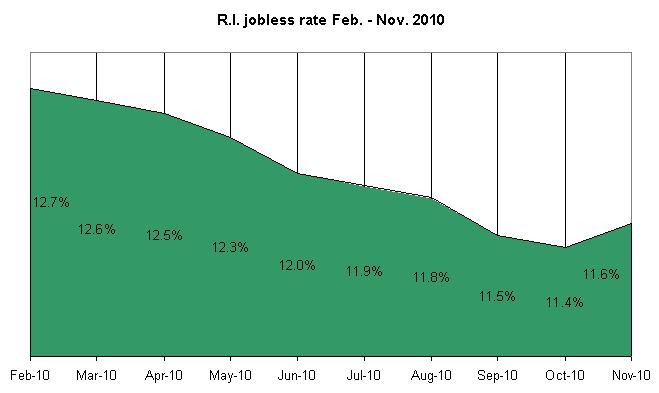
 CLICK HERE. / " title="THE UNEMPLOYMENT RATE ROSE TO 11.6 percent in November from 11.4 percent a month earlier. For a larger version of this image, CLICK HERE. /"/>
(Corrected, 11:45 p.m.)
PROVIDENCE – The Rhode Island unemployment rate rose in November after eight consecutive months of decline, the R.I. Department of Labor and Training said Friday.
Beyond Cash Donations: How New Forms of Giving Are Transforming Not-for-Profit Accounting
Evolving Funding Landscape for Not-for-Profits Not-for-profit organizations are being asked to do more with less,…
Learn More
The state said that the unemployment rate edged up two-tenths of a percent to 11.6 percent. Nationally, the U.S. unemployment rate rose two-tenths of a percent, settling in at 9.8 percent while in Massachusetts it climbed one-tenth of a percent to 8.2 percent.
Rhode Island’s net loss of 1,200 jobs cut the state’s non-farm payrolls to 449,000 in November, 3,200 fewer jobs than the state had a year ago, when unemployment was 12.5 percent.
The number of employed state residents was unchanged in November, staying at 506,200, while the amount of unemployed residents – those classified as available for work and actively seeking employment – rose by 800 from October to 66,100, the first monthly increase since January.
The rising number of unemployed residents boosted the state’s labor force to 572,300, up 800 for the month, but down 700 from a year earlier.
The average weekly claims for unemployment benefits declined by 966 to 32,082 in November, down 2.9 percent from October’s average. That figure differs from the total number of unemployed because of eligibility restrictions.
Rhode Island’s largest job loss in November came in construction, which lost 400 mostly in the specialty trade and building construction industries, the DLT said.
Arts, entertainment and recreation, and manufacturing shed 200 jobs each last month. Retail trade; transportation and utilities; education services; health care and social assistance; government; wholesale trade; accommodation and food services; and “other services” each reported declines of 100 jobs.
The biggest job gains came in financial activities and information, with each sector picking up 200 jobs in November. Professional and business services, and natural resources and mining remained unchanged.
Manufacturing-production workers in Rhode Island earned an average hourly wage of $14.87 in November, up three cents from October and up 53 cents from a year earlier.
The state’s average manufacturing work week in November was 39.2 hours, up three-tenths of an hour from October and up 1.6 hours from last year, DLT said.
An earlier version of this story gave incorrect private-sector and public-sector job figures.