
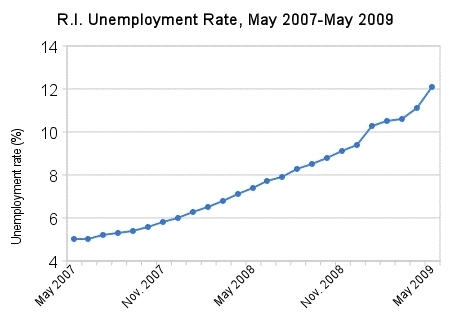
BOSTON – Rhode Island has been losing jobs for longer than any other New England state and had the region’s fastest rate of employment decline in the 12-month period that ended March 31, the U.S. Bureau of Labor Statistics (BLS) reported yesterday.
Employment in Rhode Island began to decline in January 2007 and has not stopped falling in the two and a half years that have transpired since then, the agency said. By contrast, both Massachusetts and New Hampshire did not begin losing jobs until March 2008, more than a year after Rhode Island’s job slump began.
Rhode Island's Market Has Changed. Developers, Builders, Investors and Sellers Must Change With It.
By Emilio DiSpirito IV License Partner | Engel & Völkers Oceanside Leader | The DiSpirito…
Learn More
Rhode Island lost 22,000 jobs in the 12-month period ending March 31 that the BLS analyzed, a 4.6 percent rate of decline. Total employment in the state stood at its lowest level since June 1999 in March, the agency said. The unemployment rate in Rhode Island was 12.1 percent in May, the most recent month for which figures are available.
Vermont, at 4.2 percent, had the second-fastest rate of job loss in New England. Both states lost jobs at a faster rate than the nation as a whole, which saw employment fall by 3.5 percent over the year.
They were followed by Connecticut (down 3.3 percent), Massachusetts (down 3.2 percent) and Maine (down 2.8 percent). New Hampshire had the slowest rate of decline, losing 1.7 percent of the jobs it had in March 2008 over the year that followed.
Across New England, the hardest hit industries were construction and manufacturing, both of which posted job declines in all six states. In Rhode Island, construction employment dropped 17.4 percent from March 2008 to March 2009, more than the national average for construction job loss of 12.6 percent. The state’s manufacturing work force fell 10.2 percent, also greater than the national average decline, which was 9.9 percent.
Rhode Island also was the only New England state where one industry – education and health services – did not add jobs in the 12-month period ending March 31. Employment in that sector stayed flat in the Ocean State. No industry gained jobs in Rhode Island during the period.
Rhode Island did not rank last in every measure.
Rhode Island and every other New England state except Massachusetts were able to recoup all the jobs they lost during and after the 2001 recession in the recovery that followed.
Rhode Island surpassed its previous job peak by 14,300 when total employment hit a high of 496,400 in January 2007 before its long decline began. By contrast, Massachusetts never returned to its previous employment peak before the state began to shed jobs again.












The way you have set up your graph is a classic way of using statistics to create a wrong impression. If the left side were set up starting at zero instead of already at 4, the increase wouldn’t look so dramatic. But then you love to spread a sense of panic and horror. Helps the business community convince workers to work for less?
http://data.bls.gov/PDQ/servlet/SurveyOutputServlet?request_action=wh&graph_name=LN_cpsbref3
The lowest unemployment rate in the last decade was 3.9%. So 4% is pretty much zero.
Maybe they should have made the graph start @ -10% so it wouldn’t have looked so bad.