Work is under way in the Rhode Island General Assembly to put a lid on predatory lending. And though programs are in place to educate the public about dangerous lending practices, community and housing nonprofits say unsuspecting consumers – mostly seniors and minorities – continue to fall prey to dishonest mortgage brokers and debt agencies.
Signing onto unaffordable mortgages with hidden charges, sub-prime or variable interest rates can result in bankruptcies and foreclosures. But those are the realities of accumulating too much debt. Yet predatory lending happens when lenders make false promises, or mislead consumers into thinking they don’t qualify for prime-rate mortgages.
ISO 9001:2026: A Practical Opportunity to Build for What’s Next
For Rhode Island manufacturers, ISO 9001 has been much more than a certificate on the…
Learn More
“The important point is that, as the housing market continues to rise, people think this is the only chance they will have to buy a home and attain the American dream,” said state Sen. Juan M. Pichardo, D-Providence.
Pichardo sits on the Special Legislative Commission to Study Predatory Mortgage Lending Practices, a 13-member board of local legislators, business leaders and nonprofit officials. Their findings will guide lawmakers in creating legislation to combat the problem.
“If something sounds too good to be true, it probably is,” said Brenda J. Clement, executive director of Housing Network of Rhode Island.
The Housing Network administers the state’s “Don’t Borrow Trouble” program, which is part of a nationwide campaign financed in this state by the U.S. Department of Housing and Urban Development. The program launched a public awareness campaign and began taking predatory lending complaints via its telephone hotline in June 2004.
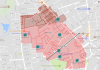
Figures released by the Housing Network show that, through March 31, more than 33 percent of callers were from Providence, with much of the balance of calls emanating from nearby urban communities such as Cranston, Pawtucket and Warwick.
“Generally, predatory lenders target women, seniors and the minority population,” said Vivian King, project manager for Don’t Borrow Trouble Rhode Island.
Through the hotline, King helps connect victims of predatory lending with HUD-certified counseling agencies, which may assist them in getting subsidies to free up more income for their mortgage or negotiate with a lender to secure alternative payment plans. Also, income-eligible victims may seek free legal counsel from Rhode Island Legal Service.
King pointed to a recent case study in which a Latino couple, neither of whom spoke very good English, was approved for sub-prime loans to purchase a $277,000 multi-family home. One loan was for $222,000 with an interest rate of 7.75 percent, and the second was for $55,000 at 10.62 percent.
After five months, the couple began having trouble affording their $2,500 monthly mortgage, and they sought help from HUD counselors. Indeed, the counselors learned that, though the wife earned less than $2,000 per month as a machine operator, the undisclosed lending agency wrote on the loan application that her monthly income was $5,950. Also, the agency misinformed the couple that they did not have a “traditional” credit history and would have to pay a higher interest rate. However, the wife had an “A” credit rating and should have been granted lower interest rates.
“There needs to be strong regulations that protect consumers,” said Aimee Olin, head organizer for R.I. Association of Community Organizations for Reform Now (ACORN).
The grassroots organization’s some 2,000 low- and moderate-income members are likely targets of predatory lending, and Olin has seen the drastic effects this problem has on their lives. “There are cases where consumers were told one thing and signed paperwork,” Olin said, “… and then they find out they were flat out lied to.”