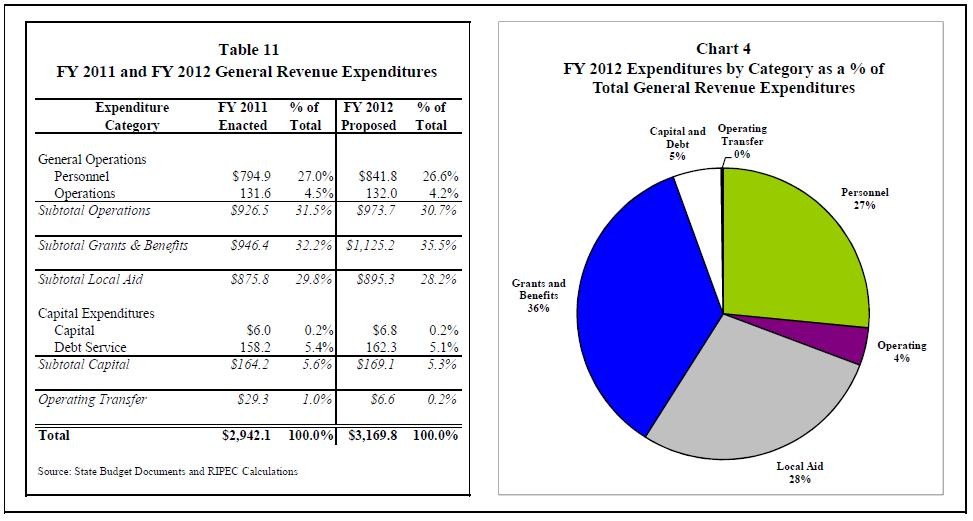
 CLICK HERE. / " title="RIPEC HOPES THAT Gov. Lincoln D. Chafee does not take the extra money flowing into state coffers as a result of the improving economy just to plug holes and leave projected spending alone for fiscal year 2012. For a larger version of this graphic, CLICK HERE. /"/>
PROVIDENCE – The Rhode Island Public Expenditure Council is urging state leaders to use a projected $65 million surplus this year for long-term budget fixes instead of using it to avoid spending cuts in the fiscal year 2012 budget.
In a 33-page assessment of Gov. Lincoln D. Chafee’s $7.66 billion budget proposal, the business-backed fiscal watchdog group said the state should dedicate the estimated surplus for the year ending June 30 to repay Rhode Island’s reserve fund, and not as an easy way to close the projected $300 million shortfall for 2012.
Beyond Cash Donations: How New Forms of Giving Are Transforming Not-for-Profit Accounting
Evolving Funding Landscape for Not-for-Profits Not-for-profit organizations are being asked to do more with less,…
Learn More
“The state should consider taking action on issues that will have long-term impact on the state’s expenditures, for example, pre-paying long-term obligations,” the group said in a statement Thursday. “These funds should not be used to fund the expansion of programs that will require ongoing support.”
Earlier this week,state fiscal advisers at the semi-annual Revenue Estimating Conference projected that the state would collect $119.66 million more than expected in revenue this fiscal year and in fiscal 2012 as the economy improves.
Based on that estimate, RIPEC placed the state’s expected surplus for this fiscal year at $65 million – not including a $22 million repayment to the state’ rainy day fund that has been deferred for several years, including in Chafee’s 2012 proposal.
Still, RIPEC projects budget deficits continue to grow steadily from $126 million – or 3.9 percent of revenue – in fiscal 2013 to $411.5 million – or 12 percent of revenue by 2016. And the group said those figures don’t include new pension funding requirements enacted by the state Retirement Board.
“The state must carefully consider the consequences of enacting another budget that does not fundamentally resolve the state’s underlying fiscal imbalance,” RIPEC said in its report.
The group commended the governor for addressing several “structural issues” in his budget plan and for his proposal to offer a “permanent and stable funding source for federal highway funding.”
“However, a number of concerns remain with regard to some of the proposals, such as whether the sales tax expansion will negatively impact business and residents, and whether current and proposed programs are prioritized based on the state’s policy agenda and their benefit to Rhode Islanders,” RIPEC said.
The General Assembly leadership already has said Chafee’s budget proposal won’t survive as proposed. His plan to expand and lower the sales tax has drawn heavy opposition from the business community, as have his idea to restructure the corporate minimum tax rate and enact combined tax reporting.
RIPEC said the General Assembly should ask the following questions as it considers Chafee’s budget proposal:
- Does the proposed budget address the underlying structural deficit?
- Are the primary budget drivers – Medicaid and personnel – addressed in a meaningful and systematic way?
- Does ongoing revenue support ongoing expenditures and are new initiatives funded in a manner that is sustainable?
- Are proposed revenue changes practical in the current economic environment?
- How does the budget promote economic development?
- Do the proposed tax changes undermine efforts to develop a consistent and predictable tax system?
- Are there unintended consequences that may arise from the proposed tax changes, specifically as they relate to the state’s ability to attract or retain business?
- Is the budget consistent with economic development goals as outlined by the state or does the budget promote a different set of priorities?
- Will the expenditure and revenue initiatives outlined in the budget promote job growth?
- Does the budget adequately address education and work force development needs?
- Will the proposed revenue and tax changes encourage business development, or will they serve to push business out of the State?
- Are there additional issues – such as regulatory changes – that should be considered in conjunction with the proposed tax and fee changes?
For more information, visit www.RIPEC.com.