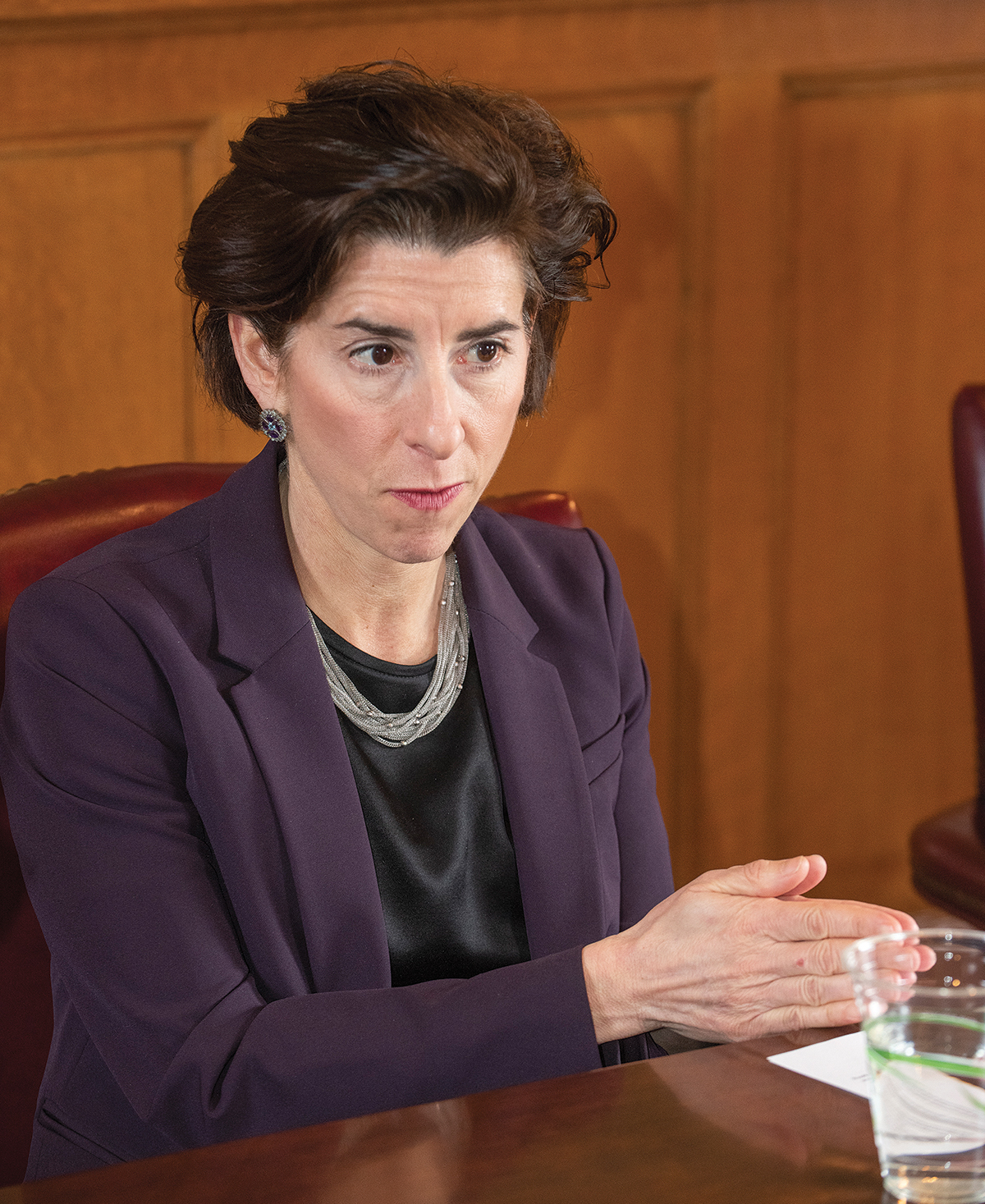
PROVIDENCE – The number of cases of COVID-19 identified in Rhode Island totaled 408 as of Monday afternoon, marking a case 114-case increase from Sunday, according to Gov. Gina M. Raimondo.
The state’s fourth COVID-19-related death was a man in his 70s who did not live in a nursing home, Rhode Island Health Director Nicole Alexander-Scott said.
Building a Strong Data Foundation in the Age of AI
Artificial intelligence (AI) has become a key priority in the boardroom and across management —…
Learn More
Health officials are looking into whether the man had other medical issues that may have been a factor in his death.
Raimondo said that there are 41 individuals with COVID-19 that are hospitalized in the state, an increase of six from the day prior.
“We are keeping our eye firmly on that hospitalization number. It’s climbing at a fast rate,” she said.
Raimondo added that the state is now expecting a fast rise in overall cases, noting that, “The next few weeks are going to be very difficult.”
About 500 Rhode Islanders are being tested daily for the coronavirus, but the governor said she hopes to increase that number to 1,000 by the middle of the week. Drive through testing sites to be run by the National Guard are in place at the University of Rhode Island, the Community College of Rhode Island and Rhode Island College. The sites, to open later this week, will test people who have been approved by the R.I. Department of Health.
“Do not show up without an appointment,” Raimondo said.
People with symptoms who want to be tested for COVID-19 should call their doctor, an urgent care center or the Department of Health, Alexander-Scott said.
The governor also addressed the state’s remote learning efforts in her daily COVID-19 briefing Monday, announcing that the state public schools will continue to operate digitally through all of April.
She said that she will revisit the decision at the end of April, saying it was possible to continue the practice through the month of May.
While Raimondo was full of praise for teachers, students and parents, she acknowledged that distance learning has its difficulties.
“There’s nothing easy about this,” she said, before adding that she is “thrilled” with progress so far.
In order to help reach kids with no internet access at home, cell phone service carriers Verizon, AT&T, Sprint and T Mobile have agreed to allow free access to a Wi-Fi hotspot for families with a cell phone and cell phone service, Raimondo announced.
“It’s not perfect, but it’s something,” she said.
In addition, internet provider Cox is offering families that qualify two free months of internet service, and service for $10 a month afterwards.
Families who miss the qualifying standards can take advantage of one free month of internet from Cox.
This story has been updated to include details regarding remote learning efforts, as well as details of COVID-19 cases in the state.