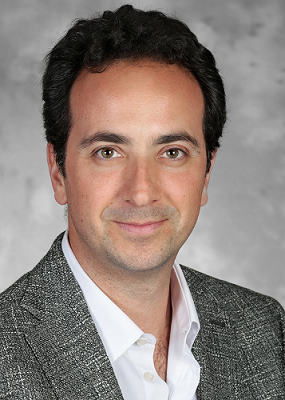
Dr. Luca Bartolini, director of the pediatric epilepsy program at Hasbro Children’s Hospital, was recently named editor of “Neurology: Clinical Practice.” His 10-year term begins next month. Bartolini is the second editor of the journal since it was founded in 2011. He has been involved with the publication since 2014, serving on the editorial board for three years and as a section editor for six years.
Bartolini is also an assistant professor of pediatrics, assistant professor of neurology and assistant professor of neurosurgery at the Warren Alpert Medical School of Brown University.
Beyond Cash Donations: How New Forms of Giving Are Transforming Not-for-Profit Accounting
Evolving Funding Landscape for Not-for-Profits Not-for-profit organizations are being asked to do more with less,…
Learn More
PBN: How does the role of editor work at “Neurology: Clinical Practice”? Will you be able to make decisions on the journal content?
BARTOLINI: The “Neurology: Clinical Practice” editor has final responsibility for all editorial content decisions in the journal, and, in conjunction with the editorial leadership team and neurology staff, developing and implementing the strategic vision, promoting the journal to the neurology community and overseeing the peer review process. NCP is one of the leading international journals for practicing neurologists worldwide.
PBN: You created a section in “Neurology: Clinical Practice” titled “Practice Current: An Interactive Exchange on Controversial Topics.” What are some controversial topics that have recently been included in the section, and what is the tone of the dialogue that’s generated?
BARTOLINI: “Practice Current” topics have ranged from treatment strategies for autoimmune encephalitis to the use of adjunctive tests for brain death determination. Subjects focus on areas where evidence is limited due to the lack of trials or where there is great variability in practices across different institutions and countries.
Our digital surveys have received sustained attention since 2015, averaging more than 1,000 responses from more than 60 countries, with approximately 50% of participants from outside the U.S. Results are presented on an interactive world map where readers can apply several filters. Results are also analyzed statistically and published as a research study.
PBN: Do you find that hands-on involvement in a medical journal broadens your professional horizons?
BARTOLINI: Absolutely. Being a scientific editor puts you at the very core of one of the most important processes for researchers and academics worldwide. Now more than ever, editors have a strong responsibility towards the process of science and how it affects practice.
Despite the large availability of online journals, an editor’s priority is to preserve the integrity of evidence-based content through a rigorous peer review system. This gives me a strong ideal to pursue, feeding my energy, creativity and passion for my job. It also affords a connection and collaboration with a variety of outstanding clinicians and academicians, allowing me to learn from them and become a better researcher and author.
PBN: How do journals such as “Neurology: Clinical Practice” relate to everyday patients who come to you for help with epilepsy and other neurological disorders?
BARTOLINI: NCP has a very strong connection to everyday practice and the community. Much of the content is meant to keep the clinician abreast of the latest recommendations for the management of common neurological conditions, such as epilepsy, stroke, migraine, headache, and movement disorders.
My goal as editor is to expand the journal’s scope, welcoming pediatric neurology articles; to incentivize submission of original clinical research, trials, systematic reviews and meta-analyses; develop novel digital resources; and most importantly fully embrace a culture of inclusion.
PBN: Hasbro Children’s Hospital is the only facility in southeastern New England to offer advanced brain wave monitoring for kids with types of epilepsy that don’t respond to medication. How does this treatment work and what is the success rate?
BARTOLINI: The pre-surgical evaluation for epilepsy is complex and multidisciplinary: step one is admitting the child to the Epilepsy Monitoring Unit at Hasbro Children’s and monitoring the brainwaves with EEG [electroencephalogram] electrodes placed on the scalp. The goal is to capture the seizures and determine the area of the brain where they originate.
Then, we discuss the case at the Pediatric Epilepsy Program Surgical Conference, where we also analyze the result of advanced brain imaging – such as MRIs, functional MRIs and PET [positron emission tomography] scans – and neuropsychological evaluations.
These all contribute to formulating a plan, which may include a second stage, known as invasive EEG monitoring, where the electrodes are placed deep into the brain (stereotactic EEG), or on the brain surface (subdural grids). Again, the goal is to capture seizures and determine their precise origin and if it is safe to remove that area.
The actual surgery follows: “open” resection, laser ablation (minimally invasive), or implantation of a responsive neurostimulation device (if there are multiple areas involved or if removal is not safe). Success is usually defined as seizure-freedom, which can be achieved in as many as 70[%] to 80% of selected cases. Even if not completely seizure-free, most patients after surgery usually experience a significant reduction in frequency and severity of the events.
Elizabeth Graham is a PBN contributing writer.