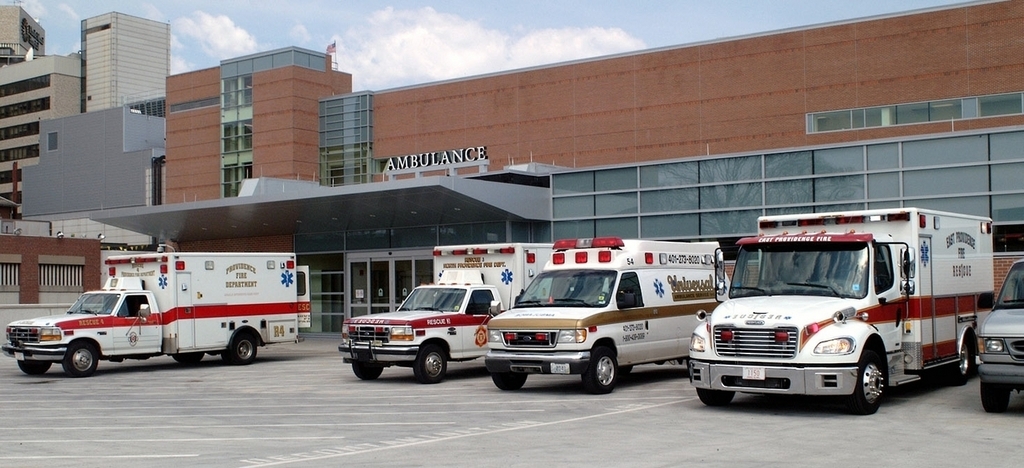
A new survey by the American Heart Association shows many EMS units don’t have the gear needed to detect the deadliest kind of heart attacks, undermining their ability to prepare patients for life-saving treatment as rapidly as possible.
The group surveyed 65 of the 73 eligible emergency medical services agencies in Rhode Island between October and December 2008, asking about staffing, funding, training and existing processes for handling patients who experience a heart attack.
The survey was part of the American Heart Association’s Mission: Lifeline initiative to improve the response and treatment of ST-elevation myocardial infarction, the most serious kind of heart attack, characterized by complete blockage of the coronary artery.
STEMI requires very quick treatment to reopen the artery and restore blood flow to the heart muscle. The preferred approach is primary percutaneous coronary intervention, which involves opening the artery with a small balloon and inserting a stent.
Because time is of the essence, identifying STEMI while the patient is enroute to the hospital and activating a cardiac catheterization lab prior to arrival is considered very valuable.
In its survey, the association asked EMS agencies whether they have 12-lead electrocardiogram (ECG) devices and how they use them:
“This survey delivers a comprehensive look at our state’s current preparedness to manage STEMI in the pre-hospital setting,” said Dr. Steven Fera, director of the South County Hospital Diagnostic Cardiac Catheterization Lab and president of the Rhode Island Board of Directors of the American Heart Association, in a news release. “While it identifies many weaknesses and disparities in our system of care, it also provides a tremendous opportunity to improve outcomes and save lives.”
Not all hospitals are equipped to do percutaneous coronary intervention; locally, only Rhode Island Hospital, The Miriam Hospital and Landmark Hospital can do it; Kent Hospital is slated to open a PCI center later this year.
The Rhode Island Ambulance Service Advisory Board recently approved a new protocol for STEMI patients that allows EMS agencies to take suspected STEMI patients directly to a PCI-capable hospital after conferring with a central control unit; all must comply by Sept. 1.
For more information on Mission: Lifeline, visit www.americanheart.org/missionlifeline.
Seifert Systems Invests in Energy Efficiency to Strengthen Operations
For manufacturers, energy is more than just another operating expense. It plays a critical role…
Learn More