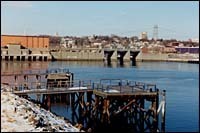
been years since ship channel
was dredged.
Though Rhode Island’s three-decade lapse in dredging its harbors, marinas, and salt marshes is often lumped together for the sake of discussion, there is a fundamental difference between each area -the material coming out of the water.
The term dredge material refers to “anything removed from an area.” But according to University of Rhode Island Geologist Jon Boothroyd the broad definition is causing confusion in the public arena.
Beyond Cash Donations: How New Forms of Giving Are Transforming Not-for-Profit Accounting
Evolving Funding Landscape for Not-for-Profits Not-for-profit organizations are being asked to do more with less,…
Learn More
“Dredge material is just a term applied to what is removed, anything picked up by a dredge, ” he said. “People often say it like it’s one word, with one definition and it’s not. It’s a complex issue.”
Sheldon Pratt, a marine researcher at URI’s Bay Campus has been working on the issue of dredging since 1970, when the Providence River was last dredged, and said there are more terms added every year.
“There is all sorts of language to describe it,” he said. “If you’re against it you call it sludge. It always used to be called dredge spoil, and then for better communication it was renamed dredge material.” But no matter what you call it, experts agree it comes with a negative connotation — something that isn’t always accurate.
“It truly is a complex issue,” Boothroyd said. “There is nothing spoiled about some of this dredge spoil. For many of the state’s marinas and salt marshes it’s plain old beach sand.”
And, according to Pratt, the negative connotation goes far beyond what is found at the bottom of local water — and can even extend to what appears on your supermarket shelves.
“Fisherman are opposed to dumping of this material in the bay because they believe it causes a loss of confidence in buyers, both locally and nationally,” he said. “They contend they can’t sell their products because people aren’t going to take the chance.”
What’s ironic, scientists agree, is that most plants and animals can live in dredge material — even that which is slightly contaminated. For example, dredge material from the last Providence River project has become a haven for lobsters and lobster fishermen, Pratt said.
“Oftentimes in contaminated sediment, animal and plant life thrive,” Boothroyd said. “It’s just dangerous to humans.”
Though the contaminants vary from place to place, without specific analysis scientists are reluctant to say what contaminants might exist in any specific dredge site. Nonetheless, they mention sewage, PCBs, various metallic substances related to jewelry industry processes and related acids as potential pollutants.
Still, scientists and environmentalists alike are reluctant to re-use that material that is even slightly contaminated. The United States Environmental Protection Agency as well as state agencies like the Coastal Resource Management Council, set the standards for what is and what is not contaminated.
“It’s based on a technical review, that includes constant testing on the material” Boothroyd said.
Malcolm Spalding, chair of the Ocean Engineering Department at URI said when it comes to reusing clean material the possibilities are almost endless.
“The clean stuff has beneficial uses,” he said. “You can use it for beach nourishment, create an artificial island for bird habitats, or use it as fill to cap material in a contaminated site.”
According to Spalding there can also be a meeting place between the good and the bad.
“Typically you look for some beneficial use,” he said. “You see how much nasty stuff there is and try to isolate that from the environment while at the same time finding a use for the good stuff.”
The problem with any kind of dredging, all agree, is the cost and, according to Spalding, the price tag can deter people from looking at all the options.
“The alternatives are not necessarily easy to come by,” he said. “It comes down to weighing the economic price and the potential ecological price.”