Brown University’s announcement about a month ago that the National Science Foundation had awarded a $15.5 million grant to create the Institute for Computational and Experimental Research in Mathematics was the result of a lot of hard work by the school.
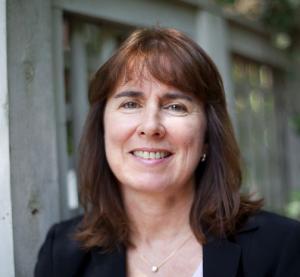
ICERM’s newly named director, Jill Pipher, took the time to talk about the academia-industry partnerships that helped clinch the deal, as well as the resources that Brown has to support the center.
She also laid out a very ambitious agenda, one that will put Brown on the international map for cutting edge research into the intersection of mathematics and the computer.
PBN: Why do you think the National Science Foundation chose Brown to locate its eighth advanced mathematics institute?
Seifert Systems Invests in Energy Efficiency to Strengthen Operations
For manufacturers, energy is more than just another operating expense. It plays a critical role…
Learn More
PIPHER: The NSF Division of Mathematical Sciences recommendation for this award was made available to our team of principal investigators on the grant. This gave us some insight into the final approval of this award, and I believe that the following were key ingredients.
First, we had a compelling proposal with a timely theme, namely the interaction of mathematics and the computer. Our vision for this institute was supported by partnerships with three major corporations: Google, IBM, and Microsoft. Many distinguished scientists and scholars had agreed to serve on our scientific and governing boards should this proposal be successful. Several national labs offered letters of support along with ideas for future collaboration. In other words, we demonstrated to the NSF that there was a great deal of interest in this potential institute from many different constituents.
Second, Brown was able to support this proposal in several fundamental ways:
- The strength and international reputation of its mathematics and applied mathematics departments;
- The commitment of the team of principal investigators (the PIs on the proposal were: Jeff Brock, Jan Hesthaven, Jeff Hoffstein, Jill Pipher and Bjorn Sandstede) to the scientific and administrative functioning of the institute;
- Brown’s internal resources, such as the site and the IT infrastructure, which it committed to this project;
- The broad support of Brown’s administrators and science faculty during the competitive process. We were also grateful to receive letters of support for the proposal from Gov. Donald L. Carcieri and U.S. Sen. Jack Reed.
PBN: Was Brown having its own supercomputer a prerequisite for getting the NSF grant to fund the institute?
PIPHER: There were no stated prerequisites of this sort from NSF. However, it is certainly the case that Brown’s collective resources, which support the institute mission, played a significant role in our ability to compete successfully for this award.
PBN: When the news came out about the institute, your team said that you were already developing partnerships with Google, IBM and Microsoft. Going forward, do you see developing more such partnerships with big information technology companies only for solving big challenges, or might we see the institute making connections with smaller, more focused companies?
PIPHER: We see opportunities for collaboration with various smaller, more focused, companies and we are already moving to develop further industrial relationships along these lines.
PBN: Do you expect the institute to be not only a national magnate for mathematics scholars but one that attracts researchers from around the globe? Will those academics connect with Brown students at any point?
PIPHER: ICERM’s scientific programs and conferences will attract scholars from all over the world. We already have more than a dozen international scholars committed to spending a semester or more in Providence during our inaugural programs of the academic year 2011-2012. Many more international visitors will come to Providence for short programs and week-long conferences. When the institute is fully operational, there will be hundreds of visitors coming to Providence for periods ranging from a week to several months, some of them from abroad. All of these visitors will be staying in Providence hotels, dining in Providence restaurants, and so forth, so we’ll notice a positive economic impact locally.
All of the mathematicians, including the international visitors, will interact with students and junior researchers at the institute. This includes, but is not limited to, students at Brown. ICERM will be a regional resource for students and will also be able to provide some travel support for students visiting from non-local universities.
PBN: The institute has said that it expects to train future scientists. How broad an effort with that be? Will you focus on Brown undergraduate and graduate students or will there be a continuing education component to it as well?
PIPHER: The training of future scientists at ICERM will take place in several ways. During the semester scientific programs, graduate students will participate in learning seminars and research conferences. The senior scientists in these programs will serve as their mentors and advisors.
Starting in summer 2012, ICERM will host undergraduate research programs that will draw applicants from all over the United States.
In the summer of 2013, ICERM will host the first of its “Post-doc Idea Lab,” an intensive one-week training and research experience for junior researchers, which will feature interaction with scientists from industry and national labs.
Finally, ICERM’s Education Advisory Board is charged with exploring and developing the ways in which this institute can have an impact on the national need in K-12 mathematics education.