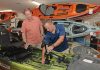
Newport-based marine scientific organization INSPIRE Environmental just hired Senior Field and Innovation Manager Scott Olson to strengthen its seafloor-habitat monitoring expertise. This monitoring is used for the emerging offshore energy industry.
With extensive experience with underwater technology such as remotely operated vehicles, or ROVs, Olson’s hiring is a step toward ramping up INSPIRE’s Sediment Profile Imaging camera technology, which can collect better images, with more data.
Selling Luxury Real Estate Requires More Than Exposure
By Emilio DiSpirito IV License Partner | Private Office Advisor Engel & Völkers Oceanside www.DiSpiritoteam.com…
Learn More
PBN: With your arrival at INSPIRE, how will the data products be improved and what kinds of new data products are going to be developed?
OLSON: My job at INSPIRE consists of two roles: managing the operations and the equipment used at sea and developing new data collection capabilities to meet our customers’ needs. My 15 years of offshore experience will contribute to the increase of the efficiency and the safety of our at-sea operations.
The other 15 years of experience that I have is in the engineering and project management of new offshore systems. This experience will contribute to the development of field-ready systems that are configured from existing state-of-the-art components.
Some of the new work that we are doing includes the ability to monitor new installations for marine growth over time and the effects of the installations on the surrounding complex habitat.
PBN: Using a picture to explain sediment profile imaging, INSPIRE’s website says that its strength lies in its ability to translate well to a nonscientific audience. Why is this important?
OLSON: Using visual images to present evidence cuts across all education levels and language barriers that the audience may possess. This is important when the viewing audience has a variety of interests and levels of understanding. You can always reach a broader audience with pictures rather than words.
PBN: What are the most important elements of maintaining and deploying underwater systems?
OLSON: The most important element is the people and the most important characteristic that an offshore technician can have is being innovative. The resources at hand may not always be perfectly suited to solving a problem, but with imagination, creativity and a can-do attitude, almost any problem can be solved.
The next ingredient is fortitude, because successfully putting electronics in saltwater goes against a fundamental law of nature. To win that battle every day – day after day – is not for the faint of heart. Beyond that, of course, is good engineering and good seamanship.
PBN: Bringing you onboard adds an experienced marine technology expert to the INSPIRE team to address the potential impacts of seafloor construction on marine ecosystems. Why has INSPIRE decided to expand its expertise in data collection at this time?
OLSON: The expansion of offshore structures like wind farms creates artificial reefs off our coast and has added a growing need to rapidly assess the environmental changes associated with these structures. We need new tools and improved image resolution to determine how these structures might alter the surrounding habitat. For example, we are working to develop systems that can capture a 3D image of the underwater parts of a wind turbine, identify the animals that grow on the surface and determine how they affect the surrounding environment.
PBN: What was the most interesting experience you have had exploring the ocean?
OLSON: Piloting the Johnson Sea Link at 2,000 feet deep in the Gulf of Mexico was always a treat because of the dynamic geology of the salt domes. An 8-inch-deep punch core would release gobs of crude oil and the ground would split open in new places every day, exposing the frozen methane.
One of my fellow pilots discovered a new species of worm that was living in burrows in the ice. We would light chunks of the frozen methane on fire while holding them in our hands on the back deck of the ship. There were also pools of brine water several acres in size that we could set the submarine down on because the brine is nine times denser than seawater.
Susan Shalhoub is a PBN contributing writer.