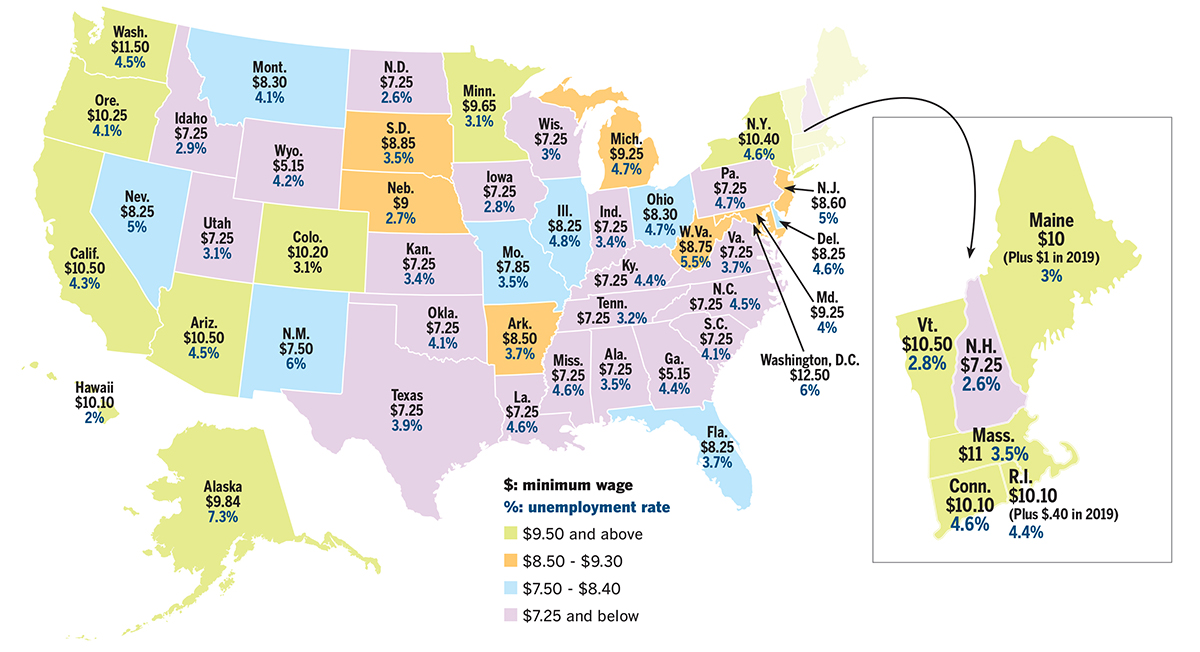
One of the primary arguments against raising the minimum wage is that employment will drop, especially among young, entry-level workers. A cursory look at the numbers does not support that thesis, since the state with the lowest unemployment rate at the end of 2017 was Hawaii, at 2 percent, according to the U.S. Bureau of
Already a Subscriber? Log in
To Continue Reading This Article
Become a Providence Business News subscriber and get immediate access to all of our premier content and much more.Learn More and Become a Subscriber
- Critical RI business news and analysis updated daily.
- 1 year of print (26 issues).
- Unlimited access to all subscriber only content on our website, on any device.
- Free email alerts.
- Annual Book of Lists Print Edition.
- All special issues produced during subscription term.
Click Here to purchase a paywall bypass link for this article
PBN Branded Content
ISO 9001:2026: A Practical Opportunity to Build for What’s Next
For Rhode Island manufacturers, ISO 9001 has been much more than a certificate on the…
Learn More