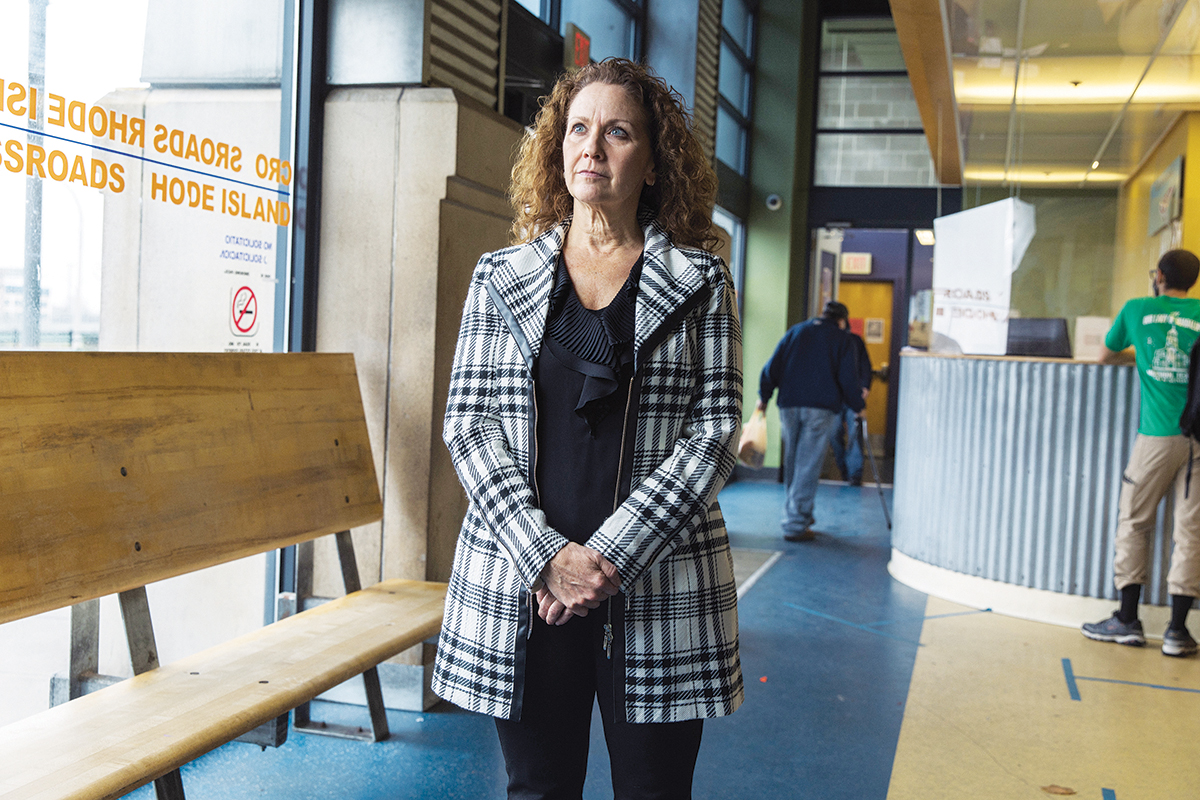
Karen A. Santilli | CEO and president, Crossroads Rhode Island
What have been the challenges faced by Crossroads Rhode Island during the pandemic and how have they affected your organization? The pandemic has challenged our operations and threatened the population we serve in ways that would have seemed inconceivable just one year ago. In March, it quickly became clear that we would need significant resources to continue providing our critical services safely and without interruption. Unfortunately, that required resources that we just did not have at the time, some of which we still don’t have. We needed funding to adapt our facilities and space to relocate the beds that we had to remove from our shelters for social distancing.
What has been your response to those challenges? Reducing the number of beds in our shelters for social distancing and finding new space to relocate those beds was a real challenge. As a short-term solution, we partnered with the state to set up temporary housing in a hotel that would have otherwise been closed due to low demand. Thanks to COVID-19 relief funding awarded through [R.I. Housing and Mortgage Finance Corp.], we were also recently able to add capacity for 30 more beds at a temporary emergency shelter … in Providence. Although COVID-19 allowed us to cut through some of the red tape, opening that emergency shelter has taken months and required thousands of hours of work. Once the need for emergency shelter beds subsides, we plan to redevelop that property into permanent, supportive housing.
What’s your plan for recovery once the coronavirus crisis has passed? In anticipation of increased need, we plan on redoubling our focus on building more permanent, affordable and supportive housing throughout the state. This will require continued funding from state and federal leaders, as well as the continued commitment from our many community partners and the generosity of the donors that sustain our work.
What are the challenges getting to that recovery? Sadly, we expect that many people in Rhode Island will continue to struggle with economic and health-related fallout from the virus, even [now that a] vaccine [is] available. As we saw with the Great Recession, those hardest-hit by these world-changing events are often the slowest to recover. Additionally, the housing market was also facing significant capacity issues prior to the pandemic. The cost of owning and renting a home will only continue to increase unless we add additional units that people can afford. It’s pretty clear that we are facing an uphill battle.