
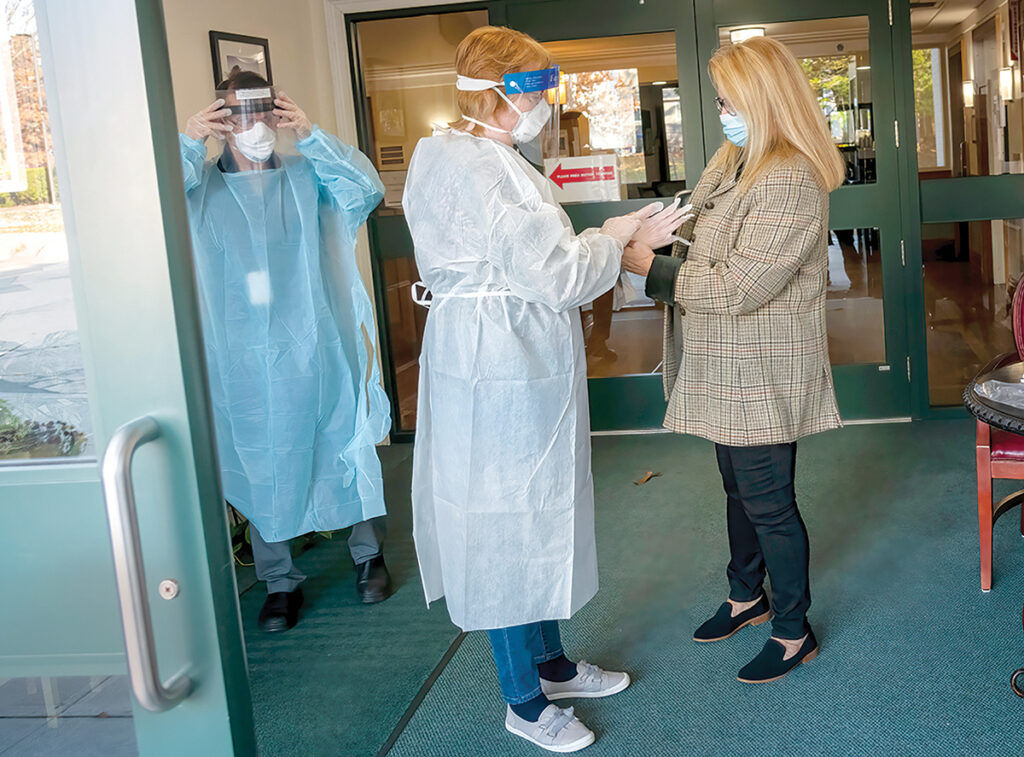
PROVIDENCE – Amid an ongoing staffing shortage that’s been fueled by the pandemic, Rhode Island nursing homes say they would need to hire 475 more employees within the next two weeks in order to meet a Jan. 1 mandate from the state.
The Rhode Island Health Care Association and LeadingAge Rhode Island on Monday said they are calling on state officials to put a one-year pause on the enactment of new minimum staffing standards at long-term care facilities throughout the state. The two groups said it would be “impossible to accomplish” the amount of hiring needed to meet the mandate before the new year.
Your Business Has Gone Global. Has Your Insurance?
A decade ago, “doing business internationally” was mostly a large-company concern. Today, a manufacturer in…
Learn More
“Very few, if any, nursing homes will be compliant with the new law while maintaining their present resident populations,” according to a joint statement from the Rhode Island Health Care Association and LeadingAge Rhode Island.
The minimum staffing policy, which was signed into law by Gov. Daniel J. McKee in late May, requires each nursing homes to provide at least 3.58 hours of resident care work per day for each patient starting on Jan. 1, before that figure jumps to 3.81 hours of resident care per day in 2023.
The requirements are coming at a time when nursing homes and the health care industry more broadly have been plagued by staffing problems, as a result of worker burnout and other factors amid the COVID-19 pandemic, such as a lack of affordable child care, vaccine mandates, “bureaucratic red tape” for the licensing new workers and a chronic lack of funding to hire new workers.
Both the Rhode Island Health Care Association and LeadingAge Rhode Island, which together represent 75 of Rhode Island’s 80 nursing homes, said there are now 1,920 job openings at nursing homes throughout the state, equating to an 18.3% vacancy rate. Rhode Island nursing homes currently employ 10,495 people, they said.
The two groups said 71% of long-term care facilities in Rhode Island are now limiting admissions due to staffing problems, amounting to 23 nursing homes not accepting new patients. Four nursing homes have closed since the start of the pandemic, making the staffing standards even more problematic, limiting the options for families seeking long-term care, the groups said.
“The implementation of these new requirements simply cannot be met in this environment,” said Jim Nyberg, executive director of LeadingAge Rhode Island. “This crisis does not only affect operators of our facilities, but their local communities as well. With staff shortages being insurmountable, the threat of looming fines, payment freezes, admission bans and potential closures, Rhode Island’s most frail residents will have no place to go if these requirements are put in place.”
Nyberg said the nursing home industry needs more support from the state government before the mandate can be safely implemented.
“Without proper funding, adequate training and available CNA testing sites in the state, the workforce challenges facing the industry will only get worse, not better in the short-term,” he said. “A delay of the requirements is a far more prudent policy for the state to pursue at this time.”
John E. Gage, president of the Rhode Island Health Care Association, said “drastic cuts” to nursing home reimbursement from the federal government make the mandate “impossible” for the industry. Gage said nursing homes want to hire more staff to fill vacancies, but “applicants simply do not currently exist.” More nursing homes may be forced to limit admissions if they don’t get additional government support, he said.
“This problem will only grow if the homes are forced to reduce their populations due to this law,” Gage said. “We need a one-year moratorium of this law to assess the needed structural changes to assure long-term success. This would include improved workforce training efforts, appropriate and much needed adjustments to the Medicaid reimbursement system, and physical upgrades to our homes to meet future pandemic challenges.”
A spokesman for McKee did not immediately respond to a request for comment.
Marc Larocque is a PBN staff writer. Contact him at Larocque@PBN.com.












NO! We already know that these facilities can turn into the perfect incubator for COVID and attack our most vulnerable. I say it’s better to work with reduced staff and work to replace those who will be leaving than continue to have the unvaccinated walking around nursing homes like a ticking time bomb.