PROVIDENCE – The Rhode Island Public Expenditure Council today called on Gov. Donald L. Carcieri and legislative leaders to start laying the groundwork for balancing the state budget when federal stimulus funds run out midway through 2011.
In a 34-page report released this morning, the business-backed fiscal watchdog group said the $7.6 billion spending plan that Gov. Donald L. Carcieri has proposed for the fiscal year that starts July 1 would still leave the state facing major long-term structural deficits over the next decade.
Seifert Systems Invests in Energy Efficiency to Strengthen Operations
For manufacturers, energy is more than just another operating expense. It plays a critical role…
Learn More
“Unless there is substantial growth in income and wealth in this state over the next few years – something we think is unlikely – the state can no longer sustain the level of government services and spending that has developed over the last few decades,” RIPEC said in a news release that accompanied the report.
“Moreover, given the fact that Rhode Island is already one of the most heavily taxed states in the country and not competitive with our closest neighbors, there is no way we can – or should – address this deficit with new or increased taxes,” the statement continued.
The State Budget Office projects a $155.7 million deficit in the 2011 fiscal year, the first year after the federal aid from the stimulus package runs out, and a $482.3 million deficit in the 2014 fiscal year, according to RIPEC. In percentage terms, the state’s budget deficit is forecast to grow from 11.7 percent of general revenue in 2011-12 to 14.5 percent in 2013-14.
The report also notes that those projections are actually lower than the ones predicted by budget analysts in the House Fiscal Office.
“The backdrop of an economy in a recession, high unemployment, a housing market collapse and diminishing state revenues necessitates a different approach for the annual budget process,” RIPEC said.
The organization recommends that Rhode Island leaders adopt a two-step approach to dealing with the state’s chronic budget shortfalls, first by developing a short-term plan for balancing the budget over the next two years and then by using the process of developing the 2011-12 budget to create broad guidelines for a sustainable level of future state spending.
“It is imperative that the state be ready to meet the fiscal challenges of FY 2012 by developing a plan to respond to increased demand and reduced resources, without relying on one-time revenues or broad-based tax increases,” RIPEC declared.
However, the organization did recommend that the state consider increasing the fees it charges residents for using state services.
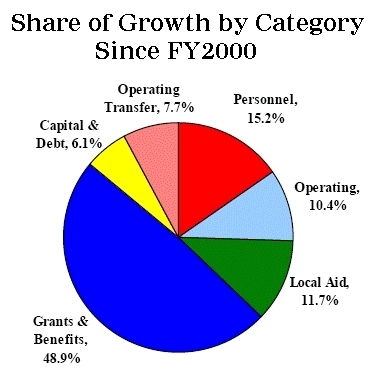
The report recommends major changes in three spending categories: local aid; state operations, particularly personnel; and grants and benefits, mostly through changes made under the state’s waiver of federal Medicaid rules.
In its analysis of Carcieri’s 2009-10 budget, RIPEC noted that the governor’s proposal to spend $3.08 billion out of the state’s general revenue represents a 6 percent reduction from the 2008-09 spending plan that was adopted last year, the first time since 1992-93 that general revenue spending decreased.
For more information on the Rhode Island Public Expenditure Council, visit RIPEC.com.