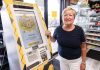
Desiree and Tom Jarosz brought their children to Roger Williams Park Zoo in Providence for the first time earlier this summer. The Springfield, Mass., residents thought it would be a good way for their kids to learn something during summer vacation.
Matthew, a 10th-grader, spoke about what he saw at the frog exhibit and his younger brother, Will, a fourth-grader, liked that he could see some of the animals in their natural habitat. Both said they learned a lot.
Rhode Island's Market Has Changed. Developers, Builders, Investors and Sellers Must Change With It.
By Emilio DiSpirito IV License Partner | Engel & Völkers Oceanside Leader | The DiSpirito…
Learn More
Desiree found the zoo on the Internet and both parents agreed that it was very accessible, about an hour away.
The Jaroszs are not unlike many of the zoo’s 650,000 annual visitors (half from out of state), said Jack Mulvena, director of the zoo and executive director of the Rhode Island Zoological Society, the nonprofit group charged with increasing awareness and support for the zoo.
“It is important to feel like you are getting a quality experience and can learn something,” said Mulvena.
The influx of visitors has made the zoo the single-largest tourism attraction in the state, said Mulvena, who has been zoo director for 12 years.
Mulvena stressed the convenient location and affordability for a family and said all these factors are part of the entire zoo trip.
“It’s important to make sure our members and visitors have a great experience,” he said.
The zoo offers a membership program to families for $55 a year that includes unlimited membership to the park, discounts on park attractions and invitations to member-only events.
There are currently more than 21,000 registered members.
First opened in 1872, Roger Williams Park became the third official zoo in the United States. In 1890, the zoo included, among others, a tiger, leopard and a pair of lions. The early 1960s saw the establishment of the Zoological Society for financial and managerial support of the zoo.
The zoo received regional and national recognition when it joined the more than 200 zoos (one in New England) accredited by the American Zoological Society in 1986, an important distinction to receive funding for endangered animals.
Today, a visitor can experience an African safari complete with cheetah, zebra and ostrich; a North American exhibit with seals, fox and a wetlands display; and a demonstration that brings visitors through Marco Polo’s Asian journey. The zoo boasts a population of more than 1,500 animals in some 157 species.
The zoo is projecting about $2.6 million in revenue from ticket sales this year. Twenty-five percent of the park’s $8 million budget comes from the city of Providence. The remainder is raised through sponsorships from area businesses like Dunkin’ Donuts, Rhode Island Monthly and NBC-10; and fund-raising events like the Zoobilee, jack-o’-lantern events and the dinosaur exhibit.
Earlier this month, Providence Mayor David N. Cicilline announced that the city and the Zoological Society revised an agreement to allow the Society greater flexibility in generating income and to save taxpayers. The plan calls for each entity to provide $160,000 a year for major building improvements while the city will pay utilities, provide animal-keeper positions and assumes ownership of most animals. The Society will be responsible for strategic planning and overall zoo management.
The city will save $1.6 million over the life of the 10-year contract because six zoo positions formerly funded by the city will be paid by the Society. The city will still help defray some of the cost of the salaries, benefits and taxes for the positions, according to the agreement.
The city will also help the Society in obtaining bond proceeds for capital improvements at the zoo, per the new arrangement.
The partnership is a win-win for both sides, according to Mulvena.
This is the first time an agreement “really lays out, in a formal fashion, exactly the role of the Society and the city,” he said. “The zoo and Society are in position to enlist support of the community” and the agreement provides a “foundation to move forward and improve.”
The zoo is in the exploratory stages of an effort to raise funds through a capital campaign and a general bond issue through the city of Providence. The collaboration between the city and zoo is important to continue improvements, said Mulvena.
The plan is to invest between $25 million and $30 million into new exhibits and renovation at the park. The first $6 million was secured through a combination of an approved bond issue in November 2004 ($4 million) and private donations ($2 million) to enhance the giraffe and elephant displays. Additional plans call for a revamped North American section with the return of polar bears, a new veterinarian hospital and a revamped entrance complex with additional parking, according to Mulvena.
“It is an investment that rejuvenates an already great zoo and positions us for the next 10 years,” he said. “We want New England’s best zoo to be in Rhode Island.”