
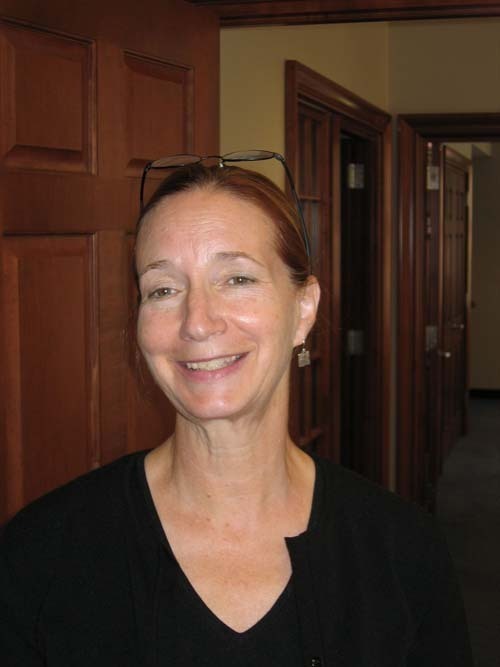
Judith Swift has held a lifelong passion to advance the general understanding of science. A professor at the University of Rhode Island for almost 40 years, Swift was appointed director of the university’s Coastal Institute last summer.
The institute brings together environmental organizations, researchers, professors and students from a spectrum of departments to conduct studies and run programs to further the understanding of the relationship between human activity and the condition of the coastal environment and its resources.
The center operates from both the South Kingstown campus and an office at the university’s Graduate School of Oceanography in Narragansett.
PBN: What is the mission of the Coastal Institute?
SWIFT: The major issue is to develop knowledge and advance solutions to environmental problems in coastal ecosystems. Essentially, the idea is to increase understanding of relationships between human activity and the condition of the coastal environment and its resources. In order to accomplish that, we work in partnership with local, state, federal, international agencies, etc., to look at the human use and development of coastal environments. The geographic scope of the institute is very broadly defined so it includes continental shelves and inland or partially enclosed seas, estuaries, bays, lagoons, beaches and aquatic systems.
I think a lot of Rhode Islanders think quahogs stop at the border. But … most of Rhode Island’s watershed is in Massachusetts. So, one of the things that the Coastal Institute does is to look at economic, ethical [and] cultural dimensions of coastal environments and also of governance.
We also strive to be a neutral environment in which the issues can be discussed and debated.
Beyond Cash Donations: How New Forms of Giving Are Transforming Not-for-Profit Accounting
Evolving Funding Landscape for Not-for-Profits Not-for-profit organizations are being asked to do more with less,…
Learn More
PBN: What are some of the programs you oversee?
The other thing that we do is serve as the host institution for what’s called the Cooperative Ecosystems Studies Units. We’re the North Atlantic Coast CESU. … That is a group of federal and academic partners that allows us to work on issues of scientific concern.
PBN: Can you tell us a little about IGERT?
SWIFT: It is a National Science Foundation grant. Essentially, it’s Integrated Graduated Education Research Traineeships. From that we have 24 Ph.D. students who are working to learn how to work in a very interdisciplinary manner through the curriculum we offer. It’s a two-year curriculum they go through … and they also have a fellowship for two years through the National Science Foundation. It’s a very prestigious thing to get an IGERT. They give you about $3 million to support these Ph.D. students.
PBN: What motivates you as director?
SWIFT: I’m very concerned about the low rate of scientific literacy in this country. I think it’s what’s responsible for the continued questioning of the legitimacy of global climate change as well as global environmental change as a whole.
The other thing that I’m concerned about is that we have one of the best educational systems, in terms of higher education, and we have an awful lot of students who are leaving university environments who may be very skilled at one thing or another, but they still are not scientifically literate. That’s a major failure, from my point of view, of the university system.
What we’re doing is we’re sending people out as specific members of the community who have a responsibility as citizens to vote, to make judgments and do all these things and they don’t have the tools to make those decisions. … One of the things I think is so important here is to make sure we give our students the best possible opportunity to really understand some of these highly complex issues.
SWIFT: One of my goals is to provide internships for experiential learning for students. We already have a number that are very effective, like the coastal fellows program, the energy fellows program and so on. But I want the Coastal Institute to be deeply engaged in providing internships for students who work here at the Bay Campus with some of the extraordinary scientists we have at the Graduate School of Oceanography and at the College of the Environment and Life Sciences. Students who are in the new Harrington School of Communication, people who are in media, people who are working in journalism, it’s incredibly important.
The other thing I’m really interested in is scholars-in-residence. People in the arts and humanities who would like the opportunity to bring the value [and perspective] of the arts and humanities to bear on these complex scientific issues would come and spend some time – that would be supported time – at either the Graduate School of Oceanography or at the College of the Environment and Life Sciences. So that they could work on issues of global environmental change from their disciplinary perspective.
The other piece is to work with the other programs here that work on the education and outreach. They would be the office of Marine Programs that works on K-12 issues … Rhode Island Sea Grant and the Coastal Resources Center, which does an enormous amount of work on the international front, and to partner as much as possible. •
INTERVIEW
Judith Swift
POSITION: irector of the University of Rhode Island Coastal Institute
BACKGROUND: Swift has been a professor at the University of Rhode Island since 1972 and worked in the theater and communication-studies departments, as well as in administrative positions. She has also consulted corporate executives, political candidates and government officials about communication strategies.
EDUCATION: B.A. in English, 1968, URI; M.A. in English, 1971, URI
FIRST JOB: Helping keep records for the family timber company at age 11
RESIDENCE: South Kingstown
AGE: 5












Dr. Swift says: “I’m very concerned about the low rate of scientific literacy in this country. I think it’s what’s responsible for the continued questioning of the legitimacy of global climate change as well as global environmental change as a whole.” I don’t think scientific literacy is the problem. Conflicting information is the issue. No one disagrees that there is climate change. Where they disagree is how it came about. I would think that all of the scientists mentioned on the isthereglobalcooling.com website are scientifically literate.