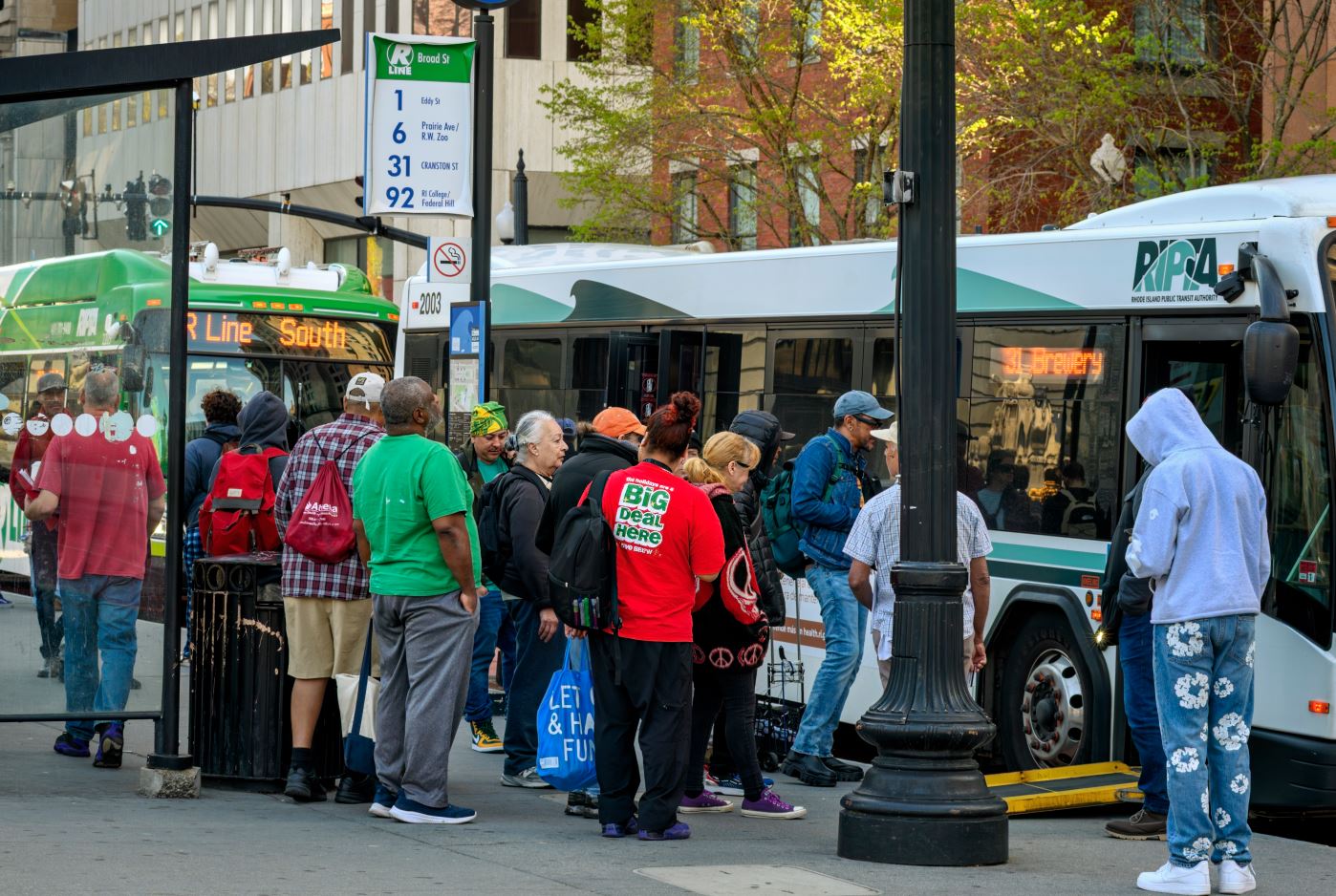
The proposed wide-ranging cuts to the R.I. Public Transit Authority's bus routes to close a $10 million budget shortfall sparked hours of public comment and dozens of emails to the agency in recent weeks, but there was one voice largely missing: the business community.
The cuts would affect 58 of RIPTA's 67 service routes, which led crowds of residents to attend a series of public hearings in which many speakers complained that the reductions of service would make it difficult or impossible to get to work and school, among other things.
According to RIPTA data, about 40% of all bus rides are work-related, and tens of thousands of high school and college students use the bus service each year.
The absence of businesses in the public discussion didn't go unnoticed.
“I think the employer community needs to raise the alarm with our elected officials, from the governor to the General Assembly,” said Patrick Crowley, president of the Rhode Island AFL-CIO and RIPTA board secretary. “We need the business community’s voice to be heard loud and clear.
“This isn’t just about cutting services,” he said. “This is about taking away an important tool in Rhode Island’s economic development plan, and the business community has an interest in making sure that workers can get to their jobs, just like workers have an interest in that. And we need to have a common voice in doing whatever we can to disrupt these cuts.”
But so far, Crowley has been disappointed.
“I’ve had conversations with certain business leaders about how important RIPTA is, and I think people are starting to be aware of what we’re facing,” said Crowley. "But we need more business leaders to speak up, and we need them to speak up now.”
In a statement to Providence Business News, Greater Providence Chamber of Commerce President Laurie White said RIPTA services are “an essential part of our community and economy,” and that "many employers depend on public transit to ensure their workers can get to their jobs.
“We encourage state leaders to continue working with RIPTA and all stakeholders to meet the needs of the tens of thousands of Rhode Islanders who use public transit daily,” White said.
A spokesperson for White did not immediately respond to a follow-up question on whether the business community has risen to the call.
Another half dozen employers either didn't respond to a request for comment or offered statements that didn't address questions about the lack of input from the business community.
Observers have long tied RIPTA’s financial hardships to chronic underfunding. The agency initially faced a $32.6 million deficit this fiscal year when Gov. Daniel J. McKee released his state budget proposal in January. The budget passed by the General Assembly closed that gap by $15 million and RIPTA squeezed the shortfall down to $10 million through savings and federal funding.
The proposed reductions included the elimination of entire routes or segments in some lines, and a reduction of service frequency in others.
And an independent efficiency study reinforced a grim outlook: The RIPTA “provides an essential service for the region,” said the report authors WSP USA Inc. and Foursquare Integrated Transportation Planning Inc. But despite performing well compared with peer agencies, the study concluded, RIPTA has no immediate access to cost-saving measures.
Asked if the effects on businesses were considered when drawing up the proposed cuts, RIPTA spokesperson Cristy Raposa said, "Given the magnitude of RIPTA’s budget deficit, the agency prioritized preserving service where it’s needed most, including routes that connect riders to employment opportunities. Decisions were guided by findings from the recent efficiency study, which identified lower-performing and more costly-to-operate routes. While developing the service reduction plan, those routes were impacted most. Nevertheless, RIPTA recognizes that these services are still utilized and provide real value and important connections to the communities they serve.
On Aug. 7, the RIPTA board postponed a vote on approving the cuts after McKee sent a letter to the agency asking it to draft a better plan to close the $10 million shortfall.
“From my point of view, we’re being asked to cut services, but we haven’t been given a scalpel as a tool,” Crowley said before the vote. “We’ve been given a sledgehammer. And that’s not the right tool to fix the problems that are identified in RIPTA’s efficiency study.”
Dylan Giles, operations manager for the Providence Streets Coalition and the Save RIPTA campaign, also called business leaders’ involvement "one of the missing elements of the public transit advocacy sphere right now.”
Employees at Amica Mutual Insurance Co., for example – one of the state's largest employers – will have their bus access to the company's Lincoln campus cut off with the loss of Route 75, Giles says.
Amica declined to comment on the number of employees who use RIPTA and the effect of the cuts.
Giles also notes that Hasbro, which is considering relocating its headquarters to Boston, has highlighted public transportation as a determining factor in selecting a new location.
Meanwhile, Giles says, the cuts will have ripple effects on the state’s traffic patterns, parking shortages, tourism and broader economy.
“I would implore employers whose workers are going to be impacted to speak up,” Giles said. “We really didn’t hear from businesses at the Statehouse this year, and it’s something that they really need to step up and value.”
“Without [transit], major employers are going to start leaving,” Giles said. "So if they want to stay here, they should speak up on behalf of their employees.”