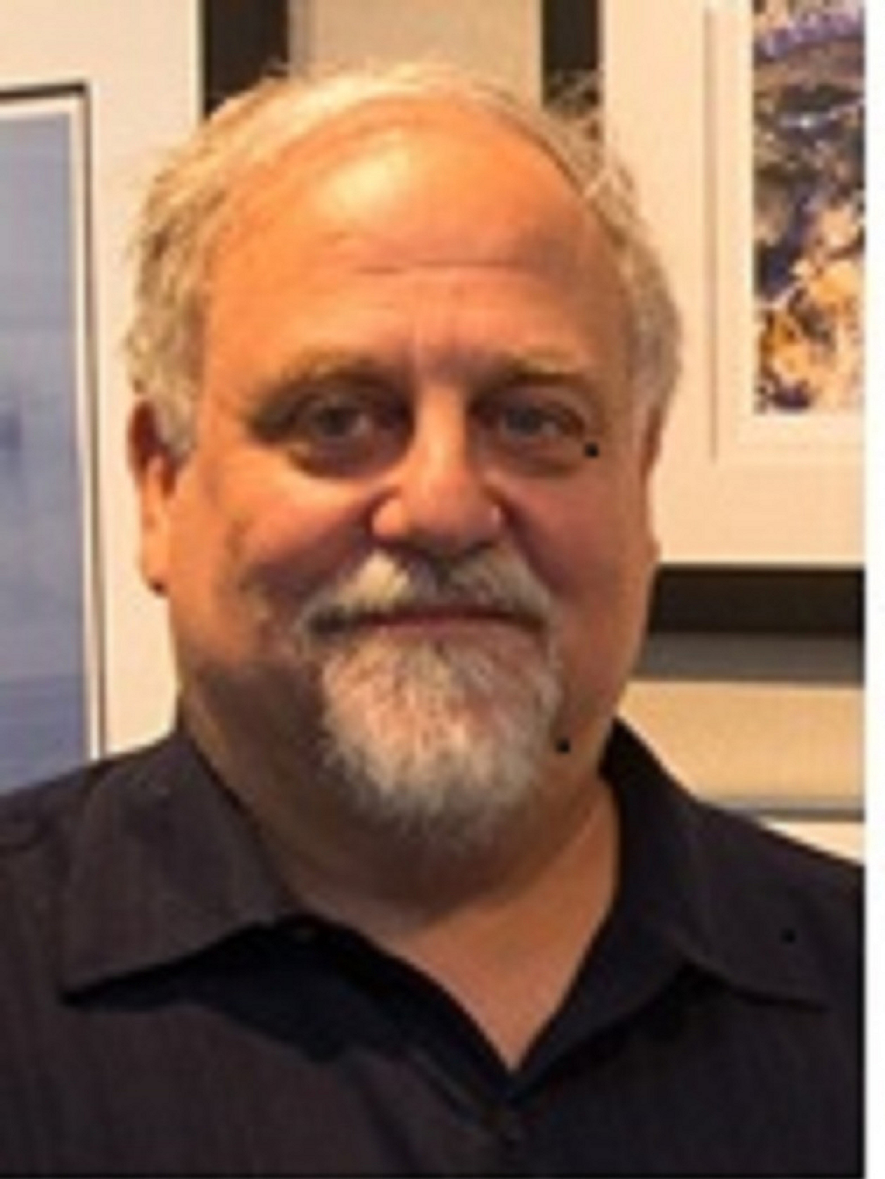
Timothy Shea is an associate professor of management information systems at the University of Massachusetts Dartmouth. Before turning to teaching, he worked in the information systems industry for a social science research company followed by time with a management consulting firm developing large systems applications and early computer-aided software engineering, or CASE, tools.
Shea received a bachelor’s degree from Boston College, an MBA from Indiana University and a doctorate in business administration from Boston College in management information systems, or MIS. He is currently an MIS professor at the University of Massachusetts Dartmouth’s Charlton College of Business.
Beyond Cash Donations: How New Forms of Giving Are Transforming Not-for-Profit Accounting
Evolving Funding Landscape for Not-for-Profits Not-for-profit organizations are being asked to do more with less,…
Learn More
His research has focused on cybersecurity, end-user training, the delivery and management of web-based learning, and implementation issues around [enterprise resource planning]. He teaches undergraduate and graduate courses in business analytics and visualization, along with advanced projects.
PBN: Where did you come up with the idea for an app that bridges the gap between those experiencing hunger and in need of food resources and said resources, such as food banks, shelters and pantries?
SHEA: The idea for the Food Finder/Food Rescue application was born within a wonderful collaboration of nonprofits in the south coast area known as SouthCoast Serves, as part of its food security focus.
With more than 50 local nonprofit members, and a core anchor group of four individuals and three organizations, [SouthCoast Serves] is facilitated by Deirdre Healy, director of the Office of Community Service & Partnerships at UMass Dartmouth’s Leduc Center.
In addition to [Healy], SouthCoast Serves member Christine Sullivan, from Coastline Elderly, had relevant data she was willing to share that would be the first input into the FoodFinder/FoodRescue application.
Joyce Bettencourt and the Southeastern Massachusetts Food Security Network jumped in and [today] hosts the app’s website. As an MIS faculty member in the UMass Dartmouth Charlton College of Business, I became involved through my capstone MIS class, [in which] student teams work with local companies and organizations to design and develop [information technology] applications. Over time, one class team and three business graduate students have [become involved], providing excellent, real-world, meaningful experience for the students.
PBN: Once live, what areas of the local region will be able to access the app?
SHEA: The initial focus is on the [southeastern coast of] Massachusetts, specifically: Acushnet, Dartmouth, Fairhaven, Fall River, Freetown, Marion, Mattapoisett, New Bedford, Rochester, Somerset, Swansea, Wareham, Westport, Lakeville and Dighton. Once established, we could easily expand to our neighbors in the north, west to Rhode Island as well as Cape Cod. For people reading this, if you would like to get your town included, please contact me at tshea@umassd.edu.
However, we are limiting our reach to the south coast and surrounding areas. As you might guess, building the website and app have their [technological] challenges, but equally [as] challenging is collecting and maintaining a thorough and accurate set of data to populate our database. As an example, we have a wide variety of food providers to track, including community gardens, community meals, emergency assistance, farmers markets and pantries, grocery stores, nutrition services and senior meals. It is important that the data be as accurate and current as possible, and that takes time.
PBN: Why do you feel an online, smartphone app will make a larger impact in terms of connecting people in need with social resources than traditional marketing done on behalf of nonprofits and corporations?
SHEA: We hope to make an impact in two ways. [First], borrowing some business terms, we are improving the supply chain. We begin with the FoodFinder component, which helps the B2C, or business to consumer, connection. Anybody who needs food for themselves or their family will be able to go to a website or click an app to see where they can find the nearest free and nutritious food. These [locations] are often only a few blocks, or a few miles, away.
When fully implemented, all the food pantries in the area will be easily accessible, including an address and hours they are open.
The second component helps improve the B2B, or business to business, side of the supply chain, the FoodRescue part of the application. The problem today is that there are 100 different entities across the region, which either provide food, make rescued food available to the public, or help deliver the food from the provider to the food pantry.
This process largely depends on [a network,] who knows whom, and making phone calls. The FoodRescue component of this application will have a verified list of organizations and individuals involved in the region. A food provider will post a “food alert” to everyone in the group in order to start a “food rescue” across the region. We hope the system will [help transport] more food to the right locations in a timely manner.
PBN: In launching and marketing your app, have you partnered with any local nonprofits or corporations to help spread awareness and involve the community?
SHEA: We made several presentations in the community over the past year to demonstrate an early version of the application and test interest. We received a lot of interest and encouragement for the Food Finder/Food Rescue application. This fall, our challenge is to complete our data collection as well as finish the iOS and Android versions. In the spring, we will focus on rolling out the website and phone apps, as well as promoting the use of both FoodFinder and FoodRescue. Several community-based organizations have offered to help with the launch and we have identified a UMass Dartmouth student intern to assist.
PBN: Especially at this time of year, what do you wish the public knew about the local food-insecure population?
SHEA: This time of year, a lot of local initiatives to help people celebrate Thanksgiving [are highlighted]. And that is a great thing. However, the food-security challenge in our region is probably bigger than most of us know and needs continuous support. Statistics show that 1 in 7 households in Massachusetts are food insecure. In Bristol County, nearly 1 in 5 children experience food insecurity.
Hungry children have trouble learning in school. Hungry adults cannot do their best at work. Our challenge in this region, hopefully helped by our FoodFinder project, is to get more available food “rescued,” get all “rescued” food delivered to the best [reception center] and make sure individuals and families can easily find food – in particular, nutritious food – when needed. Happy Thanksgiving to all!
Emily Gowdey-Backus is a staff writer for PBN. You can follow her on Twitter @FlashGowdey or contact her via email, gowdey-backus@pbn.com.