Hall of Fame anniversary to net larger crowd
Mark L. Stenning
Seifert Systems Invests in Energy Efficiency to Strengthen Operations
For manufacturers, energy is more than just another operating expense. It plays a critical role…
Learn More
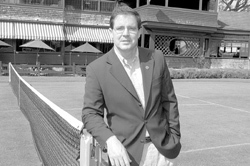
Position: CEO, International Tennis Hall of Fame in Newport
Background: Stenning started at the Hall of Fame in 1980 as assistant
executive director. He later became tournament coordinator, then director of
Newport operations. By the early ’90s, he became chief operating officer and
was named CEO in 2000.
Education: Bachelor’s in psychology, Rhode Island College, 1978
Residence: Tiverton
Age: 48
This year marks the Hall of Fame’s 50th anniversary. The nonprofit organization is celebrating the milestone with a larger-than-usual annual tournament and induction ceremony running from July 5 to 11. The tournament also has a new title sponsor, Campbell’s Soup, replacing a long partnership with Miller Lite.
An additional 1,500 seats will be added near center court to accommodate the expected rise in attendees this year. About 1,200 Newport hotel rooms have been reserved for the occasion and about 25,000 people are expected to attend the weeklong event.
As of two weeks ago, 55 of the 68 living Hall of Fame inductees were committed to attending this year’s celebration. Tennis stars Steffi Graf, Stefan Edberg and Dorothy Cheney will be inducted this year.
Currently, the building’s façade, along Bellevue Avenue, is undergoing a $75,000 re-shingling project. The facility, a national historic landmark, requires about $250,000 in maintenance per year.
PBN: Can you sum up the significance of this year’s anniversary and tournament?
STENNING: As you can imagine, 2004 is really a milestone of this organization. … The organization has not only sustained itself from a facility standpoint, but it’s grown to the point where at the end of July we’ll have 186 Hall of Famers. We’ve planned what is truly an international celebration. We’ve got hundreds of people, including the honorary co-chairs former President George Bush and Chris Evert, with us for the weekend. The tournament will be the platform for the whole thing. We’re starting to put together a fairly strong player field. The weekend events will be televised both nationally and internationally on Fox Sports Net and be syndicated internationally. I think the biggest thing for us is the reunion of the Hall of Famers where you’ll walk around and see Rod Laver, Chris Evert, John McEnroe … I don’t know of any other place where you get that sort of gathering of tennis talent.
Q. This year’s events are most likely attracting a larger crowd?
A. It certainly is. We have sold four times the number of tickets we normally do and the most recent numbers I saw (as of May 13) were for last Friday (May 7) where it’s completely sold out (for Sunday, July 11) even with the 1,500 additional seats. Saturday’s events, maybe by the time you go to print, we’ll be sold out. For Friday, a lot of the prime seating is gone and many of the weekday sessions there are in the thousands of tickets sold for those days already.
Q. You’re a nonprofit, what are your main funding sources?
A. We’re a 501(c)3 nonprofit. Our funding source is a variety of things: people who pay to go through the museum, we rely heavily on donations from the public, but we also earn a lot of money. The tournament will make money. We have the grass courts open to the public for a fee. We also have three indoor hard courts where it’s a club and the 13 outdoor courts – that’s a club that any member of the public can join. We have two tennis stores: the museum shop inside and a tennis store out on the street. We host open night of the jazz festival, we do a lot of special events. We do fund-raising dinners at the Waldorf in New York during the U.S. Open. We also rely on our endowment, which is important because just keeping this building together, just the capital maintenance can exceed $200,000 a year. We’re a national historic landmark and it’s a 6-acre site. Just the grass courts’ maintenance alone is pretty staggering.
Q. What’s your budget?
A. Our budget this year is about $5.5 million of which a little over $1 million is attributed to the 50th celebration, and about $550,000 of that is just for airfare. We’re flying every Hall of Famer back who will come and a guest at our expense; our budget for that is $550,000 and that’s just airlines because unlike other Halls of Fame, like the Baseball Hall of Fame, their people are just in North America, we’ve got tons of guys from Australia, Europe – it’s a different deal.
Q. How did the new Campbell’s title sponsorship come about and why no more Miller Lite?
A. About two years ago, Miller Brewing was sold to South African Breweries, so they started changing things and cutting things. We learned about a year and a half ago that Miller would not be back. They’ve been one of our major supporters since the late ’70s so obviously we’re sorry to see them go, but we were very thankful to have them with us for that long. In a conversation I had with the CEO of Campbell’s, who had just joined our board of directors, a discussion evolved where we talked about what opportunities existed at the Hall of Fame and what challenges we had as an organization. I presented to him that we were looking for a title sponsor, just about a year ago we reached an agreement where Campbell’s would be the title sponsor for the tournament.
Q. Was a local company considered for the title sponsorship?
A. Yes, (but) I wouldn’t want to mention any specific companies that I went to pitch. I spent about eight months pitching local companies as well as (other) companies. I went to every major company that I could get into. … We’re looking for a fit, someone that wants the kind of exposure and hospitality that they would get here on-site.
Q. Are area businesses generally supportive of the Hall of Fame?
A. Yes. Number one it’s been a Newport and sporting tradition since 1881 and for the most part what we do here is good for business whether it’s the 1,200 hotel rooms (reserved for this year’s tournament) or the fact that we’re filling restaurants and limo services and bus companies.
Q. How are local companies involved with tournament sponsorships?
A. We’ve got CVS, Mohegan Sun, APC, BankNewport, Core Business Technologies, Newport Harbor Hotel, Marriott, Clear Channel (and others) and Cathers Coyne, which is a local upscale shoe store. They do some interesting stuff, they actually throw a player party in their store where they bring players down and give them shoes – again it’s product exposure. Core Business Technologies in East Providence does a lot of hospitality and bringing people down, the same thing with BankNewport. APC does some hospitality but they also do on-site promotions, they have an exhibit booth where they can promote their products. With hospitality, (companies) would end up with blocks of tickets as well as VIP box seats and use them for hospitality for their own clients. CVS is the host sponsor and they’re secondary only to Campbell’s, they would get a similar mix of benefits only on a smaller scale.
Q. Who’s your audience year-round?
A. For the tournament it tends to be regional. When we do our demographic studies, it’s about 51 percent Rhode Islanders, 27 percent Massachusetts about 20 percent Connecticut and the other mix fills in New York, New Jersey. The Hall of Fame as an attraction is much different where we don’t get a lot of Rhode Islanders here. I know more Rhode Islanders who have been to the Empire State Building than they’ve been to The Breakers or wherever. It tends to be 1 out of every 20 people who come to the Hall of Fame is from outside North America, a lot of Europeans. Tennis is such a global sport, certainly a lot more global than other sports, so we get a good mix. Over the course of a year we get people from all 50 states and probably 35 or 40 different countries.
Q. How many visitors do you normally attract?
A. For this tournament, July 5 through 11, we’ll have 25,000 people. Our total site visitation for the year, and I’m projecting for 2004, will be just under 100,000 including concerts, museum visits, tournaments and private special events.
Q. How do you compare with other Halls of Fame?
A. Most other Halls of Fame are in buildings that were built for them. We’re actually at the site where the tournament game began in North America, so the building we’re in was never built to be a Hall of Fame, which brings us greater attraction because people come to see the architectural side of the business. But also it’s a struggle because between maintenance and utilities and those kinds of things, other Halls of Fame don’t have to experience that. Also, the fact that we own a franchise on the professional tour, most other Halls of Fame don’t; most other Halls you can’t go and play. It’s a pretty different setting than you’d see at most other Halls. We’re a much different business model than most other Halls of Fame who rely heavily on museum attendance, museum shop sales and to some extent on donations and support from the public. We’ve got a lot of different income streams.
Q. Obviously you’re busy during the summer, but what do you do during the winter to sustain yourselves?
A. The museum is open 363 days a year. What we’re doing, and just finishing up the cycle now, we’ll spend all winter selling sponsorships and servicing sponsors. … There are six months where we’re selling and planning and the other four to six months we’re implementing and doing all those things.
Q. As for the future, any infrastructure changes to the Hall of Fame?
A. We’re actually putting in a clay court for the first time down on the rear of the property. My hope is that we can always maintain (the facility) at the levels we have now. As far as interior, I would love to continue to upgrade the museum, our technology and get more bodies through here; get more people through here over the course of the year and see what is really a multi-attraction.