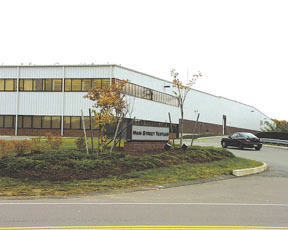
announced plans to shut down the facility.
Several weeks after Main Street Textiles told its 400 workers that
the Fall River location would gradually shut down its operation over the next
six months, city officials and workers say the mill’s closing may not be a done
deal.
Laborers at the mill staged a walkout in mid-October, complaining
about no wage increases and increased workloads. Although workers returned the
following day, the mill’s parent company, Joan Fabrics, announced at the end
of the same week that the mill would close by April 30.
While mill management declined to comment, Fall River Mayor Edward Lambert
Jr. said Joan Fabrics owner Elkin McCallum told him that if the plant can become
“productive,” the closure will not happen.
Rhode Island's Market Has Changed. Developers, Builders, Investors and Sellers Must Change With It.
By Emilio DiSpirito IV License Partner | Engel & Völkers Oceanside Leader | The DiSpirito…
Learn More
Lambert said the announcement, a notice of intent to the mill’s employees,
had been issued as a legal precaution in case plant production doesn’t make
the necessary turnaround. The release indicated that layoffs would be staggered
throughout the winter.
Workers say things are mostly back to normal at the sprawling 600,000-square-foot
mill, which moved to the Commerce Park in 1999 after 33 years in a plant on
Main Street.
Robert Raposa, who has manned a wheel for the company for the last 12 years,
said while the Oct. 14 walkout by about 100 workers may not have been the best
move, it has led to better communication between management and workers. In
the closure announcement, the company pointed to overseas competition, not labor
squabbles, as leading to the decision.
“If the company’s operating in the red, then there’s going to be no raises,”
Raposa said. “Everyone has got to be realistic about this.”
While almost half of the mill’s workers signed union cards with representatives
from the Union of Needletrade, Industrial and Textile Employees, Raposa said
there are still strong feelings about whether or not unionization is the best
way for workers to head.
The mayor’s office has offered to get involved in any mediation process between
the sides, and Lambert said the company would be happy to take him up on the
offer of third-party mediation as long as no union were involved.
Ken Fiola Jr., executive vice president of the Fall River Office of Economic
Development, was among those holding out for a positive word from the company
and hoping that a complete shutdown could be averted. If the closing does happen,
Fiola said it shouldn’t come as a shock in a textile industry that is reeling
from overseas competition.
Raposa said workers have heard that the company was considering moving its
production south, where the cost of living and wages are cheaper.
Regardless of what happens, Fiola said a total closure of the mill facility
itself would come as a surprise. Construction of the company’s new facility
was completed in December 2000 at a cost of approximately $15 million.
Joan Fabrics received a 20-year tax increment financing deal for the project,
which was revoked by the city in 2002 after the company failed to expand, and
actually reduced, its work force. Even if Main Street vacates the building,
Fiola said he is optimistic that the modern space wouldn’t sit empty for long.
Lambert said a “career day” planned by the city for Oct. 30 had already taken
on a slightly new shape with eight other manufacturers in the area, or moving
into the area, planning to attend. Fiola agreed, saying that enough opportunities
exist in Fall River for the 400 workers to be absorbed. He specifically pointed
to the incoming Silver-Line window manufacturing plant, which is constructing
a new 200,000-square-foot home and has plans to employ 500 new workers.
“I’m confident that if those workers are displaced, they will have opportunities,”
Fiola said. Published reports have put payroll and benefits costs for the mill’s
400 workers in the neighborhood of $25 million.
Management’s message is that workers need to produce quality rolls of the
mill’s upholstery fabric in a timely fashion, something Raposa said has not
been a constant. He said the hope is that things can rebound over the next six
months, as the mill’s product quality improves and the company has a chance
to rebuild an industry reputation to deliver its product on time.
“The looms are running again,” Raposa said. “People are working together a
lot better and everyone seems to know that the workers and the management have
to be in this together if we want to keep these looms running.”