Square being revived by a class
at RISD.
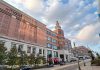
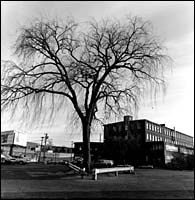
Although it looks like the mill buildings in Eagle Square will be replaced with a strip mall, a class at the Rhode Island School of Design is offering an alternative.
On Friday February 9, Professor Derek Bradford and eight of his architecture students from a class called “The Eagle Square Project,” will hold a public presentation revealing what they have designed as a solution to what some consider inappropriate development in the Valley area.
Beyond Cash Donations: How New Forms of Giving Are Transforming Not-for-Profit Accounting
Evolving Funding Landscape for Not-for-Profits Not-for-profit organizations are being asked to do more with less,…
Learn More
Emphasizing reuse of certain structures, the students and professor are in the second phase of the class.
Each student has already proposed a solution and now the group will blend those suggestions together for the presentation.
Bradford advocates reuse of buildings based on a New Jersey model, where building codes do not need to be as strict for rehabilitated buildings as they are for brand new buildings.
He put the project together at the end of last year for the six-week winter session, when he received word of a developer’s plan to demolish seven mill buildings to put up a 26-store mall. The students, mostly juniors with a few seniors, work more than five days a week. The six-credit course is their only course for the semester.
“We’ve had the kind of outrageous gall to try to do in six weeks what other people do in two years,” he said.
With that in mind, Bradford is somewhat optimistic about the impact this class will make.
“We would hope our work could influence all parties to think more comprehensively about the project,” he said, “but if nothing else our intention is to revive the positive dialogue about this particular site.”
Bradford and his students invited community members, neighborhood members, city planners, the developer, preservationists and artists to come into the classroom to share their points of view on the project.
“We are outside the particular arguments that are going on, so we can act relatively objectively,” said Bradford, “but we wanted to act with full knowledge of what other groups would like to see happen to the site.”
Bradford said the only group that seemed uninterested was the developer, Feldco Development.
“The developers didn’t think it was appropriate,” he said, “but everybody else we’ve asked has spoken to us.”
Gene Beaudoin, a partner with Feldco, said a student contacted him about coming in, but the company was too busy at the time.
“It was not in our interest,” Beaudoin said.
Bradford said this project is important as far as RISD is concerned because many people perceive the institution to not be interested in community issues.
“It seemed like an excellent test case, and it’s a great education for (the students), because we’re often characterized as being ‘ivory tower people,’ not interested in the real world,” he said.
He said that RISD actually tries to get involved in community work like this when it can.
“A few years ago we did a project to upgrade store fronts on Smith Street, and we did some affordable housing for Smith Hill Development Corporation.”
Bradford said this is one of the most complicated projects he has been involved with, and quite possibly the most complicated project RISD undergraduate students have been involved with.
“It’s an interesting case study for our students to become involved in, and when our school is committed to this kind of community outreach program I think it benefits both the community and the school.”