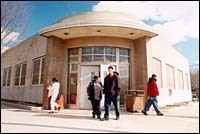
to the Alternate Learning Project
(ALP) in Providence.
In a sometimes emotional session with a notable absence — that of Superintendent Diana Lam — the Providence School Board agreed to look more closely into the question of closing the Alternate Learning Project.
“We’ve tried not only to listen, but to hear,” said Deputy Superintendent Melody Johnson to the concerned parents, students and teachers who have protested the school’s proposed closing.
Beyond Cash Donations: How New Forms of Giving Are Transforming Not-for-Profit Accounting
Evolving Funding Landscape for Not-for-Profits Not-for-profit organizations are being asked to do more with less,…
Learn More
Johnson filled in for Lam, who had an allergic reaction that led to her visiting the hospital.
The original proposal — tabled at the board’s previous meeting on February 12 — for a new performance-based high school would close both ALP and Feinstein and create a new alternative high school in their place, to be located in the Feinstein building.
Both schools had come under fire for low performance rates. According to the Providence Public School District’s Web site (which lists statistics from the 1998-99 school year), ALP has 129 students, a dropout rate of 28 percent and a student attendance rate of 80 percent. Feinstein’s 288 students have a 33 percent drop out rate and a 79 percent attendance rate.
Johnson read a revised proposal, which outlined the fate of the Alternate Learning Project (ALP) and the Feinstein High School for Community Service. It suggested the formation of a task force, to be composed at least partially of outside consultants, to further evaluate the performance of ALP and make recommendations about what should be done with the school.
The proposal — passed by a vote of five to three — also calls for the restructuring of Feinstein to incorporate a new curriculum when it reopens this fall.
“We think that this is the best decision given where we are,” Johnson said.
Not everyone agreed.
“I just read the new resolution concerning Feinstein High School, and for all its beautiful words, it’s not saying anything different,” said Councilwoman Patricia Nolan, who has been a very vocal supporter of ALP and Feinstein. “Feinstein closes in June and reopens in September as a new school. I don’t think you have a very long period to do any planning or to implement a plan. We’re doing things in reverse.”
Nolan also expressed concern for Feinstein’s teachers, who must reapply for their positions.
Councilwoman Josephine DiRuzzo was also there to offer her support for Feinstein and ALP.
“I’m happy to see you’re not taking any other action this evening,” she said.
But regarding the proposed task force, “you have to choose the right people,” DiRuzzo said. “Bringing outside people in is not always the answer. If we want this program to be successful, we have to nurture it.”
Both Nolan and DiRuzzo asked to be on the ALP task force.
Councilmen Joseph DeLuca and John Igliozzi have also expressed their support for ALP.
ALP students were out in full force at the meeting, spilling out into the halls outside the board’s crowded third floor meeting room. Several spoke during the meeting’s right to be heard portion.
One said he was particularly grateful to the teachers at the school.
“The teachers at ALP are like my family when my biological family can’t be there,” he said.
Another said he didn’t feel that the board had been listening.
“Just because we don’t have a vote doesn’t mean that we don’t count,” he said.
ALP’s media specialist also spoke before the board, saying that many students at the school had been writing essays and speeches about their feelings about the possibility that the school might close.
“These kids are not writing as the result of an assignment or at the request of any adult,” she said. “They are writing to you from their hearts.”