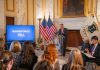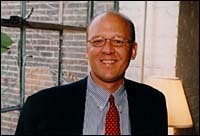
Rick Kovar.
In perhaps the organization’s strongest public showing since its inception, the RI Technology Council’s annual dinner last Thursday (Feb. 1) at the Providence Marriott projected the image of a growing technology community in Rhode Island — one with a very real potential to lift the Rhode Island economy.
RItech President Jeff Deckman told more than 200 organization members and business and political leaders that the “farming” of the past year was beginning to pay dividends.
Seifert Systems Invests in Energy Efficiency to Strengthen Operations
For manufacturers, energy is more than just another operating expense. It plays a critical role…
Learn More
“We’re not looking for things to happen,” said Deckman. “We’re making them happen. Last year we did a lot of the hard work — the farming. Now we see a lot of the sprouts coming up — dividends that are going to pay us for years and years. When you farm, you eat for a long time.”
RItech was originally known as the Rhode Island Software Council when it was founded in 1998.
Since that time, changes in leadership and focus have marked RItech’s existence. Now, organization leaders, including Rick Kovar, a former policy aide in the office of the Senate Majority Leader who was hired as RItech’s executive director in January 2000, insist that the group has found its stride and is growing in both membership — and influence.
If last Thursday night’s dinner is any indication, that growth is apparent. Kovar said the event sold out weeks ago. It was attended by several legislative leaders and representatives of the Rhode Island Economic Development Corporation, including Thomas Schumpert, its director.
In fact, 2000 was a productive year for RItech.
RItech went from representing 52 dues-paying companies to representing 137 — an increase of 160 percent.
It developed a Web site and partnered with the Information Technology Academy and the Community College of Rhode Island to develop eight CISCO academies here. RItech also brokered an agreement for education discounts for members with local education providers such as the New England Institute of Technology.
In pointing toward even bigger things in 2001, Deckman and Kovar said it would take the cooperation of all business leaders and the state’s elected officials to ensure that the high technology community reaches its potential. Rep. Antonio J. Pires, a Pawtucket Democrat and chairman of the House Finance Committee, pledged the support of the General Assembly, as did Sen. John M. Roney, a Providence Democrat.
Pires said legislators are anxious to embrace the new economy. Much has been accomplished in recent years, he said, to improve the state’s business climate – particularly for high technology companies. He specifically cited ongoing efforts to improve the state’s tax structure.
“We welcome this opportunity more than you can imagine,” said Pires. “We don’t have all the answers, but we understand we have to do this together. This is a long-term effort. We’ve got the energy to do it.”
Roney said there is a clear understanding among lawmakers that it is to everyone’s benefit to develop a stronger workforce.
“We share the goal of developing a vibrant cluster of technology industries,” said Roney.
The keynote speaker at the RItech dinner was Richard Florida, the Heinz Professor of Regional Economic Development at Carnegie Mellon University, and a regular contributor to Information Week, for which he writes a column entitled “Brave New Workplace.”
Florida — featured in the Interview section of this issue — described a new economy, driven by people, not companies. Hiding behind technology, said Florida, has been “talent and people.”
“We are all free agents now,” said Florida. “This new economy is more like Hollywood than IBM. People go from project to project. It’s no longer about working for a single company.”
That is why, said Florida, it is so important to create a community in which people want to work. By doing so, critical mass can be established. People don’t come to an area for one job, he said, they come because there are many opportunities available.
“People benefit from this system — and companies benefit from this system,” he said.
RItech officials recognized
Kovar took a moment at the dinner to recognize the RItech board, thanking its members for their hard work.
RItech’s executive committee consists of Deckman; Kovar; Jay McNally, of Ibis Consulting; Paul Harden, of the Rhode Island Economic Development Corporation; and John Ottaviani, of Edwards & Angell.
Members of the board of directors include Shirley Freitag, of Pae Tec Communications, Inc.; Daniel Dwyer, of EDS; Ken Kirsch, of Network Six; Jim McAssey, of Brave River Solutions; Charlie Nault, of Atrion Networking; Dana Paul, of Shazamm; Gary Palardy, of Blue Moon Industries; B.J. Potter, of Hope Consulting Group; Jack Sommer, of Student Advantage; Mandie Sullivan, of SilverLight; and Annette Tonti, of BlueStreak.com.
Kip Bergstrom, of the Rhode Island Economic Policy Council; Joseph Hammang, of the Rhode Island Economic Development Corporation; and Garrett Hunter, of the Business Development Company of Rhode Island, serve as non-voting directors.