vegetables
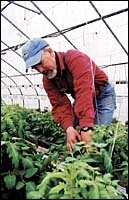
Spring planting may be just beginning, but already Little Compton farmer Skip Paul knows where much of his harvested fruits and vegetables will go.
That’s because the owner of Wishing Stone Farm began marketing and selling his produce, not to local grocery stores, but to individuals and families, while most of it was still just a seed in his hand.
The idea is called Community Supported Agriculture.
Beyond Cash Donations: How New Forms of Giving Are Transforming Not-for-Profit Accounting
Evolving Funding Landscape for Not-for-Profits Not-for-profit organizations are being asked to do more with less,…
Learn More
According to Paul, and other local farmers like him, it’s a way to get their products directly to the consumer while at the same time raising awareness about the importance of farming and preserving open space.
“By participating in this program people are making a serious commitment to the farm,” he said. “It’s a financial vote for farming and a financial vote for open space.”
Community Shared Agriculture or CSA, is an approach to growing and purchasing food products in which the farmer and consumer work cooperatively. First introduced in Europe more than two decades ago, the idea has more recently been embraced in the United States.
In a CSA the farmer grows food for a predetermined group of consumers, and in return the consumer enters into an agreement of purchase with the grower at the beginning of the season.
For example, to buy a single share at Paul’s farm customers pay $229. In return they receive between five and 15 pounds of fresh produce every week for the duration of the 22-week growing season. The cost goes up for a family share, which in turn comes with a higher poundage of produce weekly.
It’s a direct link that consumers don’t have going to supermarket. According to the U.S. Department of Agriculture, food across the country travels an average of 1,300 miles from farm to market shelf and almost every state buys 85 to 90 percent of its food from someplace else.
“The good thing about this is that when people pick up their vegetables in the afternoon, they are fresh,” Paul said. “Eighty percent of what we are offering was picked that day, and as a result has the highest nutritional value.”
The agreement also provides some stability to the farmer.
“The classic problem with farming hasn’t been growing the food, ” Paul said. “Conventional farmers have had a hard time finding a place to go with the food. We are moving toward more efficiency.”
Diana Kushner, owner of Arcadian Fields, a 5-acre CSA in Hope Valley agreed.
“This is a way to keep agriculture alive,” she said. “It has eliminated the middle man. If I wanted to sell my stuff to Stop & Shop, I would need 100 acres. It’s a nice dynamic this way and I think it’s appealing to a lot of younger farmers.”
According to the farmers, CSAs also provide cost savings for the consumer.
“We had a student at Brown do his senior thesis on the subject,” said Polly Hutchison, who with her husband Mike runs the state’s largest CSA at Casey Farm in Saunderstown. “He bought food from a CSA and then went to local markets in Providence and bought the same produce. What he found was that CSA was less expensive.”
Kenneth Ayars, director of the division of agriculture for the Rhode Island Department of Environmental Management, said the idea though somewhat new in the state is catching on rapidly.
“It really appeals to certain types of people. What it does is get the community involved because they are not just going to buy the produce but instead are taking a vested interest in the farm,” he said.
Hutchison said people like the community that is created.
“We have about 220 households that participate in our CSA,” she said. “People are really excited about being part of the farm, and we fill up every year.”
Casey Farm, which is owned by the Society for Preservation of New England Antiquities, also requires that CSA members work at least eight hours at the farm over the course of a season, something not all farms do.
“As an educational non-profit this is a good way for us to get people involved,” Hutchison said.
The concept isn’t for everyone.
“It’s a form of farming that comes with both advantages and disadvantages,” said Kushner. “One of the benefits is that I know I will make money, and I know just how much I will make. The disadvantage is the stress that comes with knowing you have promised people all of this stuff.”
Consumers must also adjust to not knowing what each week will bring.
“It has required people to readjust to seasonal eating habits,” Hutchison said. “We are going back to a time a few decades ago when there weren’t strawberries year-round and that is an adjustment for some people.”
According to Paul, for many people who do join, it’s a philosophical decision.
“This is something that fits in with organically grown food,” he said. “CSAs don’t have to be organic farms, but most, like ours, are. I think that people today are really concerned about where their food is coming from and this is a way for them to truly know.”