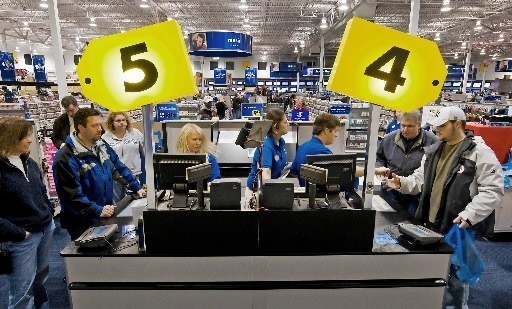
WASHINGTON – Consumer spending nationwide last month rose $110.6 billion or 1.1 percent compared with October, in the biggest monthly gain in more than two years, according to a report today by the U.S. Bureau of Economic Analysis.
The November increase in personal consumption expenditures (PCE) was well beyond what analysts expected, based on the 0.7-percent median estimate from a Bloomberg News survey of 73 economists. It followed a 0.4-percent rise in October that was twice as high as initially estimated, the BEA said.
Personal spending adjusted for inflation (real PCE) rose 0.5 percent in November after rising a revised 0.1 percent in October. Purchases of both durable and nondurable goods rose 0.6 percent while purchases of services rose 0.5 percent, the BEA said.
Meanwhile, U.S. personal income increased $43.1 billion or 0.4 percent, after rising 0.2 percent in October. Private wages and salaries rose $36.0 billion over the month, after falling $1.3 billion the month before.
Disposable personal income rose $17.0 billion in November to 0.3 percent above its October level, after rising 0.2 percent the month before. But real disposable personal income, adjusted for inflation, fell 0.3 percent in November after falling 0.2 percent in October, the BEA said.
The nation’s personal savings fell into negative numbers last month as personal outlays exceeded disposable income by $48.4 billion or 0.5 percent, erasing the previous month’s gains. By contrast, October’s personal savings amounted to 0.3 percent of disposable income or $30.7 billion.
“We can postpone fears of a recession at least until next year,” Ryan Reed, an economist at National City Corp. in Cleveland, told Bloomberg News. “Inflation sure is worrying the Fed, but there is not much they can be doing at this point.”
Additional information, including the 13-page Personal Income and Outlays news release, is available from the U.S. Commerce Department’s Bureau of Economic Analysis at www.bea.gov.