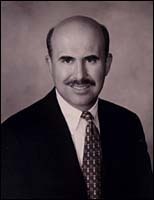
of Network Six, addressed
Tech 2001 conference.
Cooperation between area educators and businesses will be key to the future success of Rhode Island’s students was the theme at a recent conference in Newport.
“Together — that’s the easiest way to solve this problem,” said Network Six President Kenneth Kirsch, when he addressed the audience composed of educators and community-based organization leaders at last week’s Tech 2001 conference in Newport.
Rhode Island's Market Has Changed. Developers, Builders, Investors and Sellers Must Change With It.
By Emilio DiSpirito IV License Partner | Engel & Völkers Oceanside Leader | The DiSpirito…
Learn More
Leaders in the region’s high tech, business and education communities gave brief presentations at the conference, which aimed to keep the lines of communication between the groups open. Providence Business News Editor Franklin Prosnitz moderated the session.
Dennis Cheek, director of the Office of Research, High School Reform and Adult Education at the Rhode Island Department of Education, echoed Kirsch.
“The efforts that have taken place in Rhode Island are due to partnerships — people working together to make things happen,” he said.
According to Cheek, there is one computer for every six-and-one-half students in Rhode Island. Ninety-six percent of teachers and 87 percent of students report they have regular access to the Internet.
“We want to see the technical academies expand beyond just Cisco,” Cheek said. “We have to change the way we prepare teachers.”
“What can educators do? They can certainly do a lot,” said Kirsch. “They can educate themselves. Having all this equipment is wonderful, but if they don’t know how to use it. They can really lead the way, early on. We’ve got to find ways to get kids interested in math early on.”
That’s not all students need to learn, according to Kip Bergstrom, executive director of the Rhode Island Economic Policy Council. Last summer, at what was billed as a giant brainstorming session, leaders from business, labor, education and government sectors identified image as an area in need of particular attention.
“By ninth grade, kids have a negative image of IT careers,” he said. “The antidote is for kids to have direct experience with the career.”
People in existing jobs need training as well.
“The difference between the kinds of skills you need to succeed as a software or high tech employee or a manufacturing employee are converging,” Bergstrom said.
The presence of technology in the classroom will only increase as improvements are made to today’s innovations and classrooms go even more high tech, according to Anthony Salcito, director of education, East Region Microsoft Corporation.
Eventually, said Salcito, today’s backpacks full of textbooks could be loaded onto one eBook unit; still other textbooks could be accessed online.
This technology will serve “not just to duplicate the experience of reading, but to improve the experience,” Salcito said.
eBooks can be annotated with “electronic footnotes” so that a student may get more information about a particular item referenced in the reading or click on a word for a definition.
“That’s one example of technology adding to the learning process,” Salcito said.
In his presentation, Community College of Rhode Island President Tom Sepe stressed the importance of education keeping pace with technology.
“Industry will not wait for education to respond,” he said. “Motorola, Microsoft, and Sun all created their own training facilities. The new economy depends on human capital.”
Calling today’s public school IT curriculum “haphazard learning all the way through,” educator and administrator Joyce Malyn-Smith told the audience of her report, “IT Pathway Pipeline Model: Rethinking Information Technology Learning in Schools,” released last year. The report suggests that schools adopt a set curriculum of standards for technology instruction to fuel the IT industry’s need for qualified workers.
Malyn-Smith encouraged both the businesspeople and educators present to support school-to-career programs.
“Some of the best career prep programs we have in this country are based in career awareness,” she said. “We all recognize that there is a critical shortage in the area of IT — it’s not a shortage of people, it’s a shortage of skills in the people we have.”