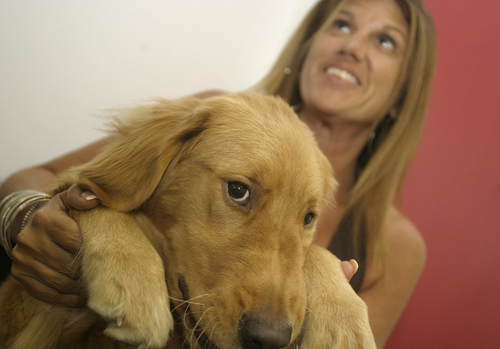
Donna Averill is an agent at MetLife Auto & Home in Warwick, so she knew right away that she needed pet insurance six months ago when she and her family obtained a puppy, Audi.
In addition to her experience in the insurance field, the South Kingstown resident was well aware of the costs that can be incurred if a pet is sick or injured. She had a cat, hit by a car that was hospitalized for one week at a cost of approximately $1,700.
Averill is one of a small but growing number of Americans who purchase insurance to cover the rising expense of health care for their pets.
Pet insurance is an “undeveloped” market that is “rapidly growing,” said Kim Curcuru, marketing manager for MetLife Auto & Home in Warwick. MetLife has offered pet insurance since 2004. In March, MetLife branded its pet offerings in brochures and advertisements with a cartoon of company mascot Snoopy on crutches with his leg in a cast – and sales doubled, Curcuru said. “They’re still not huge,” she added. The company would not reveal the actual sales figures.
Less than 1 percent of U.S. pet owners have insurance, according to a market research report covering the years 1998-2002. Spending on veterinary services increased by 83 percent during that time, the report said, and the total pet insurance market revenue in the U.S. skyrocketed, increasing 342 percent to approximately $88 million.
Four years later the estimated 2006 market size was approximately $200 million and was expected to reach $250 million by 2007, according to the 2005 Packaged Facts “Pet Insurance in North America: The Market and Trends in the U.S. and Canada” report.
Double-digit gains are projected through 2012, said a later edition of the same report, and “the North American market for pet insurance is at a pivotal stage,” with more than half a dozen new companies entering the field since 2005.
The Hartville Group Inc. of Canton, Ohio, a major underwriter of dog and cat insurance in the U.S., reported a 54-percent increase in the number of pets it insures, from 51,368 to 79,079, during the year ended June 30. Gross revenue for the six months ended June 30 was $8.7 million, double the prior year.
Pet insurance is growing in popularity primarily because “a lot of people treat their pets like family,” Curcuru said, “and expenses related to health care for pets are not regulated and can vary widely.” For instance, the cost of a drug prescription for a dog or cat can be 10 times the price of the same medication for humans, she said, even though a pet generally needs less because it is smaller. MetLife is in the process of talking to vendors about adding a prescription rider to its pet insurance policies.
MetLife works with two underwriters: Pethealth Inc., based in Ontario, and Veterinary Pet Insurance (VPI) in Los Angeles. Pethealth underwrites Met policies sold on a retail basis to individuals like Averill, and VPI backs pet policies sold through employers at the workplace. VPI has been in business since 1982, when the first pet policy was sold in the U.S., and insures approximately 450,000 pets in this country.
Just like health care for humans, prices and options run the gamut, with riders in some cases offered for boarding fees, spaying/neutering, euthanasia and even cancellation of a vacation due to a pet’s illness. Pre-existing conditions, the age of a pet and its breed can affect the premiums. Discounts can be offered for enrolling more than one pet. Deductibles can apply.
Averill said she is paying $28 per month for Audi’s insurance and she chose a 70-percent reimbursement rate to keep the price low. She said prices can range from $22 to $60 monthly. Averill obtained her coverage through MetLife online at www.petcareinsurance.com and said she has just three clients with pet insurance. According to Curcuru, basic coverage at MetLife averages about $36 a month for a cat and $50 for a dog. A random check on the Internet turned up prices ranging from $95 to $432 per year for a two-year-old domestic short-haired cat, depending on the plan and company.
Dr. Christopher Hannafin, president of the Rhode Island Veterinary Medical Association, said pet insurance is recommended because the latest technology and the fact that pets are living longer have driven up the cost of health care. “The insurance is primarily for injury, accidents, illness, cancer and treatment of problems not due to preventable disease or elective procedures,” he explained.
Most claims are not processed by veterinary hospitals, he said, “so, it is not a matter of veterinarians accepting the insurance policy. It is generally the responsibility of the animal owner to file a claim and provide documentation.”
He recommended that pet owners consult with their veterinarians about what kind of policy to purchase. “Buyers should decide what they need based on the animals they have and what they are comfortable with and can afford,” he said. Most popular policies are those that cover emergency and critical care, major illness and diagnostics, he said.
Averill is glad she had the foresight to obtain insurance for Audi because it turns out he needed it. Although not apparent when he was born, the dog as it grew older developed a problem with an eyelid that required surgery, and to her relief, the procedure was covered. “It gives you peace of mind, too, knowing that you have some backup,” she said of pet insurance.
Insurance follows the national trend for pet spending. According to the 2007-2008 National Pet Owners Survey, 63 percent of all U.S. households, or 71.1 million homes, have at least one pet, with 88.3 million cats and 74.8 million dogs in the country. Overall spending on pets increased from approximately $17 billion in 1994 to $41.2 billion in 2007, with 2008 estimated at $43.4 billion, the survey said. •