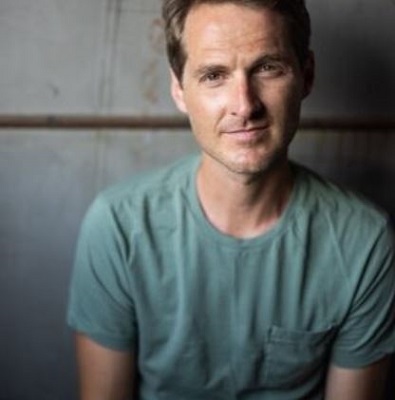
Josh Short is the founder and artistic director of Providence-based performing arts organization The Wilbury Theatre Group. As local theaters are still working their way back from the COVID-19 pandemic, The Wilbury Theatre Group has faced challenges of its own. Short discusses how the organization has navigated those challenges and its optimism for the future.
PBN: How has The Wilbury Theatre Group fared in its first full year of shows since the COVID-19 pandemic?
A modernized health plan: Supporting cost management and the employee experience.
The Surest health plan came from a group of innovators wondering: What if health care…
Learn More
SHORT: With the exception of a brief few weeks right after COVID-19 shut things down in March 2020, the people at the Wilbury Group never stopped producing for their community. We moved things online for a bit, but then were among the first performance groups in the country to resume in-person performances in August 2020 – first outdoors with the production of “Decameron, Providence” we developed in collaboration with WaterFire, and then we were the first performance group in Rhode Island to resume indoor performances with our April 2021 production of “Krapp’s Last Tape” at the Main Hall of the WaterFire Arts Center.
It’s been nice to be back in a more controlled environment in our new black box performance space at the WaterFire Arts Center this year, but the work never stopped for us. And as we’ve continued to adapt and grow our approach over these challenging last few years, we’ve held on to the lessons learned throughout the pandemic about investing in our artists and prioritizing the needs of our community.
PBN: Is the organization still facing some challenges from the pandemic? If so, what are they?
SHORT: Producing work in the pandemic under the [R.I. Department of Health] and the Actors’ Equity Association regulations, as well as the rules that we put in place ourselves in collaboration with epidemiologist Brandon Marshall at the Brown [University] School of Public Health, has been challenging. Keeping our artists and our audiences safe with regular testing, vaccine requirements, etc., while also making backup plans after backup plans (and sometimes BACKUP backup backup plans) has been hard to navigate.
And despite our best efforts, we’ve still had our share of understudy performances, and even canceled performances, as we’ve continued to work. It’s been a lot to navigate, but we’ve been grateful for the support of the artists, community partners and audiences who’ve gone above and beyond with us to make it happen.
PBN: Describe for us the pay-what-you-will ticket model and how has it helped with show attendance?
SHORT: For years we’ve done everything we could to keep our performances as accessible as possible, and like other performing groups, we offered discounts and pay-what-you-will ticketed performances to each of our productions. But a few years ago, we started discussing the idea of transitioning to a fully pay-what-you-will model where those who could pay more would, and those who couldn’t wouldn’t have to.
In September of 2021 we started our 2021-22 season with a collaboration with the folks at Haus of Glitter on a production of their work “The Historical Fantasy of Esek Hopkins,” and for that production it was important to Haus of Glitter that tickets be offered on a sliding pay-what-you-will scale.
After that production was over, and in light of its tremendous success, we felt like we had an opportunity in front of us: we could either go back to the old ways of doing things, or we could seize the opportunity to develop our “All Access” pay-what-you-will model, which is what we decided to do. So, we took the leap – and it’s been incredibly successful. Since moving to the “All Access” model, our average ticket price and our audience size has increased with every production. By prioritizing audience access, we’ve been able to serve more of our community with our performances, and we’ve increased our bottom line exponentially.
PBN: Are there any new initiatives or performances the group is looking to introduce this year?
SHORT: We’ve just started rehearsals for the Rhode Island premiere of Paula Vogel’s Tony Award-winning play “Indecent,” which is a beautiful play about the power of live theater and the intersection between the Jewish and LGBTQ+ communities in the shadow of antisemitism. In addition to the incredibly talented cast and creative team we’ve assembled, we’ve partnered with the Jewish Alliance and Providence’s Temple Beth El to engage our community in conversation about the work itself.
Additionally, we’ve continued to embrace opportunities to develop new work, and we’re excited to be presenting the world premiere of “Goodnight Sweetheart Goodnight,” a new musical by Darcie Dennigan about the Italian baroque painter Artemisia Gentileschi in the spring, and then in the summer we’ll have dozens of new performances at the 10th annual Providence Fringe Festival.
PBN: Are you optimistic the performing arts community will continue to improve and recover in 2023?
SHORT: I am. If COVID-19 showed us anything about performing arts organizations, it’s that we’re so committed to the “yes, and” principle of improv, which has helped us to adapt and grow in even the most challenging of circumstances. And as much as we love “yes, and,” we have a neon sign on the wall in our new lobby that pushes back on it – “not / but” – which reminds us every day to be intentional in our work.
With the support of our audiences, performing arts groups can rebuild and recover with that intentionality and make a more accessible model for theater.
James Bessette is the PBN special projects editor, and also covers the nonprofit and education sectors. You may reach him at Bessette@PBN.com. You may also follow him on Twitter at @James_Bessette.