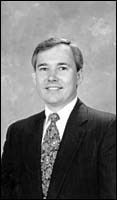
executive officer,
Bacou U.S.A..
Increasing awareness of workplace safety has helped boost revenues for manufacturers of workplace safety products. This is good news for three Rhode Island companies, Bacou U.S.A., North Safety and Dome Industries.
Jackie Shepherd, vice president of operations for health and safety at the Cranston branch of North Safety Products said the workplace safety product industry is becoming more refined.
Beyond Cash Donations: How New Forms of Giving Are Transforming Not-for-Profit Accounting
Evolving Funding Landscape for Not-for-Profits Not-for-profit organizations are being asked to do more with less,…
Learn More
“Certainly the employers are becoming more aware of it, and how creating workplace safety can economically be a good thing,” she said. “It’s just in everyone’s best interest to create a safe work environment.”
Phil Barr is president and chief executive officer of Bacou U.S.A., the Smithfield manufacturer of personal protection equipment that reported net income for 2000 of $32.1 million. He traced the industry’s growth from the beginning of Bacou’s involvement.
“When the government stepped in with OSHA (Occupational Safety and Health Administration) and put together the rules and regulations because of the feeling that employers hadn’t done enough,” he said, “they were just responding to the mandate of OSHA in the 1970s.”
He said since then, employers have recognized that workers injured because of a lack of safety equipment mean less money for the company, and began focusing on safety independent of regulations.
“It’s a good investment to protect your employees,” he said. “Otherwise, there is more absenteeism, and the loss of productivity.”
Tracy MacMillan, vice president of marketing for North Safety, said she thinks the Bush Administration will determine the future of workplace safety products.
“Some of it is going to be dictated by the new president and his policies,” she said. “He’ll be an influence on what safety manufacturers can expect.”
Some of the factors by which Bush will be an influence include the changes he will make to OSHA, how quickly he will be able to implement them, and whether he will call for a step-up in inspections and increase penalties for those manufacturers who do not pass.
“When his dad was in office OSHA penalties increased every year,” she said. “They went from $57 million to $116 million.”
This is good news for the safety products industry, and good news for the American worker, said MacMillan.
“If there are more regulations that are promulgated quicker, that has a prominent effect on the safety manufacturers,” she said, “and the same positive halo effect on the American workers. Because it makes it a safer place for them to go to work every day.”
“We’re in the business of helping save the life and health of the workers and we’d like to think the government has the same objective,” she said.
Another company contributing to workplace health is Dome Industries. The Warwick-based company manufactures HandEze gloves, a product that helps reduce pain caused by arthritis, repetitive stress injuries and carpal tunnel. They are currently producing their HandEze Plus glove, which has removable heat and cold retaining pillows to increase relief.
Andrew Hamilton, national sales manager for Dome said the company began manufacturing bookkeeping records over 60 years ago, and the HandEze product is relatively new. He said the company saw an opportunity to manufacture and market a workplace safety product, and took it. Consolidating with New England Therapeutic Research Group to manufacture HandEze, Hamilton said manufacturing products within different industries is not difficult.
“We’re manufacturers and we’ve always done it this way,” he said. “As far as new products go, if it makes sense for us and we see marketing potential then we’ll do it.”
Barr said the future of the industry looks promising.
“I think, in the future, insurance companies will begin to audit companies’ safety programs the way they do buildings,” he said. “When the buildings pass the insurance, premiums are reduced. If this happened with workplace safety, the companies would have better treatment on workers compensation premiums.”
Even more incentive to be safe would likewise mean even better revenues for the workplace safety product manufacturers.