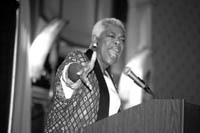
Bar’s featured speaker stresses value of diversity, civil rights
The Rhode Island Bar Association held its 2005 annual meeting, “Bridging the Gap: Lawyers as Social Architects,” June 9 and 10 at the R.I. Convention Center, giving area attorneys an opportunity to participate in a variety of seminars and workshops.
Seifert Systems Invests in Energy Efficiency to Strengthen Operations
For manufacturers, energy is more than just another operating expense. It plays a critical role…
Learn More
Elaine R. Jones, past president and director-counsel of the National Association for the Advancement of Colored People’s Legal Defense and Educational Fund Inc. (LDF), served as the event’s keynote speaker, delivering a stirring address to set the ball rolling for the annual two-day event.
Jones, whose career has spanned 32 years, was the first woman to hold her position created by the Fund’s founder Thurgood Marshall. She joined the group immediately after graduating from the University of Virginia Law School in 1970.
“I had the privilege to lead the law firm established by Justice Thurgood Marshall. He established the NAACP Legal Defense and Educational Fund Inc. in 1940 in New York, the first nonprofit law firm in the country. … He hired me on staff at the LDF and the first five years I was there I spent litigating death-row cases in the South,” she told the crowd.
According to Jones, lawyers today, like always, face many issues and made a point about the importance of understanding the reach of the law and how they impact people in all walks of life. She said lawyers have a responsibility to solve many of the societal problems that exist today.
Jones referred to what she called ‘sister statutes,’ including disability, age, race and ethnicity discrimination, adding that these are all interrelated and must be addressed.
“One of the values that I have incorporated (in my career) is the deep appreciation of the interdependence of the law, the way the law serves us all, especially in cases of civil rights, human rights and social justice,” Jones said. “We usually think about civil rights cases as benefiting one segment of society only. And too often people want us to think of those cases that way, because they serve to divide us rather than unite us. I’ve been very fortunate to serve in a legal organization that from its inception valued diversity.”
Through anecdotal accounts of the many cases she had to litigate through the years, Jones illustrated how lawyers throughout the nation have become social architects, with the responsibility to uphold the law to protect the rights of everyone.
“Once Thurgood Marshall said to me that lawyers litigating in these kinds of cases have an uphill battle, which is why they must use any resources available to them to solve issues. (He said), ‘We have our legal arm and we have our political arm, lets use them both. Don’t listen to the myth that the problems have already been solved, take it from me these problems have not been solved,’” she said.