A 1,495-slip marina on Weaver Cove in Portsmouth is the first part of a plan
to create one of the largest marine trade centers in the Northeast over the
next 10 years.
The marina being developed on Weaver Cove on Narragansett Bay along Burma Road (Defense Highway) will open to boats in June, phasing in about 400 slips at a time, said Ken Kubic, president of the Rhode Island Marine Trade Association.
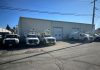
Meanwhile, the Rhode Island Economic Development Corporation, the marine trade association, the community and the Newport County Chamber of Commerce are working on getting two Navy properties adjacent to the cove transferred to the private sector for development. Both properties would be used for expansion of the 40 existing marine businesses in the Melville Marine District and the addition of new ones, said Portsmouth Town Administrator Robert Driscoll.
“We have both small and large businesses that want to expand but have no room, and I know we’ll be able to attract new businesses as well,” Driscoll said.
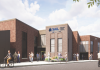
If acquired, the parcels would be used to create the largest marine complex in the Northeast, the Melville Marine Trades Industrial Park.
“From a vision standpoint, this would become the most important area in New England for concentrated marine trade activity. It would be a cluster area with everything the marine industry needs – a one-stop shopping marine industrial park,” said Newport County Chamber of Commerce Director Keith Stokes.
“There is an immediate need for 2,000 more slips and a future need for even more,” said Kubic, citing the demand reported by local marinas. “We ran out of space for people to expand marine services five years ago, so anything we can get would be of tremendous help.”
The EDC is looking for private investors to purchase the Navy properties or to form a public-private partnership, Townsend Goddard, of the EDC, said.
The “vision” plan for the Melville Marine Industrial Park includes three phases to be completed over the next decade.
Phase I is the Weaver Cove marina, which is currently under development.
Phase II is the purchase of a 30-acre parcel of naval land adjacent to Weaver Cove, which is currently under negotiation by the EDC. Negotiations should be complete by Jan. 1.
The negotiations stipulate there must be $12.8 million in private investment on taxable property and at least 180 jobs must be added, Driscoll said. The job requirement is tied to a need for year round services.
The parcel includes a pier and water access route. Because the parcels belong to the Navy, there is no set market value, Goddard said.
“There are federal regulations which allow for excess federal property to come to the state for redevelopment – as in the case of Quonset Point – before going to private market,” Goddard said. “It is very early in the process so I’m not sure if there is any environmental cleanup, which could affect the eventual per-acre price.”
Phase III of the vision plan is the acquisition of a 120-acre naval tank farm located east of the waterfront. The property is connected to the Navy base via Burma Road and was used as a fueling area during World War II, Stokes said.
Plans to possibly purchase that property depend on the results of environmental testing of the land that is being conducted now and should be completed over the next six months.
“There are a number of issues with that property, so any plans for it are very preliminary,” said Stokes. “If we acquire that property, it would have direct access to the waterfront.”
To develop the Melville Marine Trades Industrial Park, logistical issues also have to be resolved, Stokes said.
If the 120-acre tank farm is acquired from the Navy and developed, Burma Road would have to be transformed into a parkway to make the area easily accessible and to keep people from having to travel on the already congested West Main Road, Stokes said.
Should all issues be resolved and Melville Marine Industrial Park becomes a reality, it could mean a major economic boost for the state.
“There is a shortage of space in the East Bay for marine industry which has been a drag on growth for many years. We see the Melville as an opportunity to bring more space on-line for boat builders, sail makers, precision parts manufacturing,” Goddard said.
Boat sales through June of this year were up nearly 19 percent from last year and 150,200 jobs were directly related to the industry, said James Petru, director of market statistics for the National Marine Manufacturers Association at the recent Newport International Boat Show press conference.
“For each of the middle- to large-sized boats kept here, there is a significant – but hidden – economic impact. The parts, supplies, labor that are necessary to keep the boats going also keep quite a few people working – from small one-person operations to big chain stores,” Goddard said.
It is difficult to predict the exact number of jobs and economic impact of the boating industry because many parts of a boat aren’t made by the builder and are not considered part of the boating industry in statistics, Goddard said.
For instance, a boat builder does not make the engines of its boats. On a sailboat, the mast and rigging are made by other companies, and the winches, sails, glass, hoses and paints used are all manufactured by different companies.
The state Department of Labor and Statistics lists ship and boat building and repairing as one of the industries to add the most jobs in the state through 2010.
In 2000, 3,014 jobs were directly related to the industry and by 2010, the industry is expected to increase by 30 percent: 3,915 direct jobs.