The Canadian owner of Bess Eaton shops to battle Dunkin’ Donuts, fast-food chains
The “Christ is the answer” message on the Styrofoam cups
of Bess Eaton coffee shops will soon read “always fresh,” the motto of Canadian-based
Tim Hortons restaurant chain.
Beyond Cash Donations: How New Forms of Giving Are Transforming Not-for-Profit Accounting
Evolving Funding Landscape for Not-for-Profits Not-for-profit organizations are being asked to do more with less,…
Learn More
It will be among a slew of changes – big and small – at the 42 Bess Eaton locations Hortons bought recently in U.S. Bankruptcy Court for close to $42 million.
An operations team is already in the state working on transforming Bess Eatons into Tim Hortons, revamping the sites to make them more like the 184 other U.S. versions of the brand – in western New York, Michigan, Ohio, West Virginia, Kentucky and Maine – and the 2,358 locations in Canada.
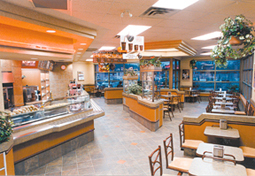
Consumers will notice changes “immediately,” Hortons spokeswoman Diane Slopek-Weber said. All the locations include drive-thru windows (some have two) and many of them are open 24 hours. The restaurants have sit-down areas much like its parent chain, Wendy’s.
Aside from competing with other coffee shops, like Dunkin’ Donuts and Honey Dew Donuts, Hortons also serves soups, chili and various sandwiches, pitting it against fast-food chains like McDonald’s and Burger King.
Tim Hortons has more locations in Canada than McDonald’s does and considers itself a different type of fast-food chain, Slopek-Weber said. It sells 72 percent of all the coffee in Canada. It offers pastries and coffee, but doesn’t sell flavored coffees – regular and decaffeinated only, “never older than 20 minutes” – though it does offer hot cappuccinos and thick, frozen cappuccinos, she said.
As consumers get to know Hortons in coming weeks, the Ontario-based company is familiarizing itself with Rhode Islanders. For the first time, the chain will offer iced coffee.
“We don’t offer iced coffee in any of our restaurants, but we hear it’s very popular there so we’ll be offering that,” said Weber. “We understand the history of Bess Eaton, and we are sensitive to that. We are looking forward to making our way into the area.”
The TDL Group Corp., the licensing company of Tim Hortons, outbid Dunkin’ Donuts by about $1 million for the 42 locations. The bankruptcy procedure lasted seven weeks after Bess Eaton executives filed for Chapter 11 reorganization in February.
In all, the company owed its creditors and vendors $36 million, the company’s attorney Alan Shine of Winograd, Shine & Zacks of Providence said.
“In my 43 years of practice, I’ve never seen a company file bankruptcy and end with a 100 percent payout to creditors, and so quickly. Most Chapter 11 filings to save a business last 18 months to two years,” Shine said. “Most Rhode Island Chapter 11 cases are not successful, probably 5 percent or less. Bankruptcy filings usually end in liquidations and shutdowns.”
Shine said one of the reasons the company was financially troubled is that about 30 of the locations are clustered in tourist and beach areas that aren’t frequented during winter months.
In addition to selling off 42 of the 48 stores, Bess Eaton’s bakery was sold to Glanz Properties Inc. of Brookline, Mass., for $2 million, and the office building to Heartlab, a Westerly-based medical-imaging company, for $1 million.
Tim Hortons may locate its regional corporate office in Warwick, though, Slopek-Weber said plans have not been solidified.
She also said the chain is looking at the possibility of eventually opening more locations. It also plans to employ current Bess Eaton staff.
The chain is expected to receive a tax exemption from the Rhode Island Economic Development Corporation for the money it plans to spend on renovating the stores.
The company plans to make a good impression with the Tim Hortons Children’s Foundation, a nonprofit, charitable organization that provides a camp environment for children from economically disadvantaged homes. Every year, local children are selected from each of the communities in which a Tim Hortons store operates, and gives them the opportunity to attend one of the camps.
“Our company is active in the communities we enter. We get involved in community events and fund-raisers for children. We plan to give back to the community.”
The first restaurant opened in 1962, with Ron Joyce as the franchise owner. Joyce and National Hockey League Hall of Famer Tim Horton became partners in 1967, until Horton was killed in a car accident in 1974 and Joyce became sole owner.
Joyce and Dave Thomas, owner of the Wendy’s chain, merged in December 1995. The chains operate separately.
The chain reports $806.6 million in sales in 2003 and 23.9 percent one-year sales growth.
It employed 760 people that year, Hoover’s information shows.