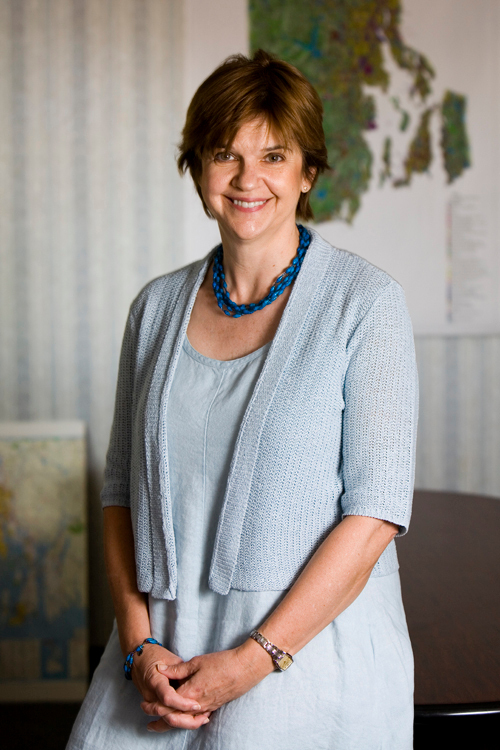
Before she came on board as president of the Rhode Island Health Care Association (RIHCA) in early 2008, Virginia Burke had no experience as a political activist. She proved a fast learner.
Just weeks on the job, she found herself organizing a full-tilt lobbying campaign to safeguard funding for the nursing homes and rehabilitation facilities the organization represents. State government was facing yet another financial crisis, and Medicaid reimbursements were on the chopping block. She testified at hearings, answered countless questions from the press, pulled together 600 people for a Statehouse rally and met with key legislators. In the end, cuts were made, but due to her efforts they were much smaller than expected.
“Virginia has done a remarkable job creating a message and telling the story of what has happened to Rhode Island’s nursing homes,” said Hugh Hall, chairman of the association’s board of directors and administrator of the West View Health Care Center in West Warwick.
“She came in at a very difficult time for both Rhode Island and the health care field. It’s been government by crisis for several years now, and the state had repeatedly reduced Medicaid assistance reimbursements,” Hall said. “She has been successful in educating legislators about the high performance level in Rhode Island nursing homes, and what will happen if cuts continue.”
The Rhode Island Health Care Association represents 60 of the 85 nursing homes and rehabilitation facilities in the state, institutions that provide care for more than 7,000 Rhode Islanders.
“My focus is the care of the frailest of the elderly,” Burke said. “When you have a message as compelling as that, organizing a rally is not a difficult thing to do.”
Leading RIHCA is Burke’s third professional career, but she’s been involved with health care all her life. She worked for 10 years as a registered nurse, then picked up a law degree and became an attorney, with a practice concentrating on general health care law.
She first became interested in policy issues while working in the pediatric intensive care nursery at George Washington University Medical Center in Washington, D.C. “I saw that as a society, we were willing to spend a million dollars a month for premature infants with little hope of survival,” she said. “But at the same time some of the hospital’s housekeeping staff could not afford antibiotics for their kids’ ear infections.”
Burke later enrolled in a bio-ethics class at Georgetown University. An instructor there took note of her keen interest in policy and suggested she go to law school. She followed that advice and earned a law degree from Georgetown in 1989. She then moved to Providence, where she has worked for several law firms, including Partridge, Snow & Hahn and Edwards Angell Palmer & Dodge.
When the previous RIHCA president retired, Burke applied for the job. The board’s vote to hire her was unanimous. As head of the association, her goal is to help long-term care providers and state regulators bring about a cultural change at nursing homes.
“Nursing homes started out as an offshoot of hospitals, and for a long time they were run like hospitals,” she said. “But today these places are becoming more and more like home. People wake up when they like, not when the breakfast tray arrives. The residents decide when they will go to bed, or whether the lights stay on or off.” •