Verdict may boost business
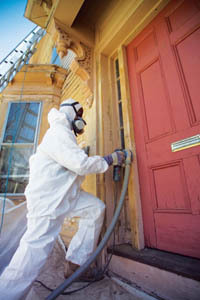
Even forcing an old door or window shut can release poisonous lead paint dust, contractors say. So imagine the precautions they need to take when they do actual lead abatement.
Seifert Systems Invests in Energy Efficiency to Strengthen Operations
For manufacturers, energy is more than just another operating expense. It plays a critical role…
Learn More
Rhode Island has one of the oldest housing stocks in the country, meaning that hundreds of thousands of homes contain lead paint, even if it lies beneath coats applied after its use was banned in 1978. And though standards for working on affected properties have been in place for years, the threat of exposure is ever present, contractors say.
The issue found its way to the front pages in February, when a Providence jury found that The Sherwin-Williams Co. and two other paint companies were liable for the state’s lead paint problem and should be required to pay to correct it, at an estimated potential cost of $1 billion. The amount of damages and the level of remediation – containment vs. removal – must still be determined in further court proceedings.
Either way, the impact of the case on the lead removal industry in the state, said Derek Winslow, program director for Clear Corps Providence, a nonprofit that provides free home lead evaluation and other related services, could be “huge,” given the amount of money that would become available.
Clear Corps, a national program offered locally through the West Elmwood Housing Development Corporation, works in conjunction with the city of Providence to control lead contamination in households by educating tenants and landlords and providing cleaning services.
Winslow said he recently has seen cases where people inadvertently released lead paint remnants when replacing old kitchen cabinets or scraped lead paint onto the yard while doing exterior upgrades – putting workers and tenants at risk.
In 2004, the R.I. Department of Health has said, 1,617 new cases of lead poisoning were diagnosed among children under age 6 in the state. But while lead poisoning is particularly hazardous to children, in adults it can cause increased blood pressure, kidney damage and nerve disorders, according to the National Safety Council, a Washington, D.C.-based nonprofit dedicated to health awareness.
Brian E. Correira, president of BEC Technologies Corp., an East Providence firm that specializes in lead and mold abatement, said it’s unclear how much the verdict could increase business for lead abatement contractors, though it will certainly have a positive impact.
Right now, BEC tackles mostly large-scale lead projects, following existing R.I. Department of Health and U.S. Occupational Safety and Health Administration regulations.
Per Health Department requirements, Correira said, he and his employees are recertified annually to conduct lead removal and cleanup work. They also undergo blood tests every year to gauge the amount of lead in their bodies.
Depending on the level of pollution, OSHA demands that workers wear varying amounts of gear such as respirators, masks and protective suits. And Correira said he takes extra measures to ensure safety, such as assigning each employee his own fitted gear to prevent leaks due to wrong sizes or damage.
The environmental contractor also carries added pollution insurance on his liability policy, required of companies for most large lead removal projects, Correira said.
Correira and others noted that Rhode Island has “lead-safe” standards that allow lead paint to be contained so it won’t chip or create dust, whereas Massachusetts requires lead abatement projects to make properties “lead-free” – with all the lead paint removed.
Marie Stoeckel, who heads up the lead program for the Department of Health, said the state’s current regulations were adopted in 1992 primarily to protect children, and in the process they have required contractors to get certifications to clean lead pollution in homes.
In 2002, Stoeckel said, the department created a second tier of certification that follows a less rigorous process so more people could gain licenses. More than 100 companies have used the streamlined “Lead-Safe Remodeler/Renovator” process to certify employees for smaller lead cleanup projects, she said.
The R.I. Department of Environmental Management, which certifies contractors for outdoor lead paint removal, has also adopted a quicker certification process to enable more people to legally perform lead cleanups, she noted.
Stoeckel, whose official title is chief of occupational and radiological health, said the state’s lead paint litigation could have an “interesting” impact on the department’s efforts to enforce safety standards.
“Some of that money will be spent on housing that is not in good condition,” she said. “We would expect, because of the attorney general’s interest in making properties ‘lead safe,’ that the money would be moved to properties where they need financial assistance.”
Clear Corps’ Winslow said he hopes that the lawsuit funds will help provide free lead inspections and cleanups to households statewide. And a release of funds would increase the number of projects, he said. “It’s about to become really crazy.”