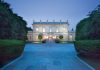
One local building — the Providence Public Library on Washington Street — is receiving lots of attention from architecture students these days.
Fourth and fifth year students at the School of Architecture, Art and Historic Preservation at Roger Williams University (RWU) have been asked to create plans for a hypothetical building restoration and 21st century addition to the library, and will spend the semester examining the building and generating designs.
Beyond Cash Donations: How New Forms of Giving Are Transforming Not-for-Profit Accounting
Evolving Funding Landscape for Not-for-Profits Not-for-profit organizations are being asked to do more with less,…
Learn More
The class is being taught by Hasan-uddin Khan, distinguished visiting professor at RWU’s school of architecture.
The library, which was built in 1900, has undergone several renovations since, including the addition of a new building in the 1950s and smaller projects in the 1960s and 1980s.
At the time the library’s original building was constructed, “there was an image of what a library was,” said Khan. “Libraries in the old days had an image of being these old stone buildings.”
By the time of the building’s major addition in 1954, “no one really worried about how you add onto a building,” he said. “You almost rejected the past.”
Thus, the students’ challenge of what to do with the structure on its tight urban site is a real one.
“How do we make sense of the building?” Khan said. “How much of the past can we reuse? How do you make this a space that is friendly and warm? Do you restore it to 1900? To the 1950s?”
Khan hopes to exhibit the students’ final projects at the Providence Public Library in May.
“All architecture students study architectural history,” said Dennis Frenchman, professor of the practice of urban design at the Massachusetts Institute of Technology.
Mentioning the Egyptian obelisk (also found in Washington, D.C., of course) and the arch of classical Rome, Frenchman said that certain architectural features resurface time and again as a form of artistic expression.
“You have to go beyond the notion of shelter alone,” he said. “These things recur. Every 100 years or so, you can see a classical period of architecture. One of the interesting things is if you look at what’s happening today is that there is a lot of disassociation from the past. One hundred years ago, banks looked like Roman temples — today we have ATM machines.”
Buildings like banks, schools and churches were meant as symbols of security, reflective of the institution they represented.
“Whenever you see one of those buildings, it looks out of place,” Frenchman said. “It’s very hard to tell anymore by its appearance what a building is supposed to be.”
The Industrial Revolution was the beginning of the modern movement, Frenchman said, where buildings are meant solely as an expression of their function, “stripped down to their absolute essence.”
One thing Khan has noticed about historic preservation of buildings in the U.S. as compared to Europe, is that in Europe the restoration extends to the inside of a structure, as well as its façade. Here, often a building will display a painstakingly preserved exterior, only to reveal a completely modern interior.
“I find that disturbing in many ways,” he said. “It does preserve a streetscape, but it also displays a lack of confidence in the architecture of our own time.”
Khan said that more and more, architects are collaborating with preservationists especially in urban settings.
“Not every building can be a museum,” he said. “The main thing is to keep the nature of the building and keep the qualities of what it was.”