future for aquatculture in Rhode Island.
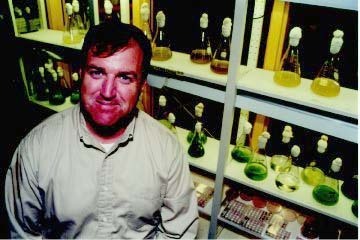
Roger Williams University Professor Tim Scott may be impressed with the 26 percent increase in gross revenues the state’s aquaculture industry experienced last year, but he knows that it isn’t nearly enough.
The industry’s $5.5 million impact on the state’s economy still pales in comparison to the industry statistics of neighboring states and he wants that to change.
Seifert Systems Invests in Energy Efficiency to Strengthen Operations
For manufacturers, energy is more than just another operating expense. It plays a critical role…
Learn More
So, the executive director of the Center for Economic and Environmental Development at Roger Williams University is studying the feasibility of creating Marine Technology Park – an incubator for aquaculture — along Rhode Island’s shores.
“This is not a new idea for us, but one I think the time is right for,” he said. “What we want to create is an incubator that will help grow this aspect of the marine industry.”
With only two other such centers in the country, Scott said the state could be poised not only to bring its own aquaculture industry back, but also to become a leader, especially in the field of marine biotechnology.
“This is something that will help small companies get over the limitations they face when it comes to research and development,” he said. “It’s a way to invest in this industry.”
It’s an investment that doesn’t yet have a funding source. So far Scott has only received $30,000 through a grant from the Rhode Island Aquaculture Initiative, run by the state’s Coastal Resource Management Council, to study the feasibility of the idea.
“The Department of Commerce asked us to study the feasibility of the center,” he said. “We estimate that to build it would cost between $4 and $5 million. I don’t think about the funding. Right now I am just thinking about the park’s importance. ”
And while the idea is still in its infancy, Scott and other local industry experts agree, the tide is definitely changing for Rhode Island aquaculture.
“This is our defining moment,” said Todd Corayer, owner of Salt Water Farms, which is based in Narragansett. “I would definitely say we are moving forward. It has just been a responsible progression.”
With a nickname like the Ocean State it wouldn’t seem a far fetched-idea that Rhode Island dominate the region’s aquaculture industry. But pollution in the bay, hurricane damages, and a poor regulating system have served to cripple the once thriving industry.
After recently being ranked last in the nation in aquaculture production, the state’s industry leaders decided they had had enough.
They began petitioning local legislators to pass aquaculture-friendly bills, they looked to the state’s Washington delegation for grant funding, and they urged those in academia to push research and awareness of the industry.
Their efforts seem to be working. In the last year, the General Assembly passed a bill releasing aquaculture farm products from size requirements levied against commercial fisherman. The state’s Coastal Resource Management received a $1.5 million federal grant supporting the Rhode Island Aquaculture Initiative, and together the University of Rhode Island and Roger Williams University have brought in a total of $1.5 million in funds for aquaculture research.
“The sky is the limit when it comes to aquaculture,” said Bill Silkes, president of the Ocean State Aquaculture Industry, and president of the American Mussels Company. “The industry is definitely growing. The social and political climate is changing and that is allowing the industry to happen.”
No one knows that better than Corayer. Currently harvesting oysters and mussels from 15 acres in Middletown, and overseeing another two-acres off the coast of Block Island, Corayer is the largest farmer in the state.
“Large is a relative term,” he said. “If you go to Maine 15 acres is tiny for people; they experiment on that. There is so much room for expansion in this industry. The whole ocean is out there, and if carefully sited, it has unlimited potential.”
But like others in the industry, Corayer understands the risk that he is taking, even with what he considers a small 15 acres.
“There really is no cookbook reference in this business,” he said. “The way it works, if you make a mistake or encounter an obstacle you have to wait until the next year to fix it. The learning curve is longer, and I don’t think the lending community is yet ready to accept my crop of oysters as assets. That makes getting funding difficult.”
A former commercial fisherman, Corayer is considered a “convert” in the aquaculture industry. That’s because traditionally commercial fisherman hated the idea of aquaculture and saw it not as an emerging industry, but as one that was invading an already shrinking economic landscape.
“For years the commercial fishing industry opposed aquaculture because they saw it as infringing on their bottom line,” said David Alves, director of aquaculture for the Coastal Resource Management Council. “What we have tried to do, and I hope I have been successful at is working with the fishing industry to let them know that it’s not zero sum. This can fit into their lifestyle.”
It’s not just about shellfish, either. According to Alves, one of the most positive aspects of the proposed Marine Technology Park, is that it has a broad focus. Already, he said there is one company interested in growing tropical fish for its aquarium business.
“This incubator is something different,” he said. “One of the largest problems identified with start-ups is the permits and the capital costs. This center would take care of that.”
And while Rhode Island’s own industry isn’t large enough to support the center, Alves said, New England’s is.
“There is enough of an industry in the northeast region to support this, definitely,” he said. “The possibility of bringing new jobs into the state is there.”
So far, Scott’s study results also show that to be true.
“At this point we have completed discussions with experts and other industry constituents and the results have been very positive,” said Amy Tomas, an assistant director of marketing at Roger Williams who is conducting a marketing study for Scott’s proposal. “There seems to be a sense of relief. People know that there is a need, and several people have commented that that need is especially true for Rhode Island.”