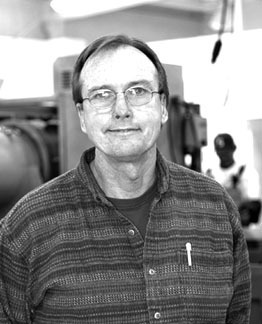
Mussel Harvesters.
Name: William Silkes
Age: 52
Position: President and founder of the American Mussel Harvesters,
a fully integrated live clam, mussel and oyster processing, distributing and
harvesting company founded in 1986
Beyond Cash Donations: How New Forms of Giving Are Transforming Not-for-Profit Accounting
Evolving Funding Landscape for Not-for-Profits Not-for-profit organizations are being asked to do more with less,…
Learn More
Background: Prior to founding the AMH, Silkes was a mussel harvester
and grew mussels on an experimental farm in Maine before coming to Rhode Island
and establishing a mussel farm
Education: Received a bachelor’s degree in marine sciences from Unity
College in Maine; received a master’s of science in aquaculture science from
the University of Rhode Island
Residence: South Kingstown
PBN: You recently opened a new processing facility in Quonset. What has
allowed your business to grow?
SILKES: It’s focusing on bringing quality shellfish to the marketplace
and literally guaranteeing it. We just look at the business in a different way
than the traditional industry where it’s really a commodities business and you’re
buying and selling around weather events and when the harvest can get out and
the price is up and down and so on. What we’re focused on is bringing quality
and stability to the market, so we go to the market with a guaranteed quality
and a stable price and we work with our customers to allow key restaurants to
put the items on their menu…. And they can rely on the supply, they can order
it every day, they can rely on the quality and the stability of the price. We
had a smaller operation, but the same philosophy, and a smaller seawater and
packing operation and we grew the business around that to the point that we
needed to expand.
How has this new facility brought more technology to your business?
What you’re looking at there represents about five years of R and D on seawater
systems and marine biotechnology research. The folks that I work with is actually
a company called Marine Biotech in Boston but I traveled around the world looking
at how industries in different parts of the world handle shellfish. What you
see out there is unique to the world in terms of we brought a filtration system
and a pumping system to an industry that where you typically see this is for
the National Institute of Health for holding marine fish for their genetic integrity
and history. It’s a very high-tech approach to an industry that has traditionally
been a commodities-type business.
AMH has a water filtration and holding system that pumps seawater into a treatment
system that purifies the water and removes bacteria, which speed decomposition
in shellfish. The shellfish are kept alive in holding bins constantly flushed
with the water, which is returned to a reservoir for future use. When an order
is placed, the bins are removed from the water and the shellfish is processed
for shipping.
What do you think of the Department of Environmental Management’s improved
fishing license system? What do you think of Governor Carcieri’s decision to
re-appoint DEM Director Jan Reitsma?
It’s a very emotionally charged issue and the reality is, change had to come
in terms of the old licensing system, and I have a lot of respect for director
Jan Reitsma and how he got involved with the industry, trying to understand
what the best approach would be to better manage the state’s marine resources
as well as accommodate the financial and social interests of the fishermen.
I think it was one of the better decisions the governor made in re-appointing
Jan Reitsma. It’s a very difficult situation with no easy answers, whether you’re
talking about fisheries licensing in Rhode Island or at the national level.
What do you think of the new non-port focus and the new Economic Development
Corporation regime?
In terms of the governor going on and running on and winning on a no-port,
non-port platform, I supported that and I think there are a lot of good uses
of the waterfront here, including what we do, in terms of our tie-ins to the
traditional shellfishing industries in Rhode Island, as well as the up-and-coming
aquaculture industry and shellfish farming that’s happening in the bay. What
we represent is using the waterfront in this way – access to the shellfish resource
as well as access to the market. It’s one of the critical issues facing the
seafood industry and fishing in general and aquaculture in this country is access
and the need for a working waterfront.
How can you assure your shellfish are harvested in an environmentally sustainable
manner, and why is it so important to you and your company? Is it a marketing
strategy?
It’s a philosophical belief, it’s part of our mission statement, and one of
the reasons we’re unique – if you look at the seafood business everyone’s trying
to do a range of products and we’re specific to mussels, oysters and clams because
they are sustainable both in a free and common fishery as well as in aquaculture
farms. We’ve got generations of people growing shellfish for us and I’ve got
my own sons growing shellfish. It’s pursuing best management practices that
will support your farming and harvesting efforts today and for future generations.
We are definitely doing that and it’s the philosophy of our company.
Some critics say that aquaculture, especially shellfish farms, is a stress
on the environment because shellfish and other marine life grow in larger quantities
in the smaller area than they would occur in nature. How do you feel about this?
Usually that criticism is directed at the aquaculture industry and they liken
salmon pens or shrimp ponds to cattle lots and them degrading the environment
and there’s a whole debate around that. But those of us who do shellfish, you
have to understand, what we introduce to a coastal body of water is a filtering
system. We’re introducing filters and there’s a body of science that’s being
published right now suggesting that as you look at the coastal environment in
most countries, it’s eutrifying as a result of too many nutrients being washed
into coastal waters and that creates plankton blooms. What we’re doing is introducing
a filtration system that is filtering the water, taking those microscopic green
plants and converting it into animal protein and when you harvest you’re removing
that nitrogen. There is actually a benefit to a coastal marine ecosystem in
introducing a shellfish farm to the environment. So that criticism of aquaculture
is a broad-brush thing that paints an image in the average person’s mind that
is totally false.
You get the majority of your shellfish from Canada. Why don’t you get more
from Rhode Island and New England areas?
The short answer is water quality and really that goes back to a lot of the
reasons why we set this operation up. Increasingly the U.S. market for large
shellfish is being filled by production out of Canada because the water quality
is better. You can grow shellfish there, but that adds two to three days to
the distribution channel and so the product is coming in and sitting in a cooler
before it goes to a restaurant or retailer where it might spend another two
to three days before someone’s actually sitting down to eat it. That’s a large
part of the reason for the installation of this system. We have the access to
the clean water and we have the access to the market. Every day at 10 o’clock
we have a truck on the road that’s servicing all of the local restaurants and
fish markets here in Rhode Island and Connecticut and Boston. At one o’clock
we have a tractor-trailer that goes to our warehouse in Boston and we’ll have
pallets of product packed for our distributors in the Carolinas, the Virginias,
Atlanta, out to Alabama and another truck that goes to New York, Detroit, Ohio
and we have a truck that goes to the airport.
Your company has shellfish coming in directly from fishermen, but you also
have your own shellfish aquaculture farms. How much of what you distribute is
caught in natural fisheries versus harvested from aquaculture?
In 1992, 100 percent was from free and common fisheries and today probably
on a weight basis, 40 to 50 percent is from public fisheries, so about half-and-half.
That’s an increasing trend toward more farmed product because of the sustainability.
You’re walking a fine line as to your definitions here because you first have
to define a private aquaculture farm. In Rhode Island right now there’s a public
effort to restore the quahog fishery with public funds for the benefit of the
free and common fisherman, but it’s going to be using aquaculture technology.
We don’t make a distinction – we represent independent farmers as well as independent
fishermen. We bring those products to market as long as it meets our quality
specifications.
You said that there is always more demand than supply in this business.
What is the future of shellfishing here in Rhode Island and on the East Coast?
Do we need to change the way we fish in order for us to keep bringing in the
supply?
When you say here, I think of where we work with independent farmers and fishermen
and we’re along the entire eastern seaboard from Atlanta, Canada down through
Rhode Island and Connecticut and we’re out in the Pacific Northwest. The production
potential is enormous. In our little farm here in Rhode Island we could produce
a standing crop of mussels that exceeds the total harvest from the coast of
Maine right now. The technology is there and we’re actually working with some
folks at URI talking about doing some mussel farming in open water. We could
produce millions of mussels out there. So what’s got to change – we could talk
about that for quite a while. There are some regulatory issues, some water quality
issues that are being addressed here in Rhode Island.
Should we be investing more into creating jobs and
technology in this industry?
The problem is that people think the fishing industry is small business –
that it’s cute, but it’s big business around the world. What we’re trying to
do here is microbiological. Our goal is to move the company out of the shellfishing
business and into the food business. A lot of high-class, white table restaurants
get our shellfish. We’re producing the food folks are serving in their restaurants.
There are certain people in this state, there are legislators who are passionate
about it and are working every day to (get the state to) invest in the shellfishing
industry.
For the complete current issue, visit our subscription Web site, or call (401) 273-2201, ext. 227 or 234.