Every year about this time we implore the business community to contact state legislators to let them know which issues are making it difficult to do business – and what steps could be taken to improve Rhode Island’s business climate.
Understandably, small-business owners are busy. Sixty and 70-hour workweeks are not uncommon. That leaves little – if any – time to drop by a legislative hearing at the State House.
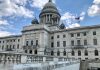
We continue our call for business owners to find that couple of hours each month to get up to the State House and make their presence known or to set aside an evening to contact legislators by telephone.
Beyond Cash Donations: How New Forms of Giving Are Transforming Not-for-Profit Accounting
Evolving Funding Landscape for Not-for-Profits Not-for-profit organizations are being asked to do more with less,…
Learn More
Remember that the pro-labor forces in this state are well organized and their presence at the State House is formidable.
The small-business community should know that the National Federation of Independent Business and its state director Terrance Martiesian, are aggressively lobbying on its behalf.
Martiesian has singled out the high cost of health insurance and a projected $190 million state budget deficit as the NFIB’s top concerns for 2004. In addition to those critical issues, the NFIB has targeted about a dozen others that are vitally important to improving the climate for small business here.
Here are just a few of them, and the NFIB’s stance:
Death (or Estate) Tax – The Rhode Island estate tax should be indexed so that it gradually increases to reflect the increase in the value of the assets, particularly real estate. This tax is money that should go to heirs and not the state so heirs are not forced to sell off their parents’ lifework. Addressing this issue should also deter so many from establishing residences in states where the tax is not so onerous.
Mandated Benefit Review Panel – The NFIB supports legislation that would establish a panel to review all health care mandates prior to any legislative enactment. This panel would take into consideration research data to determine the effectiveness and perform an analysis to determine the cost/benefit for each proposed mandate.
Bi-Weekly Payment of Wages – The NFIB continues to support legislation that would allow employers to pay hourly employees biweekly instead of once a week. Currently, employers operating in several states have to alter their payment method to operate in Rhode Island. This legislation would give businesses the same flexibility that federal, state and local governments now enjoy.
Project Labor Agreements – PLAs are agreements signed by a trade union and a public entity, which ensures that union workers will be used on all public projects. In most cases the unions must agree that there will be no slowdowns or strikes. The PLA supercedes all other collective bargaining agreements. The NFIB opposes any moves to make PLAs mandatory in Rhode Island.
Public Property and Works – Legislation, with strong union support, has been introduced the past several years that proposes all contractors and subcontractors to carry health insurance and other benefits for employees at the employers’ sole cost. The NFIB continues to oppose such legislation.
Sales Tax Discount for Vendors – Small-business owners have told the NFIB in Rhode Island that the requirement of payment of the tax on credit sales is an additional burden, sometimes forcing them to borrow to pay the tax before they received payment from the customer. There is also a problem of obtaining a tax refund on sales refunds, unpaid bills and bad debt write-offs. The NFIB supports legislation that offers small-business owners a sales tax discount.
Triple Damages Bill – For several years legislation has been introduced that had the support of trial attorneys. It is modeled after the Massachusetts Consumer Protection Act. It would establish yet another cause of action that would allow triple damages, legal fees and would encourage an increase in litigation. This type of bill would only encourage frivolous lawsuits and would make Rhode Island one of the most litigious states in the country. The NFIB opposes any new bills on damages and fees that adversely impact small business.
Small-business owners and the employees and families that depend on them need to support the efforts of the NFIB on these efforts and others.
“Rhode Island is a state of small businesses,” said Martiesian. “Stabilizing our tax laws will improve the business climate and encourage small-business owners to continue to serve as the engine of economic growth here.”
Martiesian is tireless in his work on your behalf. But he could use your help. Give him a call at 421-8676 and ask what you could do. And remember, a hearing room filled with small-business owners sends a powerful message.