Motorists getting socked at the pump paying record-high prices for gasoline, take heart.
At least you’re not paying to fill a 300-gallon tank with marine fuel – which costs an average of 40 cents a gallon more than automotive fuel.
Marinas around the region are taking a “wait-and-see” approach before saying what the higher fuel costs could mean for the boating industry in the Ocean State. But if the sale of dock slips is any indication, the high cost of fuel isn’t deterring people from cruising the open water.
Seifert Systems Invests in Energy Efficiency to Strengthen Operations
For manufacturers, energy is more than just another operating expense. It plays a critical role…
Learn More
At Brewer’s Cove Haven and Marina in Barrington, unleaded marine fuel was fetching $2.76 a gallon. Diesel was $2.43 a gallon. For the week of April 25, AAA said the average cost a motorist pays for regular unleaded fuel in Rhode Island was $2.22 a gallon.
Marinas around the region are taking a “wait-and-see” approach before saying what the higher fuel costs could mean for the boating industry in the Ocean State. But if the sale of dock slips is any indication, the high cost of fuel isn’t deterring people from cruising the open water.
At Brewer’s Cove Haven and Marina in Barrington, unleaded marine fuel was fetching $2.76 a gallon. Diesel was $2.43 a gallon. For the week of April 25, AAA said the average cost a motorist pays for regular unleaded fuel in Rhode Island was $2.22 a gallon.
“My sense is that fuel for most boats is really a rather small expense in comparison to other costs,” said Michael Keyworth, general manager and vice president of Brewer’s Cove. “We’re still seeing strong slip sales. I think people will still launch their boats, but they may tend to use them less.”
And that’s a notion that might mean that boaters will take fewer day trips or longer voyages to locales like Block Island, Nantucket or Montauk.
“What usually happens is that people budget for vacation, so at the beginning of season not much changes” with boaters’ travel patterns, said John McGovern, operator of Greenwich Bay Marina in Warwick. “They’ve had that money set aside through the winter, so if they’ve budgeted for it, they’re going to go.”
But toward the end of the season, like any family watching their vacation budget, they might take fewer trips.
“It’s the extra trips, like to Newport and things like that that they might not do,” McGovern said.
The boats at Greenwich Bay Marina can hold between 300 and 1,500 gallons of fuel, McGovern said. A round trip from that Warwick location to Newport can burn between 20 and 75 gallons, depending on the size of the boat, wind and tides.
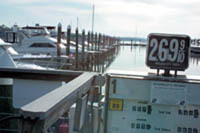
A round trip from Warwick to Block Island will range between 100 and 150 gallons of fuel for a power boater, McGovern estimated. Right now at Greenwich Bay, it costs $2.69 a gallon for 89 octane marine fuel – which means that at the April price, a trip out to Block Island from Greenwich Bay and back could cost anywhere from $269 to $403.50.
And most marina operators said they expect the cost of fuel to hit the $3 mark during peak season.
Al Conti, owner and operator of Snug Harbor Marine Inc. in Wakefield, said people began cutting back on lengthy boat trips last year.
“It definitely started last year,” Conti said. “A lot of it depends on how the fishing is or the weather, but when fuel was cheap, they would just go and not worry about the weather or fish reports.”
Snug Harbor is selling diesel for $2.15 and regular fuel at $2.64 a gallon.
But when fuel prices started climbing and didn’t abate, charter and private sport fishing boats began thinking twice before leaving the marina.
“Even last year, they would only pick the very best weather … some of these guys use between 300 and 400 gallons of fuel in a day,” Conti said. “Now, with the price of gas where it is, they think long and hard before shoving off. Instead of going out 20 or 30 times last year, they went 10.”
McGovern said he’s spoken with several charter fishers who’ve already raised their rates from $100 to $150 for a full day trip.
However, the news about just how expensive gas will be has come far in advance of the travel season might stem some of the negative effect it could have.
“This is unprecedented,” McGovern said. “We already know it’s going up, everyone’s been forewarned about this one. Maybe people will skip on that one dinner to increase their spending down here.”
If the demand for dock space is any indication, this season won’t be much different than last year’s in terms of boat usage.
“There’s more demand for slips today than there ever has been,” Keyworth said.
And at Conanicut Marine Services in Jamestown, boats have been selling at a steady clip, said Mark Mutty, the service manager.
“We’re actually selling more boats this year than last year,” Mutty said. “I think at this point, people are hoping the cost is going to come down soon.”
Mutty said it’s difficult to ascertain what, if any effect higher fuel prices will have.
“It’s yet to be seen, but it wouldn’t surprise me if people restrict their travel somewhat,” he said. It’s early in the season, but right now it’s business as usual.
“My sense is that fuel for most boats is really a rather small expense in comparison to other costs,” said Michael Keyworth, general manager and vice president of Brewer’s Cove. “We’re still seeing strong slip sales. I think people will still launch their boats, but they may tend to use them less.”
And that’s a notion that might mean that boaters will take fewer day trips or longer voyages to locales like Block Island, Nantucket or Montauk.
“What usually happens is that people budget for vacation, so at the beginning of season not much changes” with boaters’ travel patterns, said John McGovern, operator of Greenwich Bay Marina in Warwick. “They’ve had that money set aside through the winter, so if they’ve budgeted for it, they’re going to go.”
But toward the end of the season, like any family watching their vacation budget, they might take fewer trips.
“It’s the extra trips, like to Newport and things like that that they might not do,” McGovern said.
The boats at Greenwich Bay Marina can hold between 300 and 1,500 gallons of fuel, McGovern said. A round trip from that Warwick location to Newport can burn between 20 and 75 gallons, depending on the size of the boat, wind and tides.
A round trip from Warwick to Block Island will range between 100 and 150 gallons of fuel for a power boater, McGovern estimated. Right now at Greenwich Bay, it costs $2.69 a gallon for 89 octane marine fuel – which means that at the April price, a trip out to Block Island from Greenwich Bay and back could cost anywhere from $269 to $403.50.
And most marina operators said they expect the cost of fuel to hit the $3 mark during peak season.
Al Conti, owner and operator of Snug Harbor Marine Inc. in Wakefield, said people began cutting back on lengthy boat trips last year.
“It definitely started last year,” Conti said. “A lot of it depends on how the fishing is or the weather, but when fuel was cheap, they would just go and not worry about the weather or fish reports.”
Snug Harbor is selling diesel for $2.15 and regular fuel at $2.64 a gallon.
But when fuel prices started climbing and didn’t abate, charter and private sport fishing boats began thinking twice before leaving the marina.
“Even last year, they would only pick the very best weather … some of these guys use between 300 and 400 gallons of fuel in a day,” Conti said. “Now, with the price of gas where it is, they think long and hard before shoving off. Instead of going out 20 or 30 times last year, they went 10.”
McGovern said he’s spoken with several charter fishers who’ve already raised their rates from $100 to $150 for a full day trip.
However, the news about just how expensive gas will be has come far in advance of the travel season might stem some of the negative effect it could have.
“This is unprecedented,” McGovern said. “We already know it’s going up, everyone’s been forewarned about this one. Maybe people will skip on that one dinner to increase their spending down here.”
If the demand for dock space is any indication, this season won’t be much different than last year’s in terms of boat usage.
“There’s more demand for slips today than there ever has been,” Keyworth said.
And at Conanicut Marine Services in Jamestown, boats have been selling at a steady clip, said Mark Mutty, the service manager.
“We’re actually selling more boats this year than last year,” Mutty said. “I think at this point, people are hoping the cost is going to come down soon.”
Mutty said it’s difficult to ascertain what, if any effect higher fuel prices will have.
“It’s yet to be seen, but it wouldn’t surprise me if people restrict their travel somewhat,” he said. It’s early in the season, but right now it’s business as usual.
Marinas around the region are taking a “wait-and-see” approach before saying what the higher fuel costs could mean for the boating industry in the Ocean State. But if the sale of dock slips is any indication, the high cost of fuel isn’t deterring people from cruising the open water.
At Brewer’s Cove Haven and Marina in Barrington, unleaded marine fuel was fetching $2.76 a gallon. Diesel was $2.43 a gallon. For the week of April 25, AAA said the average cost a motorist pays for regular unleaded fuel in Rhode Island was $2.22 a gallon.
“My sense is that fuel for most boats is really a rather small expense in comparison to other costs,” said Michael Keyworth, general manager and vice president of Brewer’s Cove. “We’re still seeing strong slip sales. I think people will still launch their boats, but they may tend to use them less.”
And that’s a notion that might mean that boaters will take fewer day trips or longer voyages to locales like Block Island, Nantucket or Montauk.
“What usually happens is that people budget for vacation, so at the beginning of season not much changes” with boaters’ travel patterns, said John McGovern, operator of Greenwich Bay Marina in Warwick. “They’ve had that money set aside through the winter, so if they’ve budgeted for it, they’re going to go.”
But toward the end of the season, like any family watching their vacation budget, they might take fewer trips.
“It’s the extra trips, like to Newport and things like that that they might not do,” McGovern said.
The boats at Greenwich Bay Marina can hold between 300 and 1,500 gallons of fuel, McGovern said. A round trip from that Warwick location to Newport can burn between 20 and 75 gallons, depending on the size of the boat, wind and tides.
A round trip from Warwick to Block Island will range between 100 and 150 gallons of fuel for a power boater, McGovern estimated. Right now at Greenwich Bay, it costs $2.69 a gallon for 89 octane marine fuel – which means that at the April price, a trip out to Block Island from Greenwich Bay and back could cost anywhere from $269 to $403.50.
And most marina operators said they expect the cost of fuel to hit the $3 mark during peak season.
Al Conti, owner and operator of Snug Harbor Marine Inc. in Wakefield, said people began cutting back on lengthy boat trips last year.
“It definitely started last year,” Conti said. “A lot of it depends on how the fishing is or the weather, but when fuel was cheap, they would just go and not worry about the weather or fish reports.”
Snug Harbor is selling diesel for $2.15 and regular fuel at $2.64 a gallon.
But when fuel prices started climbing and didn’t abate, charter and private sport fishing boats began thinking twice before leaving the marina.
“Even last year, they would only pick the very best weather … some of these guys use between 300 and 400 gallons of fuel in a day,” Conti said. “Now, with the price of gas where it is, they think long and hard before shoving off. Instead of going out 20 or 30 times last year, they went 10.”
McGovern said he’s spoken with several charter fishers who’ve already raised their rates from $100 to $150 for a full day trip.
However, the news about just how expensive gas will be has come far in advance of the travel season might stem some of the negative effect it could have.
“This is unprecedented,” McGovern said. “We already know it’s going up, everyone’s been forewarned about this one. Maybe people will skip on that one dinner to increase their spending down here.”
If the demand for dock space is any indication, this season won’t be much different than last year’s in terms of boat usage.
“There’s more demand for slips today than there ever has been,” Keyworth said.
And at Conanicut Marine Services in Jamestown, boats have been selling at a steady clip, said Mark Mutty, the service manager.
“We’re actually selling more boats this year than last year,” Mutty said. “I think at this point, people are hoping the cost is going to come down soon.”
Mutty said it’s difficult to ascertain what, if any effect higher fuel prices will have.
“It’s yet to be seen, but it wouldn’t surprise me if people restrict their travel somewhat,” he said. It’s early in the season, but right now it’s business as usual.