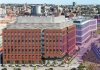
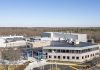
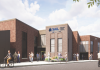
The Greenwich Medical Center represents the kind of commercial development that East Greenwich is willing to embrace. For many of Rhode Island’s non-urban communities, it is an all too common dilemma. Populations grow – necessitating the construction of costly schools and expansion of public safety services. Developers knock on the door.
In East Greenwich, rising property taxes have long been a concern. But so has maintaining the town’s character. Development is looked upon with a cautious eye.
Beyond Cash Donations: How New Forms of Giving Are Transforming Not-for-Profit Accounting
Evolving Funding Landscape for Not-for-Profits Not-for-profit organizations are being asked to do more with less,…
Learn More
The two medical office buildings on the west side of Route 2 – both of which offer 20,000 square feet of space – were 90 percent leased when construction was completed this spring. Now they are full and there are additional medical office buildings under construction and in the planning stages. A plastic surgeon is on the way – as is a facility that will offer MRI services.
It’s the kind of development that seems to be solving the town’s biggest challenge – expanding its tax base, while maintaining its character.
“It was so successful and the buildings were leased so quickly that a parcel to the immediate south is being leased for another facility,” said Lisa Bourbonnais, the town’s assistant planner.
Bourbonnais likes the way Route 2 is shaping up – at least the East Greenwich section of Route 2.
“We have a Comprehensive Plan in place that specifically calls for this kind of office development on Route 2,” said Bourbonnais. “It is aesthetically pleasing. It’s a different kind of development. We’re discouraging more retail along Route 2.”
While its neighbor to the north, Warwick, has greatly expanded its tax base by welcoming with open arms a string of retail tenants – many of them national chain restaurants – during the last two decades, East Greenwich has moved at a decidedly slower pace.
In recent months, the pace of development in town has picked up – but in such a way that should expand the tax base, without damaging its cherished character. Town Manager William J. Sequino looks at the new medical office buildings and smiles. They are going to be a big help as the town manager works out the details of the next town budget.
“Each building is worth $2 million in terms of valuation,” Sequino said. “That’s $4 million on the site that we tax, plus the medical equipment. That’s without any hassles.”
Hassles are not embraced in East Greenwich. When McDonald’s wanted to move onto Main Street in the early 1990s, hundreds of residents attended public hearings at Swift Gymnasium. Many of the meetings lasted from 7 p.m. until well after 11. The charts and graphs and dissertations were at times numbing. But the residents kept coming back. – until the hamburger giant ditched the idea.
Now, that same Main Street location is home to a Centreville Bank, complete with a neatly landscaped exterior. In fact, the town’s Main Street has been upgraded from one end to the other.
Jerry Meyer, executive director of the East Greenwich Chamber of Commerce, sees Main Street as a true jewel for the town. To him, it’s a rare competitive advantage.
“We are lucky to have a Main Street,” Meyer said. “It’s not like people are going to decide between going to Providence Place or East Greenwich. We have something that’s different.”
A short walk off Main Street, the town’s waterfront – billed as a more affordable alternative to Newport – is jumping. On a summer evening, particularly a Friday or Saturday, the restaurants are packed.
“It’s a destination place in the summer,” Meyer said.
Sequino believes the town is on a roll of sorts. Even those areas that have long been unattended – like the old Hilltop Drive-in on Post Road and the former Almacs on Main Street – are close to getting new life.
In fact, the old drive-in is just weeks away from a dramatic transformation.
St. Elizabeth Home, a nursing home facility based in Providence for 17 years, has closed a deal with Steve Erinakes, an East Greenwich businessman, to purchase 20 acres of land off Post Road, the home of the former Hilltop Drive In.
St. Elizabeth plans to develop a 120-bed nursing home and 84-unit assisted living facility.
Financial details of the sale were not released. Steven J. Horowitz, administrator and executive director at St. Elizabeth Home, said the deal was completed on June 25. St. Elizabeth has applied for the necessary permits from the Rhode Island Department of Health, a process Horowitz said should take about 60 days. He expects to break ground for the facility by mid-September.
St. Elizabeth Home was founded in 1882 and provides care to adults who can no longer live independently.
Plans call for the development of more than 13 acres of land including construction of a two-story Federal style nursing home and later construction of a two-story assisted living facility. Upon completion in the fall of 2000, the nursing home facility will house 120 residents and employ 200 people.
David Gilden, chairman of the economic development committee of the East Greenwich Chamber of Commerce and a partner in the Providence law firm of Partridge, Snow & Hahn, sees St. Elizabeth as starting a very positive chain reaction.
“Taking care of that spot will lead to a further refinement of that strip,” said Gilden.
Gilden points out that motorists coming in from North Kingstown are finding an attractive stretch of development, with a wider Route 1.
Another major parcel in town is the former Almacs on Main Street. Vacant for several years, the property has been the subject of much discussion. Now, that discussion is centering on luring a mid-sized grocery store and creating a series of new retail tenants around a park-like development.
“The concept is certainly doable,” Gilden said. “The idea of putting in a small park with some retail stores and a grocery would certainly work there.”
Gilden formed the economic development committee a year-and-a-half ago. It’s another resource, he said, for prospective business owners. And it serves as another body that can keep an eye on development.
So far, it’s working. The tax assessor has more to tax. And development has moved forward at a manageable pace.
“It’s a great place to have a business,” Gilden said. “In East Greenwich, you can work, live and play.”