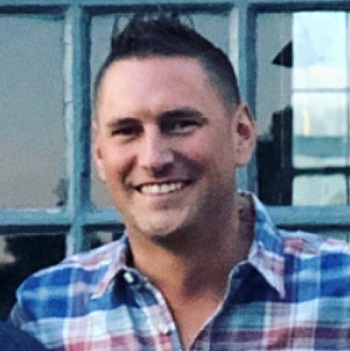
Peter Lankarge, a resident of Portsmouth, is a client specialist with the New Hampshire-based Corporate Data & Voice Solutions. He uses his background in health care information technology to help health care companies and networks with digital communication.
Lankarge discusses some of the ways that physicians’ offices in Rhode Island are making use of technology to keep up with patients during the COVID-19 crisis.
Beyond Cash Donations: How New Forms of Giving Are Transforming Not-for-Profit Accounting
Evolving Funding Landscape for Not-for-Profits Not-for-profit organizations are being asked to do more with less,…
Learn More
PBN: Many physicians and providers of all types are saying that their offices are increasingly reliant on telehealth to continue to care for patients amid the COVID-19 outbreak. Have you seen increased demand for these services during this time in Rhode Island?
LANKARGE: Yes, as Coastal Medical [Inc.]’s CMO [chief medical officer], Dr. Edward McGookin, noted in the virtual PBN Health Care Summit on April 1, the implementation of telehealth very quickly became an imperative. In their case, it went from being a project they intended to accomplish over six months to one that was accomplished in just a week because of COVID-19.
Almost overnight, telehealth went from being a niche service that was more relevant in rural areas, with larger distances between patients and providers, to one that helped reinforce the practice of social distancing in the face of this pandemic. With Rhode Island being one of the most densely populated states, this certainly produced a sudden spike in its demand for telehealth.
PBN: Are you seeing creative responses from technology companies in response to demand?
LANKARGE: Absolutely. I represent a number of cloud technology vendors here in Rhode Island, and nearly all of them have launched generous promotions to assist with remote worker enablement and remote customer/patient care.
One great example is RingCentral. Their RingCentral Office telehealth platform is being offered to all health care providers at no charge for three months to deal with this current crisis. This platform enables providers to maintain HIPAA [Health Insurance Portability and Accountability Act of 1996] compliance while video conferencing with patients, making and receiving secure phone calls, secure direct faxing of patient records, and even secure SMS/MMS [short message service/multimedia message service] text messaging for patient follow-up.
PBN: Is there a one-size-fits-all solution, or are different types of providers looking for different types of services?
LANKARGE: Every health care provider has different needs and there are a number of different telehealth solutions in the marketplace. The future of telemedicine will become more complex as it moves to encompass the “internet of things” via wearable devices for patients, but that is not where the majority of telehealth solutions need to be at our present moment.
Today, the immediate need is for secure interactions with patients via video, holding remote secure check-ins, scheduling patient follow-ups via calls and text messages, and virtually triaging patients. It’s certainly beneficial to provide a solution in which all of this can be accomplished through a single platform, from anywhere – including people’s homes – but the extent to which each solution is deployed is up to each individual provider.
To that point, while many hospitals and larger systems of care have begun deployments recently, many smaller or independent health care providers may not be as far along in that process and wondering which steps to take. In particular, this is relevant to practitioners of behavioral health, pediatrics, and endocrinology, for purposes of patient monitoring and follow-up.
PBN: Is setting up telehealth and other virtual capabilities a drain on resources such as time and finances for doctors’ offices?
LANKARGE: It certainly doesn’t need to be. With varying levels of technical capability among health care staff, it is important to find an all-in-one, easy-to-use platform, to minimize the draining of resources and shorten the learning curve. The goal is to help medical professionals make better use of their time while also improving population health.
On the financial side, finding a solution such as RingCentral that offers this whole range of capability through a single cloud subscription license is key to ensuring that this will not only be financially feasible but can even save an organization money by shortening the IT [information technology] stack from their siloed legacy environment.
PBN: Do you foresee the shift to virtual platforms in the health care industry sticking around once the public health crisis eases?
LANKARGE: Yes, without question. Across the business landscape, we are currently witnessing tectonic shifts in workflows that have been ripe for change. This is certainly true of health care, which as an industry is often resistant to change – think of the persistence of faxing, for example, or the lack of interoperability between many disparate electronic health record systems.
However, in the case of telehealth, with this sudden and unprecedented demand, health care providers are quickly accelerating their response because it has become crucial to population health. Once these solutions are implemented, and as both providers and patients grow comfortable with them, the benefits will be obvious. It will, of course, never fully replace the need for in-person care, but rather will serve to augment comprehensive care strategies. Like the many other communication tools suddenly coming into vogue, telehealth is likely to become part of “the new norm.”
Elizabeth Graham is a PBN staff writer. She can be reached at graham@pbn.com.