Go to virtually any school committee meeting in Rhode Island this time of year and you are likely hear the same discussion. It’s budget time and the number crunching gets difficult for school officials when they do not know the amount of money they will be receiving in the form of State Aid to Education.
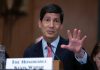
Sen. William A. Walaska, a Warwick Democrat, hopes to address the problem with legislation requiring that State Aid to Education figures be submitted to the state legislature on Feb. 1 — and then enacted by April 15 for the following fiscal year.
Beyond Cash Donations: How New Forms of Giving Are Transforming Not-for-Profit Accounting
Evolving Funding Landscape for Not-for-Profits Not-for-profit organizations are being asked to do more with less,…
Learn More
If, between April 15 and the beginning of the next fiscal year, the state’s financial picture improves, more money could be added to local education budgets, but decreased, according to Walaska’s bill.
State Aid to Education figures are traditionally tricky. Last year, for example, Lincoln was facing a 7.8 percent school budget hike — and then received a 5 percent boost in State Aid to Education. In fact, according to Walaska, only a handful of communities received state aid equal to what they had projected.
“Planning local school budgets without knowing a significant piece of the puzzle — State Aid to Education — is a tricky, trying and potentially costly prospect,” said Walaska. “Local budgeters are competent people, but even they cannot be entirely accurate when a major number in their funding scheme is unknown. The end result can be fiscal mayhem for a local school district, which falls into the laps of taxpayers.”
Walaska has filed similar legislation in recent years, but asked that state figures be enacted by March 15. Those attempts failed. This year’s bill gives the state more time — and Walaska, more confidence in its prospects.
“Pushing the enactment off until the middle of April should make this bill more palatable to (Almond) Administration and General Assembly budget crafters,” said Walaska. “This is a matter of fairness to the municipalities in our state. It acknowledges that State Aid to Education is a major aspect of local budgets. I believe that, given a concrete figure early enough, our school departments can live within their means. That translates into fiscal security for taxpayers.”
The bill (01-S 0109) has been referred to the Senate Committee on Finance. It is co-sponsored by Sen. Stephen Alves, of West Warwick, Sen. Paul W. Fogarty, of Burrillville and Sen. James C. Sheehan, of North Kingstown, all Democrats.
In other education-related news out of the legislature, Rep. Joseph M. McNamara, a Warwick Democrat, has introduced a bill that calls for parents of students and staff members at schools and day care centers to be notified if pesticides are being used on the property.
“Scientists believe that children are especially vulnerable to the effects of pesticides,” McNamara told the House Committee on Health, Education, and Welfare last week. “Children’s brains and nervous systems are not completely developed, making them more susceptible to the effects of nerve poisons.”
The legislation, said McNamara, is an attempt to prevent children from any unnecessary exposure to pesticides — without outlawing the use of pesticides.
The bill would restrict schools from any application of pesticides during regular school hours or during planned activities, except when an emergency application is necessary to eliminate an immediate threat to human health.
“No one should have to accept unnecessary environmental hazards, least of all children,” he said.