opted for conveniently located retail ATMs.
Retail ATMs, free-standing cash dispensers found in venues from casinos to
convenience stores, are celebrating their 10th anniversary.
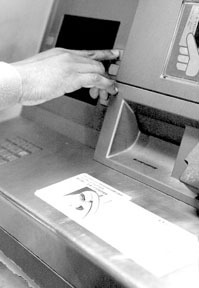
The units have gone from being placed in the rare retailer to becoming as ubiquitous as the average bank ATM. They have since gotten to the point, perhaps, that a convenience store is not considered convenient without one.
“They are seen as enhancing what’s offered to the average customer,” said Brian Kett, president of the Long Beach, Miss.-based Triton Systems, a subsidiary of the Dover Corp. out of New York City. “And, more people are turning to these retail ATMs instead of driving a couple blocks away to their bank’s ATM.”
Rhode Island's Market Has Changed. Developers, Builders, Investors and Sellers Must Change With It.
By Emilio DiSpirito IV License Partner | Engel & Völkers Oceanside Leader | The DiSpirito…
Learn More
When the retail ATM was first introduced, it was billed as an item to give a retailer an edge over the competition.
“The majority of people who make withdrawals at the retail ATM would spend a portion of the money at that store,” Kett said. “It raised revenue 10 percent to 20 percent.”
However, it didn’t take long until what Kett calls the “ATM effect” to spread.
“Now, they are expected in convenience stores and bowling alleys, for example,” he said.
According to Kett, of the 360,000 ATMs in the country, 170,000 are retail ATMs. His company, which was the first to come out with a retail ATM, sold its 100,000th unit in February.
Richard Batsell, a professor at the Jones Graduate School of Management at Rice University in Houston, said he found the 80-20 rule can be applied to the “ATM effect.” In this case, 20 percent of the users contribute 80 percent of the user fees generated.
“These people value their time and convenience so much that they will use an ATM like this over and over again,” he said. He added that 94 percent of the people he surveyed say they are aware of the fees.
The retail ATM doesn’t have much in common with its cousin – the bank ATM. Although they both dispense money, the bank ATM is a tool for a much different business model.
“Fleet wants to make sure customers receive a certain level of service,” said James D’Aprile, manager of the ATM Functionality Department at FleetBoston Financial Corp. in Boston. “For instance, we don’t want customers standing in line, so enough ATMs are available to handle peak periods.”
And this costs money. D’Aprile did not elaborate on the amount an average Fleet ATM costs, or what it might bring in through fees. There are too many variables, such as the volume of transactions compared to the services provided, to be considered when figuring the cost or profit of a machine.
“Fleet ATMs are there to support our relationship with the customer,” he said, adding that this service is a key difference between the bank and retail ATMs. “There is no relationships at all between the two relative to a competitive market or base served.”
D’Aprile said Fleet ATMs see between 20 million and 22 million transactions a month. The advantages businesses see from retail ATMs might come at the expense of the consumer, according to financial advisers in the area.
“It makes compulsive buying a lot easier,” said Rui Marques, owner of Marques Financial in New Bedford. “I come across people with money problems on a weekly basis and one of the first places I look is their ATM transactions.” He said he doesn’t see too many of these individuals indicating to him that the ATM-related spending spree is not pandemic; but when he does, he recommends they divert money from ATM accounts to areas that can make more money.
Jason Archambault, a partner at Providence-based SKM Wealth Management, said ATM transactions are one of the first places he looks when identifying a money problem among his clients.
But this is a controllable situation once a client sees the damage caused by ATM spending. “I think this ATM effect doesn’t affect the more sophisticated consumer,” he said.