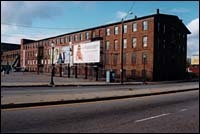
The seven semi-abandoned mill buildings at Eagle Square in Providence have inspired an intense debate about what is tasteful development and what is wasteful development.
City officials realized the proposal was a big deal after more than 150 objectors to the plan showed up in city hall last month, where Feldco Development of New York submitted preliminary plans for the development of the Valley neighborhood on the west side of the city of Providence before the City Plan Commission. The objectors said the proposed plan was too much like a strip mall, while the 30 or so residents representing the nearby Providence Commons, wanted to see the proposed Shaw’s Supermarket and 26 neighboring stores at Atwells Avenue and Eagle Street developed as soon as possible.
Beyond Cash Donations: How New Forms of Giving Are Transforming Not-for-Profit Accounting
Evolving Funding Landscape for Not-for-Profits Not-for-profit organizations are being asked to do more with less,…
Learn More
The City Plan Commission voted to postpone action on the issue until another meeting, set for Dec. 19 and set up several smaller conferences before that, for the opponents and proponents of the development to discuss alternatives. The first of those conferences took place last Tuesday, Nov. 28.
Area artist and member of the Providence Industrial Mill Building Association Raphael Lyon said the artists are not against development in the area, they simply do not want to see the seven 19th Century mill buildings destroyed to be replaced by a slice of suburbia.
“It needs to be something more appropriate to the environment in which it sits,” he said. “In order for this to be appropriate it’s going to have to look different than a strip mall.”
Providence City Councilwoman Josephine DiRuzzo does not think restoration is feasible.
“I like restoring old buildings,” she said, “but putting a Shaw’s supermarket in one of those buildings? I don’t know if this makes sense.
My druthers are not a strip mall, but I don’t see this as a strip mall at all. I see this as a moderate type of shopping area to address the need for the community.”
John Palmieri, director of the city’s Department of Planning and Development, said the plans may not be up to par for all parties, but he has seen as much flexibility as he expected from the developers.
“Is this the perfect development?” he asked. “Probably not, in terms of what new urbanists would insist we would consider, but [the developers] have clearly made an effort to develop a program sympathetic to the needs of the community.”
Jennifer Cole Steele is the director of the Providence Neighborhood Planting Program and Rhode Island coordinator for the Conservation Law Foundation. She said the artists are not the only ones concerned about the design of the proposed project.
“As a taxpayer and homeowner on Federal Hill, I’m concerned that this
development design is not well integrated into the neighborhood,” she said.
As far as numbers go, it appeared there were more people against the project than for it present at the meeting two weeks ago. DiRuzzo said many of the people there to speak in favor of the project were intimidated by the opposition.
“The people I represent have dealt with the deterioration of the neighborhood,” she said, “and lived with no hope of anything different happening.”
Gene Beaudoin, a partner with Feldco Development, said the crowd opposed to the project was the most enthusiastic crowd he had ever encountered. And even though plans have changed dozens of times since he began working on the project over two years ago, he still expects to break ground by the beginning of 2001.
“It’s unlikely we’d be going back to the drawing board,” he said.
He also said, however, before meeting with the opponents, some changes could occur.
Lyon felt the proposed changes were not enough, and that a suburban shopping destination people usually drive to, does not belong in an urban setting where pedestrians dwell.
“We were prepared to do alternative design research and look into options of a more creative alternative; however, he’s not flexible,” said Lyon of the developer.
Searching for compromise
When a public interest group is opposed to development, the developers usually try to work out the differences, and all groups involved are trying to reach a compromise.
Jack Keigwin, who heads real estate development group F.H. French Company,
said the opinions of the public often come into consideration before any ground is dug.
“We have found, particularly in Rhode Island,” he said, “that the public, should they be energized and have a legitimate concern, can delay, modify, or even stop a proposed project.”
Lyon doesn’t think the opposition is fighting fair.
“The area needs help. Nobody denies that,” he said, “but they have turned all the failures of Olneyville and South Valley and placed it on that small area so that development there will be seen as the panacea.”
DiRuzzo said it is not the first time she has dealt with organizations such as those who oppose the development as proposed.
“I’m sure the parties aren’t all going to feel okay about everything, but they might be able to look at it with a different perspective,” she said. “If the developers felt they could change their plans architecturally, I’d welcome it, but I’m not going to encourage it, because I don’t think the buildings are in the kind of mint condition people are trying to convince us they’re in.”
Beaudoin seconded this opinion after Tuesday’s meeting.
“Because of the environmental issues, as well as the fact they flood, it’s not possible to save these buildings,” he said.
Beaudoin then said all design questions were deferred to conferences scheduled to take place this Thursday (Dec. 7).
Palmieri said the issue is bigger than whether or not the buildings should be saved.
“It’s a matter of reviewing the site plan and working with the developer to help him develop as effective a site plan as possible for Plan Commission review,” he said.
Jennifer Cole Steele is still optimistic about public interest changing things.
“Getting together to work on something like this is very heartening,” she said. “We’re all on the same side, we just differ on how it should be laid out.
Nobody doesn’t want to see development there. We just don’t want to see a carbon copy of the Shaw’s on North Main Street.”