the General Assembly's agenda.
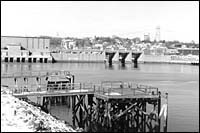
(Photo, Tom Croke)
Environmentalists are watching the state’s General Assembly as issues from dredging to neighborhood development, and lead poisoning are debated on the Senate and House floors.
And while groups like Save The Bay, the Audubon Society, the Rhode Island Chapter of Sierra Club, and Grow Smart Rhode Island have a vested interest in individual bills, the message is becoming clear – environmental issues are growing in importance.
Beyond Cash Donations: How New Forms of Giving Are Transforming Not-for-Profit Accounting
Evolving Funding Landscape for Not-for-Profits Not-for-profit organizations are being asked to do more with less,…
Learn More
“A lot of people have an interest in environment and health issues,” said Eugenia Marks, director of policy and publication for the Audubon Society of Rhode Island. “I think that if more people understood that the reason we have environmental laws is to protect the public health and welfare as well as the habitat of wild animals they would have a greater appreciation of legislation. This is not just some green stuff out in the country. It’s the land and water that we all use and share.”
Marks, who has been doing policy work for the Audubon society for more than a decade, called this legislative session “average” in terms of policy initiatives.
“The assembly constantly changes,” she said. “I think that there are people that take a keen interest in the environment, but so far the work seems pretty average.”
Topher Hamblett, director of Advocacy for Save The Bay said his organization is focusing on three areas this year: dredging, habitat restoration and Quonset Point.
Bills currently pending in both the House and Senate would provide guidelines for the disposal of dredge material – something the state has been lacking for the past decade.
“It seeks to knock down the legal barriers associated with dredging,” he said. “This is the first time ever that all of these parties have focused this way to make this happen.”
Hamblett said he is also optimistic that a habitat restoration bill will pass both the House and Senate. The bill, which has been introduced for the past five years, has failed to gain support in the House while being passed in the Senate. In addition, earlier this year a federal bill was passed that could provide funding to the state for habitat restoration – but it requires matching funds.
“The state needs to provide its own funds to procure federal dollars,” he said. “I think that there is wide acceptance that this is the most important thing that they can do for Narragansett Bay. Five years ago that wasn’t the case.”
Executive Director of Grow Smart Rhode Island Scott Wolf has been leading the charge for the passage of legislation supporting the remediation of brownfields, or areas with real or perceived contamination. As a result of a brownfields conference held earlier this year, Grow Smart has suggested to the state’s governing power that a program be developed.
“A pro-active, coordinated brownfields program is a critical tool for accelerating Rhode Island’s economic progress and enhancing our quality of life,” Wolf said. “If these properties are nor reused they will continue to worsen neighborhood blight and drain surrounding areas of their vitality. However, if they are redeveloped, they can increase local tax bases, provide the needed space in urban areas for housing, economic development, and recreational purposes, and lessen the pressure to develop greenfields.”
With all of these issues in the mix, Sen. Catherine Graziano, a North Providence Democrat, said the General Assembly has almost taken on the role as moderator.
“I think what happens is that people see a particular issue and we take a look at the design of the regulation,” she said. “No matter what the issue — air, water, land – somebody that supports that issue comes to the legislature to resolve it. Hopefully we do.”
Specific legislation pending includes:
Mercury Reduction
S-0661 and H-6161
These bills would prohibit the disposal of mercury-containing waste products
as solid waste.
S-0531 and H-6112 Mercury Reduction
These bills would create public health advisories for consumption of fish contaminated
with mercury and require they be made available to consumers by establishing health
advisories, and by requiring that the appropriate notice be posted.
Agriculture
H-5644
This bill would create a new department of agriculture and natural resources.
It also establishes a director of agriculture and natural resources as a cabinet
position.
Habitat restoration
H-2725
This bill would establish an interagency and estuarine habitat restoration
program as well as a trust fund that would receive a percentage of the oil spill
prevention fees and other grants, funds and gifts to support it.
Dredging
H-5933
This bill would create a dredging coordinator within the Coastal Resources
Management Council.
H-5645
This bill is designed to create a program for the beneficial use of dredged
material.
H-5646
This bill would grant the council the authority to set standards relative to
the water quality standards associated with dredging.
S-0424
This bill would allow the CRMC to adopt water quality standards with regard
to water quality.
Open space and housing
S-258
This bill would address the issue of sprawl by capitalizing the Rhode Island
Housing and Conservation Trust Fund with both public and private funds, permitting
the town of West Warwick and the city of Central Falls to impose a tax upon the
privilege of using property as vacant and abandoned property; naming the Rhode
Island Housing and Conservation Board as an Advisory Committee for the Planning
Department; and appropriating funds for additional staff in the Department of
Administration to perform functions required by the Comprehensive Planning and
Land Use Regulation Act.
Lead
H-5901
This act would provide a rent rebate for lead hazard violations.
Pesticides
S-660
This act would create a school pest management act to reduce the use of pesticides
in state schools.
Whistleblowers
Senate-0195 and House-5815
This bill would create a cause of action against the state of Rhode Island
by state employees and other parties seeking to enforce rights with respect to
certain federal statutes where the United States Congress has indicated its intent
that said federal statutes be applicable to the states.
Parking
H-5488
This act would provide for employer-sponsored parking subsidy programs, which
give the employee the option of receiving subsidized parking or an equivalent
cash allowance.
This act would also require cities and towns to grant appropriate reductions in
parking requirements otherwise applicable to new and existing commercial developments
that implement parking cash-out programs for those developments.